

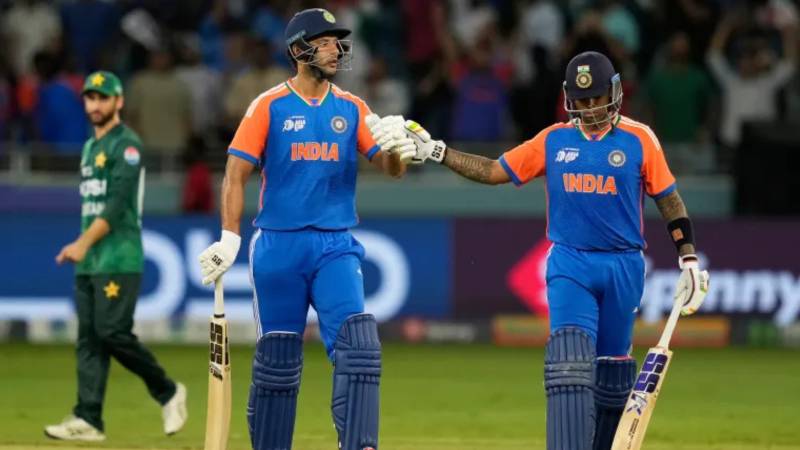
The Pakistan–India cricket rivalry preceded India’s ill-advised Operation Sindoor and will outlast any such further operations as well. I was reading a piece in ESPN Cricinfo written by an Indian sports journalist where he said that every press conference on the Asia Cup kept going back to the “sentiment back home”.
I am not sure why this would happen in every press conference and am also not sure why this would be the case for Pakistan. The “sentiment back home” in the case of the Pakistan cricket team is that India sponsors terrorists inside Pakistan, especially in Balochistan. It is also that Pakistan had nothing to do with the Pahalgam terror attack and that it offered an independent and neutral investigation to find out the real attackers, but India wanted no part of it.
And the “sentiment back home” in the case of Pakistan also is that a rabidly jingoistic Muslim- and Pakistan-hating Modi Sarkar wanted to “teach Pakistan a lesson” to strengthen its vote bank and ensure that it won the crucial upcoming Bihar assembly elections, and attacked Pakistan without cause. And then its Indian Air Force got a serious hiding from the Pakistan Air Force, losing seven jets in the process including three of the much-vaunted Rafales.
What is particularly interesting to note is how the ESPN Cricinfo article made a blanket assumption that this is the “sentiment back home” – lending further credence to the conventional wisdom that sports reporters should stay away from trying to be political pundits and commentators. In fact, it would be fair to also say that the “sentiment back home” in the case of Bangladesh or Sri Lanka would also be quite different. Coverage of the run-up to the match, as expected in the Indian mainstream media, has been warped — and that’s putting it mildly. We have seen the BJP-controlled and manipulated TV anchors taunt Indian cricketing stars for not speaking out against the match.
ESPN Cricinfo is heavily Indianised, and expecting it to take such a view and not pander to Indian readers may be expecting a bit too much
Of course, this only goes to show not only how servile these anchors are to the ruling BJP but also how they all seem to exhibit the same high level of imbecility. That is because they well know that instead of asking former Indian cricketers to speak out they should be asking the BJP government these questions, since the match is possible only if the governments of both countries give the go-ahead.
By contrast, mainstream media in Pakistan did not keep referring to “the sentiment at home” even though every Pakistani resented what India had done and had attacked Pakistan without a shred of evidence. And even after India had been soundly beaten in the military conflict that ensued, we did not see any coverage on this side of the border asking for a boycott of the match or of bilateral ties in general with India.
Of course, expecting India’s mainstream media – rightly called ‘Godi media’ (because it is in Modi’s lap, so to speak) – to be neutral would be expecting the impossible. But one would expect a cricket website covering the sport for many years and one which prides itself on providing in-depth, quality coverage to rise above politics and not play to the (Indian) gallery. Instead of trying to point out “the sentiment at home” angle – and getting it totally wrong by assuming that “the sentiment at home” will be the same in all of South Asia – it should try and stick to the traditional and sensible view that politics should be kept out of sport.
Of course, ESPN Cricinfo is heavily Indianised, and expecting it to take such a view and not pander to Indian readers may be expecting a bit too much.