

Can a single terror attack rewrite geopolitics, realign alliances, and reshape a nation’s image? The October 7 Hamas assault on Israel and the Pahalgam massacre in Indian-administered Kashmir both proved it can, setting new precedents for how terrorism reverberates far beyond its point of impact.
The Hamas attack marked a rupture in Middle Eastern politics. Israel’s overwhelming military response in Gaza, initially framed as self-defence, quickly turned into a humanitarian disaster that dominated global headlines. With Hamas militarily weakened, the brunt of Israeli firepower fell on civilians — eroding Tel Aviv’s moral standing, isolating it diplomatically, and expanding the conflict to Lebanon, Yemen, and even a brief war with Iran. What began as a single terrorist strike became a regional crisis: militarily expansive, diplomatically costly, and morally destabilising for Israel.
The Pahalgam attack had the opposite effect for Pakistan. While it strained already tense relations with India, Islamabad’s restrained military posture and diplomatic agility drew rare international praise. The Trump administration even offered favourable trade terms and renewed arms talks, while Pakistan’s military leadership deepened high-profile contacts abroad. The Chief of Army Staff’s growing diplomatic influence — marked by prominent meetings and cordial ties with influential capitals — underscored this shift in Pakistan’s international profile. For a brief moment, Pakistan’s image on the world stage rose sharply, and that was a significant achievement for the country.
But these foreign policy dividends and achievements masked a far harsher truth at home.
A Nation at War with Itself
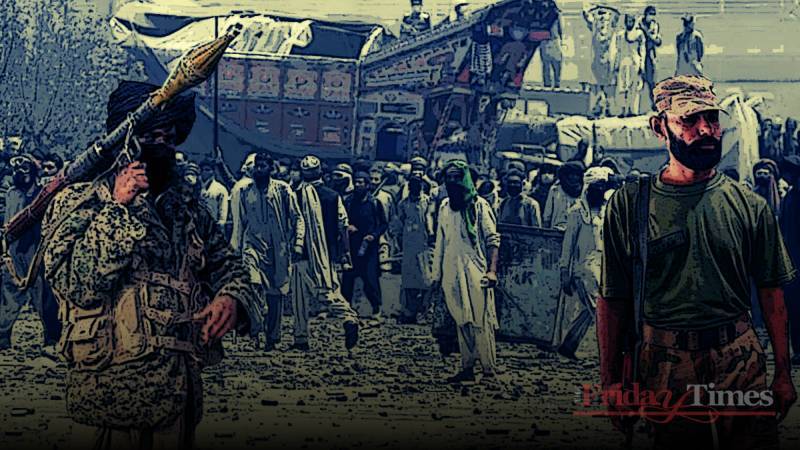
Khyber Pakhtunkhwa and Balochistan remain under constant threat from the TTP, the Balochistan Liberation Army, and their affiliates. By 8 August this year, Pakistan had lost 1,784 lives to terrorism and counterterrorism operations — more than seven deaths a day. Of them, 1,136 were in KP and 578 in Balochistan (Source: Centre for Research and Security Studies). Militants attack security posts, extort money, block roads, and kill civilians after verifying identities.
For the same period, India recorded 480 fatalities, only 75 of them in Kashmir (Source: South Asia Terrorism Portal). While India’s diplomatic image took a hit after the Pakistan–India conflict, its internal security remains far more stable. The contrast demands a sober reassessment of Pakistan’s counterterrorism strategy. Shooting down five Indian aircraft is of little comfort when infiltration by Indian-funded, Afghan-supported militants — the Fitna al-Hindustani — continues unchecked.
Since 2007, at least twelve operations have been launched in Swat, Khyber, Buner, Mohmand, South Waziristan, and North Waziristan. None achieved lasting peace
Divided Leadership, Eroding Writ
Although the civil and military leadership used Independence Day to call for national unity, Pakistan’s political reality tells a different story — especially in the fight against militancy. The army’s Operation Sarbakaf in Bajaur aims to crush militant strongholds, yet government officials, religious parties, and tribal jirgas push for negotiations. This split strategy erodes resolve, fuels public mistrust, and undermines any hope of a lasting solution.
In Bajaur, militants still attend jirgas, broker deals, and extort locals even as troops operate nearby. In Lower Dir, by contrast, tribesmen have vowed to arm themselves against the TTP and Afghan fighters, pledging to seize their property and expel their families. These starkly different reactions expose a grim truth: the state’s writ is shrinking on its own soil.
The Pashtun National Jirga rejects the “iron state” doctrine outright, while the Human Rights Commission of Pakistan warns that enforced disappearances and state overreach are stoking unrest, especially in Balochistan. Peaceful protests — like the Baloch women’s sit-in in Islamabad — are brushed aside by both political and security establishments, revealing a selective, inconsistent state response.
Unlike the divided state institutions and fractious social activists, militants and separatists are closing ranks. A senior official — corroborated by a recent UN report — confirms that the BLA, including its Majeed Brigade, and the TTP now operate in “close coordination” in terrorist activities. Yet, Khyber Pakhtunkhwa Chief Minister Ali Amin Gandapur has publicly distanced himself from the Bajaur operation. In a provincial cabinet meeting, he opposed the enforced displacement of civilians from militancy-hit areas. Offering no alternative strategy, he set a troubling precedent: disengagement from the core duty to safeguard the lives and security of his people.
The Costs of Playing with Fire
Some may see these episodes as proof that militant proxies can be leveraged for diplomatic advantage. That is a dangerous illusion. The domestic costs — fractured society, civilian deaths, prolonged instability, and deep erosion of trust — vastly outweigh any short-term geopolitical gain. Militancy is not a controlled instrument; it is a double-edged sword that always cuts inward.
For the people of Bajaur and elsewhere in KP, the options are bleak: live under militant rule with kidnappings, extortion, and parallel administrations — or permit another military operation. Yet history gives little reason for optimism. Since 2007, at least twelve operations have been launched in Swat, Khyber, Buner, Mohmand, South Waziristan, and North Waziristan. None achieved lasting peace. If the current push repeats past failures, it will not only harm the nation but also tarnish the army’s credibility.
The Choice Before Us
Pakistan stands at a turning point. External praise will not save it from internal decay. The state must adopt a unified, sustainable approach — combining decisive counterterrorism with genuine political reform, consistent law enforcement, and respect for civil rights. Without it, the cycle of violence will persist, and the fleeting goodwill won abroad will be buried under the rubble of domestic unrest.
The militants who orchestrated the Pahalgam attack stand to benefit most from the ongoing cycle of violence and instability. Their brutal actions have pushed both Pakistan and India into a dangerous crisis with far-reaching consequences. If Pakistan fails to decisively confront and eliminate this threat within its borders, it risks not only territorial loss but also the unravelling of national unity and trust. The time to act is now — before those who sow chaos reap the full cost of their destructive ambitions.