

Food is one of the most vital elements of human life. It nourishes us, brings us joy, and connects us across families, cultures, and generations. Every meal we eat is more than just a combination of ingredients but the result of science, hard work, and vigilance. From farmers who grow crops to the scientists who test food quality, there is a vast network ensuring that what reaches our plates is safe, pure, and healthy. Yet, behind the comfort of a warm meal lies an unseen world of laboratories, instruments, and experts dedicated to preventing foodborne illnesses and chemical contamination. Their work, often unnoticed by the public, is what keeps societies safe from the invisible threats that can exist in the food we consume.
Food safety is not just a technical concern; it is a moral and social responsibility. When food becomes contaminated, the consequences can be severe, ranging from mild stomach disorders to fatal cases of poisoning. Contaminated food can harm not only individuals but also entire economies, damaging public trust and disrupting trade. For this reason, nations around the world have established strict regulations and inspection systems to make sure food products meet certain health and safety standards. Behind these systems stand scientists who use chemistry, biology, and nuclear techniques to identify and prevent hazards long before they reach the consumer.
At the heart of food safety lies the science of understanding what food is made of. Every substance we eat (whether fruit, meat, or spice) has a unique chemical composition. Chemistry helps us understand how these substances behave, how they react to heat, light, or air, and what happens when they are mixed or preserved. It also helps identify harmful changes that may occur during processing or storage. For instance, a simple spice such as turmeric, known for its golden colour and medicinal properties, can sometimes be mixed with synthetic dyes or even toxic chemicals to make it look more appealing or increase profit. Without scientific testing, such adulteration could go unnoticed and cause serious health problems. Modern food testing laboratories can detect even the smallest traces of these harmful substances, protecting both consumers and industries.
The field of food safety combines laboratory science with law and policy; scientists not only perform chemical tests but also interpret their results in the context of national and international regulations
One powerful example of food safety science in action is the discovery of toxic metals or chemicals in imported goods. In a busy port city where food products from across the world are inspected, scientists may find that certain shipments are not safe for consumption. Using advanced chemical analysis, they can identify dangerous elements such as lead, mercury, or arsenic in food items. When such findings are confirmed, international alert systems are activated, informing other countries to stop the contaminated goods from spreading further. This shows how one laboratory’s careful work can have a global impact, preventing poisoning, protecting markets, and saving lives.
The field of food safety combines laboratory science with law and policy; scientists not only perform chemical tests but also interpret their results in the context of national and international regulations. They determine whether a product meets the legal standards for purity, authenticity, and safety. This makes the work both technical and ethical: it requires precision, honesty, and a deep sense of responsibility. A small mistake in analysis could allow contaminated food to reach the public; an unnecessary alarm could harm businesses. Balancing these pressures requires skill and integrity.
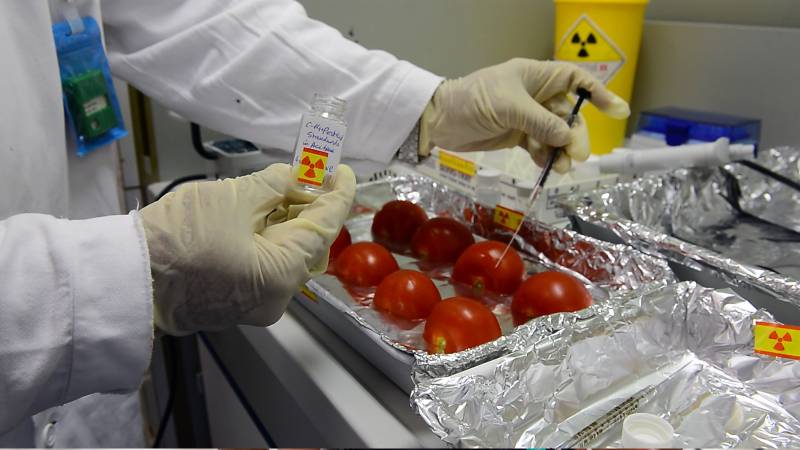
Modern food safety science also makes use of nuclear techniques. Although the word “nuclear” often sounds intimidating, in this context it refers to safe and controlled scientific methods that use radiation or isotopes to study the composition of materials. These techniques can help trace where a food item came from, detect pollutants at extremely low levels, and verify the authenticity of products such as coffee, honey, olive oil, and wine. For instance, nuclear tools can tell whether a bottle of olive oil is truly pure or if it has been diluted with cheaper oils. Similarly, they can confirm whether the fruit juice sold as “100% natural” actually contains synthetic additives. These methods offer a level of precision that traditional testing cannot always achieve.
Food safety is not limited to identifying contamination; it also involves understanding toxicity, i.e., the way certain substances can affect human health. Toxicology, a branch of science closely linked with chemistry, studies how chemicals interact with the body. Through toxicological testing, scientists determine what levels of particular substances are safe and what concentrations may cause harm. This knowledge helps governments set safety limits for residues of pesticides, preservatives, and heavy metals in food. It also ensures that new food additives or packaging materials are tested thoroughly before being approved for public use. Without toxicology, we would not know the difference between safe exposure and dangerous contamination.
The work of food safety scientists extends far beyond the laboratory. It involves constant learning, collaboration, and adaptation. Many experts pursue advanced studies in quality assurance, risk assessment, and data analysis to stay updated with new technologies. In a world where food supply chains are becoming increasingly complex and global, such skills are essential. Food produced in one country may be processed in another and sold in a third. Ensuring that every step meets safety standards requires cooperation between scientists, governments, and international organisations.
Behind every safe meal is a network of people who have devoted their skills to serving humanity
At the global level, institutions like the International Atomic Energy Agency (IAEA) and the Food and Agriculture Organization (FAO) play a key role in supporting food safety research. They provide training, share laboratory techniques, and help countries develop the infrastructure needed to test and monitor food effectively. These organisations use nuclear science not for energy or weapons, but for peace and development, ensuring that scientific progress benefits humanity in practical ways. By helping countries detect contaminants, verify food authenticity, and strengthen regulatory systems, they build a safer and fairer global food market.
The impact of this work goes beyond preventing illness. It builds trust between nations and supports fair trade. For example, when a developing country can prove scientifically that its food exports meet international safety standards, it gains access to larger markets and better prices. This not only benefits farmers and producers but also strengthens local economies. Food safety, therefore, is not merely a scientific goal but also an instrument of social and economic justice.
Modern laboratories are now exploring new challenges that affect food and health. One of these is the problem of tiny plastic particles that can enter the food chain through water, soil, and packaging materials. Detecting and understanding their effects requires sophisticated techniques that can analyse materials at the molecular level. Another growing concern is antimicrobial resistance, where bacteria in food or livestock become resistant to antibiotics. This makes infections harder to treat and poses a global health risk. Scientists working in food safety are studying how to limit the use of antibiotics in agriculture and how to detect resistant bacteria early. These efforts show how food safety science continues to evolve as new problems emerge.
The link between food safety and sustainability is also becoming stronger. Safe food production must go hand in hand with protecting the environment. When chemicals used in farming contaminate soil and water, they not only harm ecosystems but can also return to our bodies through the food chain. Scientists are therefore developing methods to monitor and minimise these effects, promoting safer agricultural practices that protect both health and nature. In this way, the work of food safety experts supports broader global goals such as the United Nations’ Sustainable Development Goals, especially those related to health, clean water, and responsible consumption.
What makes the field truly inspiring is the combination of scientific precision and humanitarian purpose. Food safety experts may spend hours in a lab studying colour changes in a liquid, analysing radiation patterns, or interpreting complex data sheets, yet the outcome of their work is simple and powerful: preventing disease and saving lives. Their dedication turns abstract science into concrete social good. It shows how chemistry, physics, and biology can serve human welfare in the most direct way possible by ensuring that what we eat is safe.
The journey to mastering food safety science is long and demanding. It requires not only academic knowledge but also persistence, teamwork, and ethical strength. Many scientists balance research, teaching, and family life while continuing their studies to stay at the cutting edge of technology. They understand that food safety is a field where learning never stops. Each new method, each new challenge, adds to a global effort to make food systems stronger and more resilient.
Ultimately, the story of food safety is a story of cooperation between people, disciplines, and nations. It shows that science is not only about discovery but also about care. It is about protecting the most basic human need: nourishment. The chemistry of food safety reminds us that behind every safe meal is a network of people who have devoted their skills to serving humanity. Their work may not make headlines, but it saves lives every day.
Food safety science stands as a bridge between knowledge and kindness. It uses the smallest particles in the universe (atoms and molecules) to secure one of the biggest human concerns: health. It transforms invisible scientific principles into visible protection. Thanks to this tireless work, we can sit at our tables, share meals with loved ones, and enjoy the flavours of life with peace of mind. And perhaps that is the most powerful proof that science, when guided by purpose, truly serves humanity.