

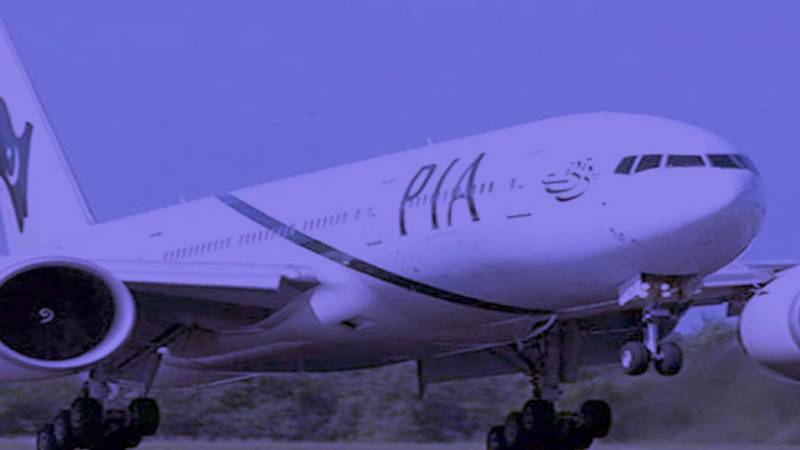
The federal government tried to privatise PIA last year and what a fiasco it turned out to be. Out of six parties shortlisted only one ended up bidding and its offer of Rs 10 billion was well short of the government’s reserve price of Rs 85 billion.
The government ended up paying over Rs 2 billion to the financial consultant EY and several million to Nutshell Group for PR and ended up losing even more money.
One of the main issues raised by the interested parties was that PIA’s network wasn’t fully operational - in particular, its profitable and lucrative routes to Europe, America, and the UK because of bans on its aircraft for safety reasons and thanks to former aviation minister Ghulam Sarwar Khan’s statement in Parliament (which was not true) that most PIA pilots had fake degrees.
However, the situation has markedly changed since that failed privatization attempt. PIA has regained access to Europe and has already started flights, beginning with Paris. The defence minister has said that the airline will soon be flying to several European cities and that by the end of February, it may be able to resume operations in the UK.
So the most obvious question arises why the great hurry to sell off the airline? Especially at a time when it is likely to experience a turnaround in its financial fortunes.
The federal government has pressure from the IMF which wants it to sell off all loss-making state-owned enterprises and PIA is clearly right at the top with tens of billions in losses accumulated over the years
It is obvious that PIA has a strong advantage over airlines like Emirates, Etihad, Qatar Airways, or Turkish Airlines over flights to Europe, the UK, and America simply because all these flights from Pakistani cities like Lahore, Karachi, or Islamabad are going to be direct. There will be considerable savings in time (by as much as 30-50%) and in the reduced hassle of changing flights and waiting during layovers. Where PIA does of course lose out over these other airlines is in quality of service for passengers, seats, and in particular inflight entertainment since most PIA aircraft don’t have inflight entertainment systems that work.
Given such a situation, its revenue will likely rise, and the government should wait and see by how much before it firms up a date to sell it off. Selling it off right away will prevent the government and the state treasury from benefitting from a higher selling price that would come with its financial situation healthier than it is currently. At the very least it should wait a year to see how much of its losses it can reduce before it considers selling it off.
Of course, the federal government has pressure from the IMF which wants it to sell off all loss-making state-owned enterprises and PIA is clearly right at the top with tens of billions in losses accumulated over the years.
However, it would make perfect sense for it to wait and see the results of the resumption of flights to Europe and the expected resumption to the UK. Even if the final decision is to sell off the airline, there would be no harm in waiting and seeing the positive impact on its financials - that way more parties may become interested and its selling price will rise naturally as a result. That said, the government also needs to ensure that the situation where freeloaders and their families went on the January 10 flight to Paris is not repeated.