


A meme is typically a humorous image, video, text, or piece of media that is copied and spread rapidly by internet users, often with slight variations. Memes can be powerful tools for self-expression, connection, social influence and even political subversion.
The term “meme” was first introduced by evolutionary biologist Richard Dawkins in his 1976 book The Selfish Gene. Memes carry symbolic meaning representing a particular phenomenon or theme that gives temporary joy to the viewer.
Internet memes have become a powerful tool of expression in the digital age, reflecting societal trends, humour, and even political commentary. Paolo Gerbaudo, a reader in digital politics and director of the Centre for Digital Culture at King’s College London, notes that internet memes are one of the clearest manifestations of ‘digital culture’. These sharable visual jokes can also be considered as a way to simplify educational material for better memorization.
Domestic jurisdiction as a notion attempts to define an area in which the actions of the organs of government and administration are supreme, free from international legal principles and interference. It follows from the nature of the sovereignty of states that while a state is supreme internally, that is within its own territorial frontiers, it must not intervene in the domestic affairs of another nation.
States conduct their inter-state relationships by establishing diplomatic missions and appointing representatives to other states. This practice of inter-state relations developed a body of customary rules and principles which have been codified in the Vienna Convention on Diplomatic Relations 1961 which entered into force on 24 April, 1964.
Article 3 of this Convention outlines several key functions of a diplomatic mission. A diplomatic mission primarily serves to represent the interests and authority of the sending State within a foreign country. It also protects the interests of its home country and its citizens within the boundaries of international law. Another major function is negotiating with the government of the host country.
Additionally, the mission gathers information on political, economic, and social developments in the host country through lawful means and reports back to the home government. It also works to strengthen mutual understanding and cooperation by fostering friendly relations and encouraging economic, cultural, and scientific exchanges between the two states.
This Convention provides a legal framework with uniform rules and principles to govern diplomatic relations and also confers the privileges and immunities of diplomatic staffs. Diplomatic immunity involves exemptions from the jurisdiction of local courts and other authorities of the host country to foreign diplomats.
Article 27 of the Convention addresses the permission and protection of communication for diplomatic staff in all official matters. According to this Article, diplomatic bags must carry visible external markings and must not be opened or detained. These bags are used to securely and confidentially transport items intended for official use by a diplomatic mission.

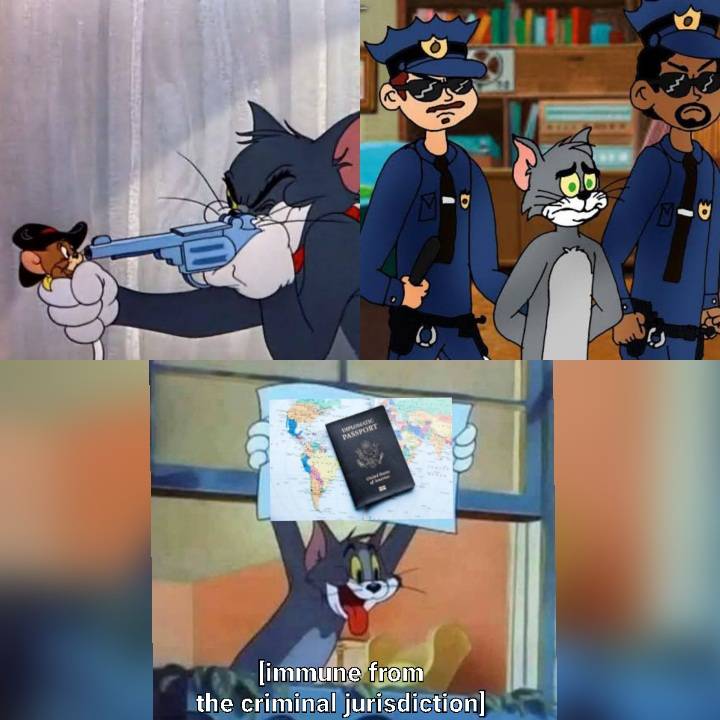
Article 31 has elaborately discussed the provisions regarding diplomatic immunity. According to Article 31(1), a diplomatic agent enjoys immunity from the criminal, civil and administrative jurisdiction of the receiving state. The primary objective of this opportunity is to let diplomats carry out their duties without interference from the receiving state.
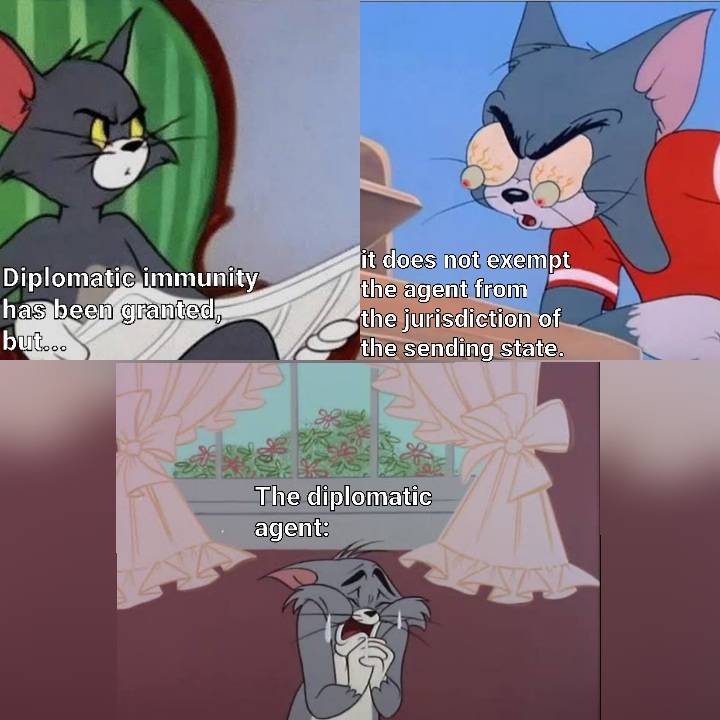
Again, Article 31(4) has conferred that diplomatic immunity does not exempt the agent from the jurisdiction of the sending state. Though the diplomats enjoy immunity from the jurisdiction of the receiving state, they may be held responsible before the court of the sending state.
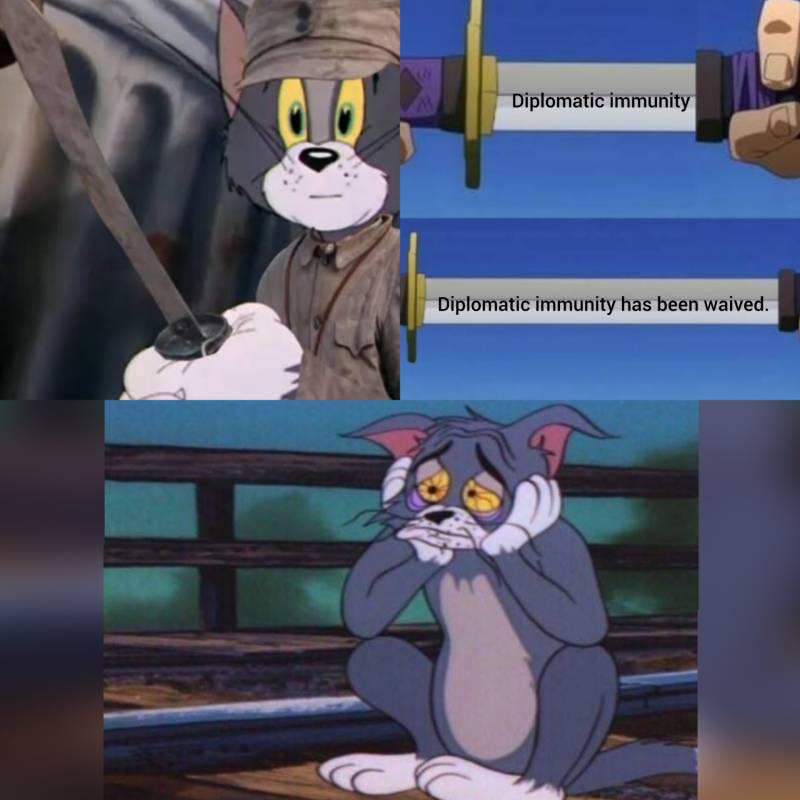
Article 32 has introduced the waiver of diplomatic immunity. The receiving state may request the sending state to revoke any diplomat’s immunity. If it is granted, the diplomat will be held accountable for his offence like any other citizen of the receiving state. Generally, the immunity is waived by the sending state when the agent is involved in a serious crime unrelated to his diplomatic role.
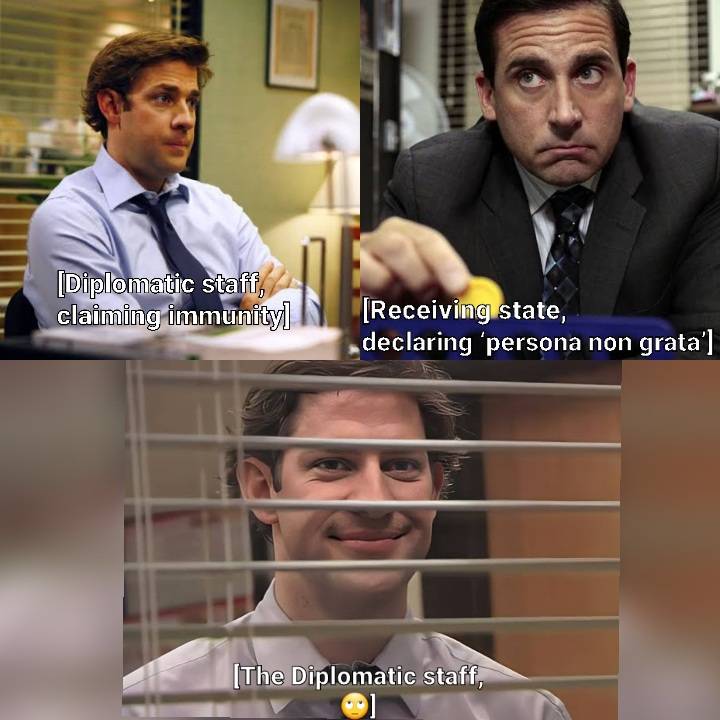
Article 9 has tried to analyse the terminology ‘persona non grata’, a Latin phrase meaning “unwelcome person”. As a legal term, it refers to the practice of a state prohibiting a diplomat from entering the country as a diplomat, or censuring a diplomat already resident in the country for conduct unbecoming of the status of a diplomat. The receiving state has the authority to declare any diplomatic staff of the mission ‘not acceptable’ without any explanation. In such a situation, the sending state shall recall the staff or terminate his functions with the mission.
Nothing works better than memes when it comes to simplifying the often rigid and complex concepts of diplomats’ rights, protections, and immunities under international law. Through a single image or caption, memes can transform what might otherwise be dense treaty language into something relatable, humorous, and instantly shareable. In an era where attention spans are short and information moves at the speed of a scroll, memes serve as a powerful bridge between legal abstraction and public understanding.