

The Two-Nation Theory (TNT) was the concept that underpinned the partition of India and remains central to Pakistan’s national identity. It provided the foundation for what later came to be known as the “ideology of Pakistan”—a term coined by Justice Javed Iqbal as the title of his 1958 book, published by the Pakistan Times Press at the behest of General Ayub Khan.
Traditionally, the TNT has been understood as portraying the Muslims of India as a distinct polity within a united India—Akhand Bharat. In contemporary India, however, it is often regarded as a flawed notion that precipitated the country’s division—an attitude exemplified by the unwarranted Indian response to Field Marshal Asim Munir’s speech at the Convention Centre in Islamabad on 12 April this year.
In this piece, I wish to draw attention to the idea of Akhand Bharat—or United India—and to suggest a broader understanding of the Two-Nation Theory.
The Indian subcontinent has been united in its entirety, in the sense of Akhand Bharat, on only a few occasions—and those were monarchies. From the Maurya Empire to the British Raj, the subcontinent experienced intermittent periods of remarkable political unification under powerful central authorities. The Maurya Empire (321–184 BCE), with its capital at Pataliputra, encompassed present-day Afghanistan, Pakistan, Nepal, Bangladesh, and most of India—excluding Tamil Nadu and Kerala—while exerting diplomatic influence over Sri Lanka. Nearly a millennium later, the Gupta Empire (c. 280–550 CE), also based in Pataliputra, presided over northern India, Bengal, Gujarat, and parts of central India. The Delhi Sultanate (1206–1526), ruling from Delhi, dominated northern India, Pakistan, and Bengal, with intermittent advances into the Deccan.
The Mughal Empire (1526–1857), first from Agra and later Delhi, achieved an even greater consolidation, extending from the Hindu Kush to Bengal and deep into central India, incorporating parts of the Deccan. The Maratha Confederacy (1674–1818), though decentralised, controlled central, western, and parts of southern India, exerting influence in the north. The British Raj (1858–1947) marked the most comprehensive unification, encompassing present-day India, Pakistan, Bangladesh, and Myanmar, and at times parts of Afghanistan and Sri Lanka, under a single administrative, legal, and infrastructural framework. It was the final and most extensive manifestation of Akhand Bharat in recorded history.
The division of India was not merely political—it reflected a deep-rooted civilisational fault line
Those lamenting the division of India through the instrument of the Two-Nation Theory must answer a simple question: which “united India” do they wish to resurrect—the Maurya Empire of the pre-Common Era, the Mughal Empire of what modern Indian historians call “medieval India,” or the British Raj? Which monarchy do they want reinstalled in India? India has never united under any democratic rule.
Another perspective for understanding the TNT is through the lens of civilisational boundaries.
The Indus Valley Civilisation (c. 3300–1300 BCE) and the Ganges (Ganga–Jumna) Civilisation, emerging after its decline from around 1500 BCE, represent two distinct phases of Indian history. The Indus Valley, centred on the Indus River in modern Pakistan and north-western India, was one of the world’s earliest urban societies, with meticulously planned cities such as Mohenjo-Daro, Harappa, and Lothal, advanced drainage systems, and standardised brick architecture. Its economy, based on long-distance trade with Mesopotamia and Central Asia, fostered an open and outward-looking worldview.
The Ganges Civilisation arose in the fertile Gangetic plain, encompassing regions such as Magadha, Kosala, and Vatsa, with cities like Pataliputra, Varanasi, and Ayodhya. Initially rural, it gradually urbanised, producing monumental religious and political architecture. Its agrarian economy, centred on rice, wheat, and barley cultivation, was more inward-looking, narrow, and locally oriented.
A closer study reveals that these two civilisations were markedly different.
The Indus Valley’s prosperity relied on trade and cultural exchange, while the Ganges Civilisation was rooted in agriculture and ritual, fostering a more insular social order. What later became Pakistan corresponds broadly to the Indus Valley domain, to which eastern Punjab was annexed by force and political manoeuvre during the 1947 Partition. In this sense, it remains a cultural misfit within present-day India, whose dominant ethos is shaped by the Ganges Civilisation.
Similarly, Kashmir historically aligned more closely with the Indus Valley world than with the Ganges basin. Its rivers flow into the Jhelum and onward to the Indus, not to the Ganges. Early political and cultural links were with Gandhara, Taxila, and Punjab rather than the Gangetic heartland. While Ganges-based influences reached Kashmir in later centuries, its formative connections remained with the north-western Indus sphere.
Hence, Kashmir’s inclusion in present-day India is unnatural.
Seen in this light, the division of India was not merely political—it reflected a deep-rooted civilisational fault line. This was the line to which Allama Iqbal alluded in his Allahabad Address of 1930, when he proposed an independent status for the four north-western states, whether within or outside British India. This perspective was further reinforced by Quaid-e-Azam’s speech of 11 August 1947, in which he envisaged Pakistan not as an exclusively Muslim state, but as a homeland inclusive of all religious communities inhabiting the Indus Valley region.
It is perhaps our departure from this foundational vision that has fuelled Pakistan’s recurring crises of identity.
After all, the founding fathers understood that nations are forged through a collective consciousness, rooted in shared history and culture—foundations that these civilisations had long provided. If religion, language, and dietary habits alone could create nations, then the entire Arab world, or all English-speaking peoples, would have been united under a single political entity.
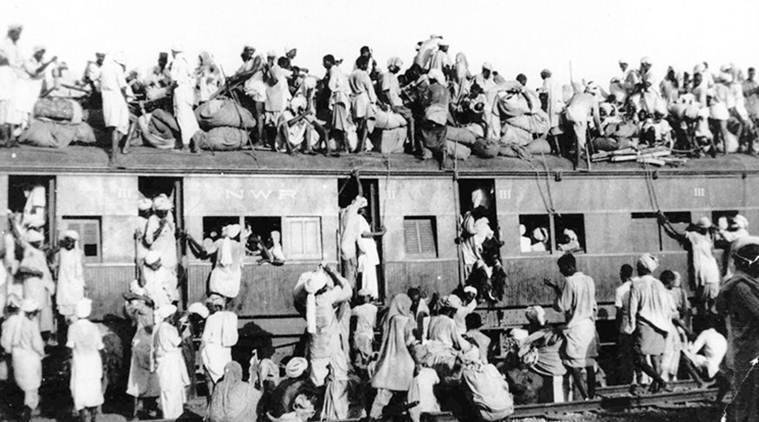
The tragic division of Punjab and the ensuing bloodshed—which led to the mass expulsion of Sikhs and Hindus from western Punjab—narrowed the TNT into a solely Muslim framework. Yet one must remember that non-Muslim communities, particularly Christians and Sikhs, played pivotal roles in the Pakistan Movement. Figures such as Bihari Lal Rallia Ram, Kundan Lal Rallia Ram, Mrs K. L. Rallia Ram, Lala Chandu Lall, Chaudhry Chandu Lal Sundar Das, Dewan Bahadur S. P. Singha, Cecil Edwards Gibbons, Samuel Martin Burke, and Lal Din Sharaf Sargodhvi were instrumental in mobilising support for Quaid-e-Azam, influencing legislative votes, and advocating minority rights in the new state.
Once this broader understanding is embraced, the picture becomes clearer: two distinct civilisations coexisted in the subcontinent—the Indus Valley Civilisation, which in later centuries became predominantly Muslim, and the Ganges Civilisation of central and eastern India, which remained predominantly Hindu. The division of India along these lines was not only imminent but historically natural.