

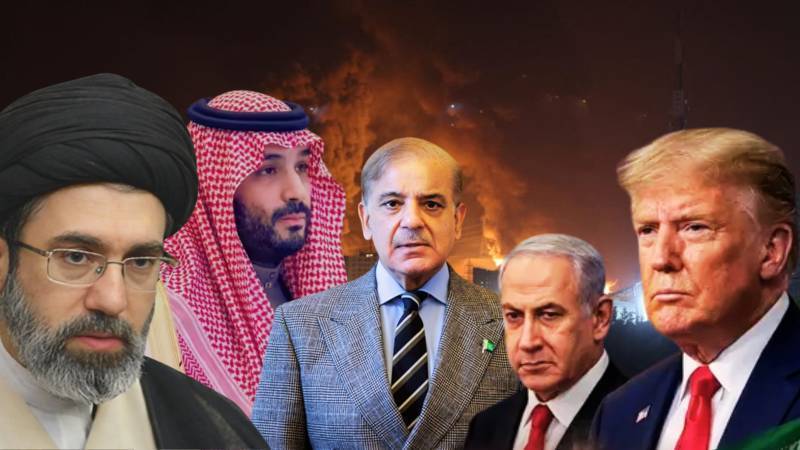
The collapse of the Islamabad talks was structured well before JD Vance landed, well before the Iranian delegation cleared customs. What we witnessed was not a negotiation failing. It was a contradiction being exposed: you cannot position yourself as a mediator while functioning as a forward deployment platform for one of the parties you are mediating between.
The sequencing matters. News of Pakistan’s 13,000-strong troop deployment to Saudi Arabia did not break after the talks concluded. It circulated during them. Iranian negotiators are not poorly briefed. They track troop movements. They understand logistics. When your interlocutor’s army is staging in your adversary’s territory while you are still seated at the table, you are no longer in a negotiation. You are in a performance.
The American position requires its own scrutiny. Vance framed his proposal as a definitive offer. That framing alone disqualifies it as serious diplomacy. Genuine mediation requires face-saving architecture.
Both parties must claim partial victory. The reported American demand structure: uranium surrender, cessation of nuclear activity, Hormuz access without sovereignty recognition, offered Iran nothing but capitulation dressed in procedural language. No state with a functioning deterrence calculus accepts that.
The choice of Islamabad as a venue was itself a problem that commentary has largely avoided. Neutral venues carry weight precisely because they carry no military entanglements. Pakistan has no such equidistance regarding the Saudi-Iran rivalry. The institutional relationship between GHQ Rawalpindi and Riyadh spans four decades, multiple conflicts, and a financial architecture that binds Pakistani military procurement to Gulf patronage in ways no public document fully captures. Hosting mediation from within this structure is not a diplomatic asset. It is a liability that the Iranians correctly identified.
When Riyadh requests a deployment, Rawalpindi does not evaluate it purely on strategic merit. It evaluates it through the lens of dependency
This is not an argument that Pakistan acted irrationally. That is precisely the point worth examining carefully. Pakistani strategic behaviour is the rational output of a state that has never resolved the foundational tension between its geographic position and its economic dependency. Saudi financial exposure in Pakistan is structural, not marginal.
Gulf remittances prop up the current account. When Riyadh requests a deployment, Rawalpindi does not evaluate it purely on strategic merit. It evaluates it through the lens of dependency.
The Iranian response will follow a predictable grammar. Direct military action against Pakistan is not in Tehran’s interest. What Iran will do is what it has always done when encircled: activate peripheral levers. The Balochistan border will become selectively more porous.
This is pattern recognition, not speculation; the 2019 Khash-Zahedan bombing and the 2024 cross-border strikes both followed periods of perceived Pakistani alignment with Riyadh. The cost is borne not by the generals who made the deployment decision but by communities living along the border and by a Pakistani state that has just made its most volatile frontier more volatile.
Pakistan cannot indefinitely sustain a foreign policy that attempts to remain simultaneously useful to parties in active strategic competition. This is not a moral proposition. It is a realistic one. The states that successfully navigate great power rivalries are those that convert ambiguity into leverage rather than availability into revenue. Pakistan has consistently done the latter.
The deeper question is why the alternative has never materialised. Strategic autonomy requires a revenue base not contingent on remittances from states with competing security interests. It requires foreign policy decisions to pass through accountable civilian institutions rather than being made in garrison. Pakistan has neither, not because of any failure of national character, but because the state formation process, from Cold War integration through the Afghan jihad and its Saudi financing to the post-9/11 rentier arrangement, consistently rewarded external alignment over institutional development.
The talks collapsed because Pakistan had already chosen. But the choice was made within structural constraints that have been tightening since 1979 and that no government, civilian or military, has seriously moved to loosen. The critique that stops at moral indictment is satisfying but insufficient.
The one that maps the constraints and argues for specific reforms: a domestic tax base replacing remittance dependency, civil-military rebalancing, and a regional economic framework making normal trade with Iran more valuable than Saudi security rents, is harder to write. But it is the only critique that might eventually matter.
The border will bleed (God forbid) in the places it always bleeds. Pakistan will return to its IMF programme and its revolving crisis management. None of this changes without a reckoning with what the Pakistani state is, how it generates revenue, and who benefits from keeping those answers exactly as they are.