

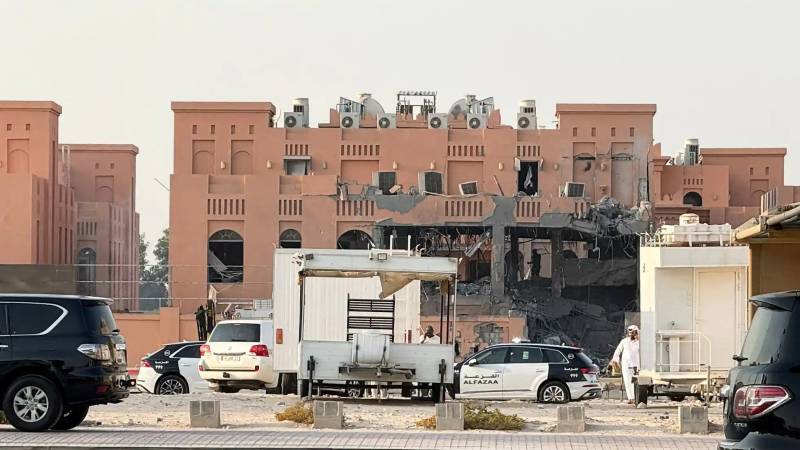
The Israeli strike in Doha earlier this week has shaken the region far beyond its physical impact. The attack reportedly hit a compound where Hamas political leaders were meeting and where US-backed ceasefire ideas were being discussed. For many, the strike was not just about killing militants, it was an attack on Qatar’s long-standing role as a trusted mediator in some of the world’s most sensitive conflicts.
Qatar has spent years building its image as a neutral go-between. It hosted the Taliban–US talks that paved the way for the 2020 withdrawal from Afghanistan. It has held negotiations for Darfur, Chad, Lebanon, and more recently for Gaza. Doha became the place where rivals could sit across the table and where the US could quietly push its diplomatic agenda. That role is not just symbolic, it is a key part of how conflicts are managed in today’s world. Once the safety of the negotiation table is in doubt, diplomacy suffers.
The reaction from Washington and NATO was strong in words but soft in action. They condemned the strike and voiced support for Qatar’s sovereignty, but stopped short of taking steps that might restrain Israel or guarantee the security of Doha as a neutral venue. This gap between language and action raises tough questions: is the US willing to risk its special relationship with Israel to protect its own diplomacy, or will it simply issue statements and move on?
Global media coverage of the Doha strike has also been telling. Many Western outlets presented it mainly as part of Israel’s wider campaign against Hamas, with little focus on the fact that a US-backed peace effort was disrupted. By treating the incident as just another strike, these outlets have lowered the sense of urgency and outrage. Regional media, led by Al Jazeera, has taken the opposite line, framing the attack as a direct assault on Qatar’s sovereignty and a dangerous precedent for all future mediators. These differences shape public opinion and, in turn, the pressure on governments to act. When Western media softens the event, it gives decision-makers more space to avoid hard choices. When Arab media highlights it, Gulf governments are pushed to demand stronger guarantees before hosting future talks.
The Doha attack is not just another episode in the long conflict between Israel and Hamas. It is a warning about the fragility of global diplomacy
Across the Gulf, the diplomatic response has been quick. Qatar convened an emergency Arab–Islamic summit, and the UAE and other Gulf capitals expressed support. The message is clear: if mediators are not protected, regional diplomacy itself is at risk. But the response is not just political, it is also military. Gulf countries are expected to speed up purchases of advanced air defence systems, drones, and surveillance technologies, many of them from NATO suppliers. If they cannot fully rely on American protection, they will invest more heavily in their own ability to deter and defend. It could also signal another round of major arms purchases from NATO countries by Gulf states, a move that will strengthen their defence but also deepen their dependence on Western suppliers.
The deeper cost of the Doha attack is the damage to what we might call the negotiation environment. Ceasefire efforts, prisoner exchanges, and back-channel contacts all depend on a shared belief that mediators can keep participants safe. If negotiators fear being targeted even in a capital closely tied to Washington, they will refuse to travel, refuse to meet, and refuse to compromise. That means more fighting on the ground and fewer opportunities to stop it.
Some will argue that this will blow over, that after a few weeks, talks will resume and the world will move on. But each time such an attack happens, a little more of the trust that makes diplomacy possible is lost. Regional players will rely more on military deterrence and less on US-sponsored dialogue. The cost of building peace will rise, and the space for compromise will shrink.
What needs to happen now is clear. The United States and NATO should make a firm, visible commitment that mediation spaces will be protected. This could include intelligence sharing, air defence coverage, or rapid response measures. International law also needs to be reinforced so that any future strike on a mediator’s territory carries a price, political, economic, or diplomatic. Otherwise, the incentive for such attacks will remain.
The Doha attack is not just another episode in the long conflict between Israel and Hamas. It is a warning about the fragility of global diplomacy. If the world fails to act, the next big roundtable may be replaced by another round of arms deals, and that is a poor substitute for peace.