

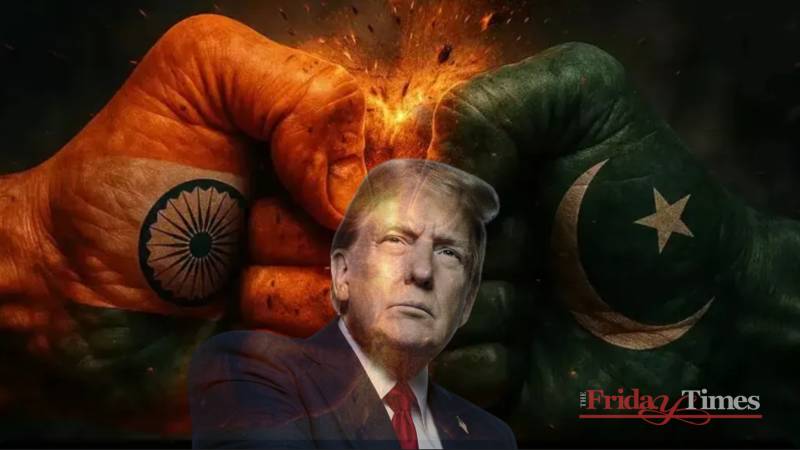
The ceasefire is a big win for Pakistan. This is basic logic since the Pakistani military and Pakistan Air Force had inflicted heavy damage on the Indian Air Force on May 7 and the morning of May 10.
The tweet by US President Donald Trump, which was the first signal of the ceasefire, indicated that India was completely on the backfoot and Indian Prime Minister Narendra Modi wanted a face-saving way out and wanted India to impress upon Pakistan to accept a cessation of hostilities.
Congratulations to all Pakistanis for a major win. India had been pushing for an end to the conflict, especially after the serious beating that India received earlier today from the Pakistan Air Force, and the loss of its Rafales and the S-400 air defence system, not to mention several of its airfields being knocked out. India attacked nine airbases in Pakistan on the morning of May 10, and Pakistan’s Operation Bunyan al-Marsoos targeted over 25 Indian bases and airfields.
Of course, the ceasefire is a desirable option because no one wins in a war. That said, Pakistan has emerged as the winner, not least because the whole world has seen that it has a far superior and technologically advanced military, and in particular, air force. More importantly, Pakistan was able to stand up to a bully and make it back down.
This analysis wouldn’t be complete without a listing of the mistakes and miscalculations that the Indian prime minister made.
A ceasefire was announced within 11-12 hours of Pakistan launching Operation Bunyan al-Marsoos, where considerable damage was inflicted on military targets in Western and Northern India 12
First of all, he approved a false flag operation with the primary aim of blaming Pakistan and gaining further strength with his vote bank ahead of elections. He didn’t agree with Pakistan's offer of a neutral and independent probe. He attacked Pakistan without providing a shred of evidence. He placed too much trust and confidence in the ability and technical prowess of the Indian Air Force.
He vastly underestimated the strength of the Pakistan military and, in particular, its air force (perhaps he was misled by his military advisers on this). Even after the PAF gave the IAF a serious hiding on May 7, Modi kept provoking Pakistan, sending in drones by the dozens. This strategy, if it can be called that, reflected a weakness because it indicated that India didn't want to engage its air force jets, presumably because it was afraid of losing any further aircraft. Despite this, Pakistan chose not to respond, exercising restraint.
Then, Modi decided to attack Pakistan's airbases regardless a total of nine bases were attacked.
And then came the turning point when Pakistan called Modi’s bluff. This led to Operation Bunyan ul-Marsoos, and Pakistan’s response was strong and decisive, and it had over 25 military targets in India, which were attacked. The attacks on Pakistan’s airbases were a particularly bad miscalculation by Modi, not least because Pakistan called his bluff and responded strongly and decisively.
The Pakistan military and Pakistan Air Force took out several airfields, airbases, military installations, supply depots, and other military infrastructure. Eventually, Modi had no choice but to save face and involve America to push Pakistan for a cessation of hostilities.
And a ceasefire was announced within 11-12 hours of Pakistan launching Operation Bunyan al-Marsoos, where considerable damage was inflicted on military targets in Western and Northern India 12.
Moving forward, the DGMOs of both India and Pakistan will be meeting on Monday. US Secretary of State Marco Rubio, who played a key role in all this, has tweeted details to the effect that the Governments of India and Pakistan have agreed “to an immediate ceasefire and to start talks on a broad set of issues at a neutral site”. Perhaps the biggest loss for India is that now it will have to sit with Pakistan and try and resolve all issues that cause conflict between the two countries - something that Modi had been resisting ever since he became Prime Minister of India.
What we also need to ensure moving ahead is that these talks include Kashmir, since that is the source of conflict between the two countries. In addition to that, India will have to agree that anytime something bad happens in Indian Occupied Kashmir or in India, it should desist from blaming Pakistan and should agree to a neutral and independent probe – if India does not agree to that, then whenever an incident like Pahalgam happens, there will be the danger that a stubborn BJP-led India will repeat what it has done always till now.