

During any conflict, the moments which warrant the closest scrutiny are often only visible once the dust settles and the states involved realise that some of their actions, justified in the moment, could have ultimately resulted in disaster. In this respect, these critical points are not necessarily announced; they often play out through signals.
These signals can be military deployments, diplomatic manoeuvring, or carefully chosen words which hint at what comes next. Each of these developments, on its own, can be explained as routine crisis management; however, when several of these begin to appear at once within a short window of time, they require reflection and course correction.
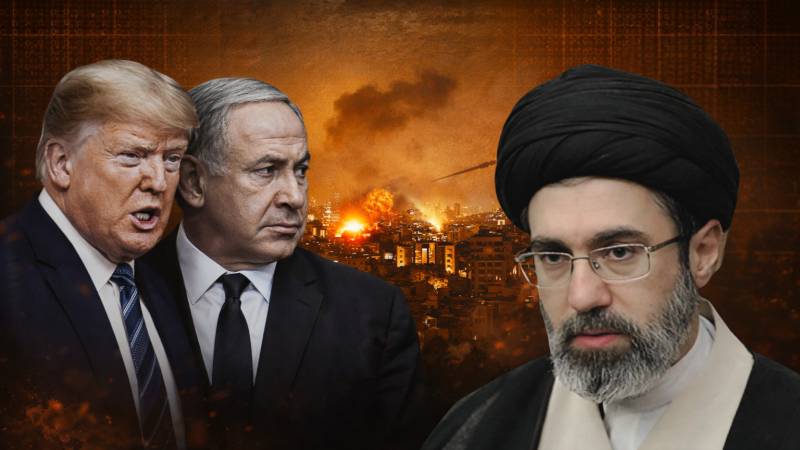
In the ongoing confrontation in the Middle East between Iran, the US, and Israel, a number of these signals emerged. On their own, none are too escalatory; however, their proximate timeframe could potentially point towards moments of heightened risk, especially when the language and infrastructure associated with nuclear armament become apparent.
Perhaps the most striking development in this regard is the reported sighting of the US Navy’s E-6B Mercury aircraft. This particular aircraft, as part of the US’s airborne nuclear command and control system, does not have an active combat role but ensures that orders from the commanders can reach submarines and the strategic forces should ground-based command centres prove to be ineffective.
These aircraft are rarely seen out for routine practices, as their mere presence can lead to strategic speculations. When they appear within the context of an active conflict, they inevitably draw scrutiny owing to their intended function.
This development, even on its own, is quite symbolic; however, in this case, this has been accompanied by diplomatic manoeuvring, suggesting growing concerns about the potential escalation of the conflict. The US has actively reduced its diplomatic presence across several Middle Eastern countries in the past few days.
This includes the withdrawal of non-essential embassy staff and family members, not only from regional states like Saudi Arabia, Bahrain, Iraq, Oman, Qatar, Turkey, and the UAE, but also from extra-regional countries like Cyprus and Pakistan. The US government has also advised its citizens to leave the region as soon as possible.
In a war where the US President appears to have underestimated Iran’s capability for retaliation, the temptation to seek a decisive demonstration is always there, especially when combined with the other signals identified above
Such measures are not unprecedented during active conflicts. Governments routinely reduce their diplomatic presence and operations during rising instability. Yet the scale of the current drawdown across much of the region does raise some concern. Such evacuations are meant to protect American officials and limit exposure to American citizens if the hostilities escalate. However, they also reflect the government’s caution, suggesting that the security environment could deteriorate further.
The third signal in this regard comes from rhetoric. The US demand for an ‘unconditional surrender’ by Iran is reminiscent of another time this exact term was used. The Potsdam Declaration, signed on 26 July 1945, called on Japan to proclaim the ‘unconditional surrender’ of all armed forces. When the Japanese forces did not bow to the pressure, the world saw the first and only use of nuclear weapons.
While the geopolitical patterns of these two developments are not the same, and there has been a taboo on the use of these weapons since that time, the rhetorical parallels still matter. Historically, this language has been associated with ‘total war’, and the fact that the US is invoking similar language vis-à-vis Iran could be another potential cause for concern.
The current US leadership is introducing additional uncertainties as well. President Donald Trump’s conduct during this war has drawn a lot of scrutiny and speculation as to his rationality, which is a prerequisite for deterrence to work.
President Trump’s approach towards the resolution of the conflict has focused on displays of American strength alongside personal victory and glorification. In a war where the US President appears to have underestimated Iran’s capability for retaliation, the temptation to seek a decisive demonstration is always there, especially when combined with the other signals identified above.
The silver lining the world can draw on is that the US system is built on several checks and balances, and it is extremely difficult for any one person to take a decisive action, despite any temptation. Additionally, the consequences of breaking the seventy-five-year-old nuclear taboo may outweigh the perceived benefits in the security calculus of the state.
Catastrophes rarely happen owing to a single dramatic decision. It is rather the culmination of a series of events and actions, all of which, at the time, appear to be the most rational of choices. Thus, when the language and infrastructure associated with nuclear armament begin to make an appearance during an active conflict, the world would be wise to pay attention and course correct so that history continues to pay homage to the restraint rather than bearing witness to the devastation which could engulf the entire planet.