

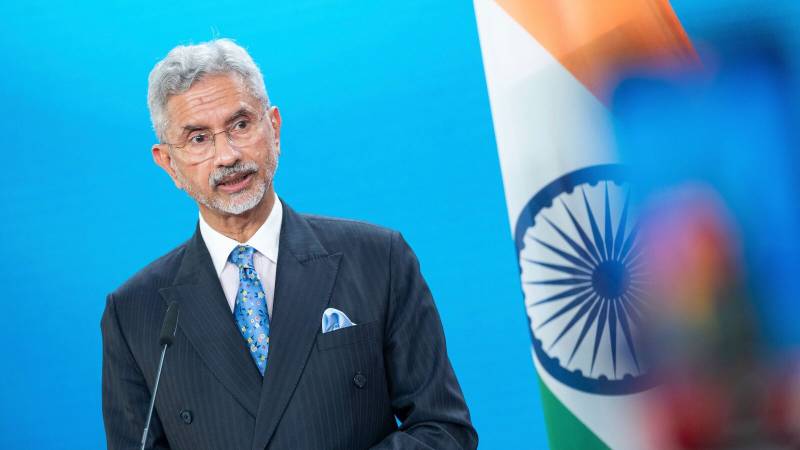
Indian External Affairs Minister S. Jaishankar recently made highly controversial remarks regarding Azad Jammu and Kashmir (AJK), describing it as a “stolen” part of India that should be brought back into the Indian Union. His statement not only reflects an aggressive diplomatic stance but also escalates tensions between India and Pakistan. These two nuclear-armed neighbors have already fought three wars over the disputed region of Jammu and Kashmir. Such rhetoric is not only provocative but also in direct violation of international norms and the United Nations’ resolutions, which advocate a peaceful and democratic resolution to the Kashmir dispute.
India took a unilateral and contentious step in August 2019 by revoking Article 370 of its constitution, thereby stripping Jammu and Kashmir of its special status and converting it into a union territory. This move was widely condemned as a breach of international law, as it disregarded the UN resolutions that call for a plebiscite in Jammu and Kashmir to determine its future. By making such statements about AJK, Jaishankar is reinforcing an ultra-nationalist narrative that fuels hostility instead of fostering diplomatic engagement.
Pakistan has strongly objected to Jaishankar’s remarks, viewing them as yet another indication of India’s aggressive posture under the leadership of Prime Minister Narendra Modi. Pakistan has long accused India of interfering in its internal affairs, particularly in Balochistan and Khyber Pakhtunkhwa (KP), by allegedly supporting non-state actors to destabilise the country. The case of Kulbhushan Jadhav, an Indian spy arrested in Pakistan and currently in custody, is often cited as evidence of India’s covert operations. Jaishankar’s statements only add to these concerns, thus, further straining relations between the two South Asian rivals.
If the Indian government believes it can reclaim AJK through military means, it is making a grave miscalculation. Any such attempt would undoubtedly trigger a war between the two nations
Importantly, when Jaishankar attended the SAARC summit in Islamabad last year, there was a sense of optimism among pro-peace groups that India and Pakistan might take steps toward resolving outstanding issues and exploring avenues for trade and cultural exchange. However, despite Pakistan’s willingness to engage in meaningful dialogue, India’s belligerent approach has dashed such hopes. Rather than promoting diplomacy, Indian leadership appears to be taking a hardline stance that undermines regional stability.
For the sake of long-term peace and socioeconomic prosperity, New Delhi needs to adopt a more pragmatic and responsible approach. As a larger country in terms of population, economic strength, and global influence, India has much to gain by engaging with its neighbors, particularly Pakistan, constructively. Hence, confidence-building measures (CBMs) are essential to discussing contentious issues such as Jammu and Kashmir, without resorting to inflammatory rhetoric.
From Pakistan’s perspective, economic constraints make it even more logical to seek commercial engagement with India under a mutually agreed framework. However, aggressive remarks rooted in hyper-nationalism would only push both sides further apart. If the Indian government believes it can reclaim AJK through military means, it is making a grave miscalculation. Any such attempt would undoubtedly trigger a war between the two nations, and given Pakistan’s limited conventional capabilities, the conflict could escalate into a nuclear confrontation. This outcome would be catastrophic for the entire region.
Major global powers, particularly the United States and China, have a crucial role to play in preventing further deterioration of India-Pakistan relations. They must urge India to refrain from provocative statements and instead focus on finding a UN-oriented resolution to this lingering dispute. The international community should also remind India that peace in South Asia is essential not only for regional stability but also for broader global security.