

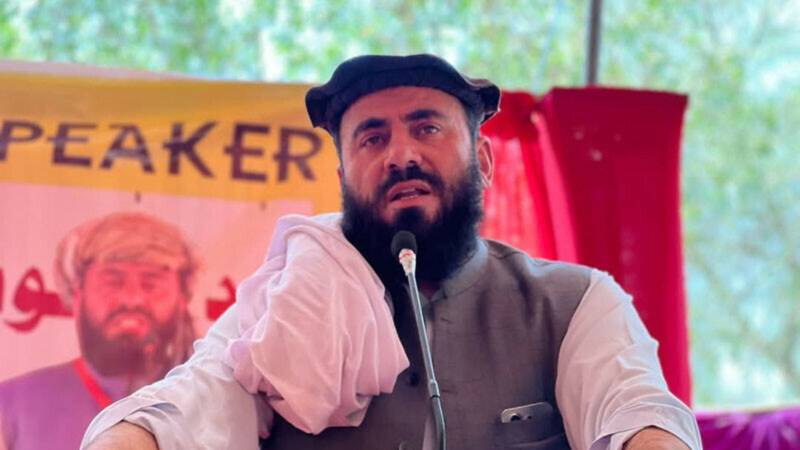
Shot on 10 July 2025, Maulana Khan Zeb was a rare voice of reason and restraint in Khyber Pakhtunkhwa’s increasingly volatile landscape. A deeply respected religious scholar from Bajaur, he dedicated his life to education, cultural preservation, and the empowerment of Pashtuns through knowledge. His 438-page book, Bajaur Da Tarikh Pah Rana Ke (“Bajaur in the Light of History”), offered a meticulous chronicle of the region’s 4,000-year legacy and earned acclaim in literary circles for safeguarding the heritage and traditions of his people.
A vocal proponent of mother-tongue education, he advocated for making Pashto compulsory in schools as a child’s constitutional right, critical for nurturing their intellect. As a central figure in the Awami National Party (ANP), Maulana Khan Zeb stood within the progressive tradition of Pashtun nationalism. He ran for office under the ANP banner in the 2024 elections and chaired the party’s district council in Bajaur, advocating reform through political and academic engagement. His other works, such as Shtamana Pakhtunkhwa (“Prosperous Khyber Pakhtunkhwa”), reflected his belief in development through dignity and respect. Amidst the din of extremism, he reminded his people that Pashtunwali honours dialogue and learning—not violence.
However, while leaders like Maulana Khan Zeb championed peace through books and ballots, Islamabad’s leadership adopted an experiment that ultimately proved fatal. Beginning in 2021, then Prime Minister Imran Khan, along with Army Chief General Qamar Javed Bajwa and ISI chief General Faiz Hameed, decided to allow thousands of TTP militants to return from Afghanistan and resettle inside Pakistan. The rationale was simple—some might say simplistic: give them a second chance, and peace might follow.
Khan defended the move in interviews, claiming the fighters had “nowhere to go” after the Afghan war ended and that all stakeholders had agreed rehabilitation was preferable to elimination. However, the Taliban viewed the invitation not as a sign of reconciliation but as an opportunity to gain leverage. They regrouped, refused to disarm, and resumed attacks across KP with renewed intensity. Prime Minister Shehbaz Sharif later questioned the dangerous optimism: Who said these jihadis were friends of Pakistan?
Constitutional intervention by parliamentary stakeholders must be considered if lives are to be saved and security is to be restored
Even PTI’s own Shireen Mazari confirmed that General Bajwa proposed the plan in August 2021 with General Faiz’s support. While a committee was meant to design a reintegration roadmap, no such framework materialised. Imran Khan’s government lost a parliamentary vote of confidence in April 2022—but the militants stayed. And so did the carnage.
In 2023, KP faced 563 terror incidents, with police being the primary target in 243 of them. In 2024, 636 attacks were recorded by the Counter-Terrorism Department (CTD), martyring 142 police officials. As of today, nearly 300 acts of terrorism have already occurred. These men and women—outgunned and often undertrained—remain KP’s first line of defence. Yet they carry on, risking their lives daily to shield communities from escalating violence.
Prime Minister Shehbaz Sharif disclosed that since 2010, Rs 417 billion had been transferred to KP under special anti-terror allocations—about Rs 40 billion annually through the National Finance Commission. These funds were intended to equip police, expand the CTD, and modernise intelligence capabilities. And yet, provincial authorities complained of lacking even basic infrastructure. Where did the money go? The billion-rupee question remains unanswered.
The Pakistan Tehreek-e-Insaf (PTI), having ruled KP for more than a decade, squandered opportunity after opportunity. As bombs went off in Swat, they were hosting dharnas in Islamabad. As families mourned in Peshawar, they were preparing for long marches. The province needed policy and resolve—but what it got were slogans and hashtags.
Meanwhile, as security collapsed, families fled. Minorities, especially Sikh and Hindu communities, relocated to Punjab, Sindh or abroad. Educated youth left for Islamabad, Lahore or Dubai, unwilling to bet their futures on a government that could not ensure safety. The state’s credibility has haemorrhaged. Even basic services are stalled, and development projects remain frozen in time.
It does not help when scapegoating distorts the debate. Some pseudo-nationalist commentators keep blaming “Punjab” or “the centre” for everything. This narrative misguides public frustration and fractures national unity. The militants murdering Pashtuns are not Punjabi bureaucrats—they are Afghan-based extremists. Blaming other provinces ignores the real enemy and fosters pointless divisions.
Leadership means presence, not platitudes. When violence surges, ministers must be in the field, coordinating relief and raising morale, not throwing tantrums on television. Compare this to the late Bashir Bilour, who led from the front. KP’s current cabinet, by contrast, has often been absent.
This cannot continue. If the provincial government remains trapped in theatrics, then other parties in the parliament must act. Constitutional intervention by parliamentary stakeholders must be considered if lives are to be saved and security is to be restored. KP has bled enough. It voted for change, but got chaos. It deserves leadership, not negligence.
Maulana Khan Zeb's legacy offers a direction rooted in dignity, knowledge and peace. The current leadership offers excuses, indifference, and a lack of initiative. That contrast should alarm every citizen. Because, as Pashtuns say, “Ka che da war na awsa, pa guerra ba ye khrasa”—if you do not extinguish the spark, you will burn in the blaze.
The spark is already lit. If PTI’s non-serious incompetence does not extinguish it, someone else must.