

For more than a century, the Nobel Peace Prize has been one of the most recognisable honours on the planet. Its roll-call ranges from Henry Dunant and the Red Cross to Martin Luther King Jr., Malala Yousafzai and the International Campaign to Abolish Nuclear Weapons. Since 1901, the prize has been awarded 106 times to 143 laureates (including 112 individuals and 31 organisations).
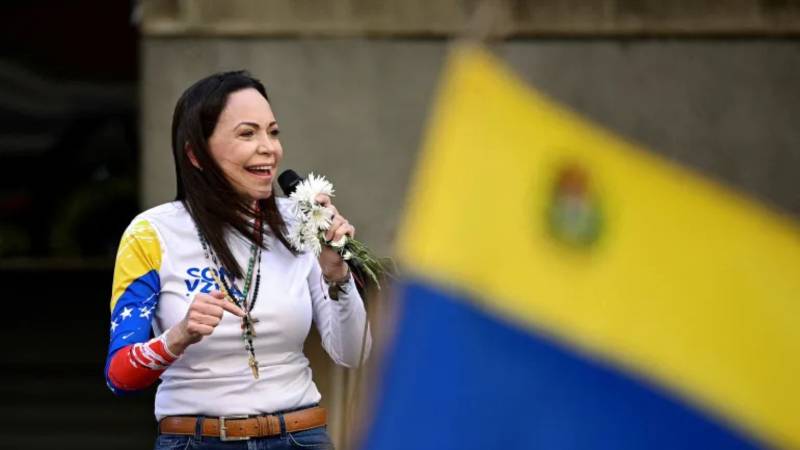
In 2025, the spotlight fell on Venezuelan opposition leader María Corina Machado, honoured “for her persistent struggle to promote democratic rights in Venezuela” and her advocacy of a peaceful transition from dictatorship. Her selection arrived in a politically super-charged atmosphere: U.S. President Donald Trump was openly campaigning for the prize; wars in Gaza and Ukraine dominated headlines; and global trust in institutions was fragile.
The debate around Machado’s award captures the broader crossroads at which the Peace Prize finds itself. To understand the authenticity, problems and expectations now attached to it, we need to look at its roots, how it is decided, what it actually does in the world, and why public opinion about it is so divided.
Alfred Nobel’s will asked that a portion of his fortune go each year “to the person who shall have done the most or the best work for fraternity between nations, for the abolition or reduction of standing armies and for the holding and promotion of peace congresses.” The Peace Prize is the only Nobel awarded in Oslo rather than Stockholm, and it alone can go to organisations as well as individuals.
Over the years, the Nobel Committee has interpreted “peace” broadly. It has honoured traditional diplomats and mediators like Theodore Roosevelt, Woodrow Wilson; organisations such as the United Nations, the ICRC and UNHCR, human-rights and democracy activists like Liu Xiaobo, Aung San Suu Kyi, Nelson Mandela, Narges Mohammadi, Ales Bialiatski; and norm-changing campaigns such as Al Gore for work on landmines, nuclear weapons and climate change.
Critics argue that this expansion sometimes stretches Nobel’s original intent from concrete achievements—ending a war, disarming an army—towards more symbolic recognition of “good causes.” Supporters respond that modern peace is inseparable from human rights, environmental security and global governance, and that the Committee has sensibly adapted Nobel’s 19th-century language to 21st-century realities.
The Nobel Peace Prize doesn’t stop wars on its own, but it can amplify marginalised voices, shift debates, and stiffen the resolve of those fighting for peace and rights
The Nobel Peace Prize is decided by a five-member Norwegian Nobel Committee, appointed by the Norwegian Parliament, based on nominations from thousands of qualified people worldwide (governments, MPs, heads of state, professors, peace-institute directors, and past laureates). The system is designed for authenticity: the Committee only evaluates, does not self-nominate; it follows strict timelines and long deliberations; and all nominees and discussions are kept secret for 50 years.
But this secrecy is double-edged: while it protects independence, it also fuels suspicion, especially when politicians publicly announce their nominations (like Netanyahu nominating Donald Trump) and then use the prize politically. On top of that, the fact that just five Norwegians—appointed by one national parliament—decide a global peace award raises questions about Euro-Nordic bias and representativeness.
Public opinion on the Nobel Peace Prize is mixed. Surveys show only about 40% of British adults think it usually goes to deserving people, almost one-fifth disagree, and many simply don’t know—suggesting its prestige is respected but not unquestioned. Among younger people, however, it still ranks as one of the most impressive honours in the world, alongside Olympic medals and military awards, so its symbolic power remains strong but contested.
Research shows the prize can have a real impact, especially in the short term: for example, when it goes to women’s rights activists, support for women’s organisations rises, and violence against women can temporarily decline. But these effects tend to fade unless they are backed by concrete policies and institutions, making the prize more of a powerful spotlight than a solution.
The 2010 award to imprisoned Chinese dissident Liu Xiaobo illustrates this: it angered the Chinese government and led to censorship and diplomatic pressure, yet the empty chair in Oslo became a lasting symbol of resistance, putting China’s democracy movement firmly on the global moral map. Overall, the Nobel Peace Prize doesn’t stop wars on its own, but it can amplify marginalised voices, shift debates, and stiffen the resolve of those fighting for peace and rights.
The Nobel Peace Prize has long been dogged by controversy, which even the Nobel Foundation openly acknowledges. Critics usually focus on three recurring issues.
First, “wrong person” complaints: Some awards, like the 2009 prize to Barack Obama, less than a year into his presidency, are seen as premature, i.e., rewarding hopeful intentions rather than concrete results, especially while wars (Iraq, Afghanistan) and later drone campaigns continued.
Second, “obvious omissions”: The clearest case is Mahatma Gandhi, nominated several times but never honoured; the Committee even later admitted this was its “greatest omission.” Such gaps reinforce the idea that politics and timing shape decisions as much as merit.
Third, “Western or ideological interference”: Prizes to dissidents such as Liu Xiaobo, Aung San Suu Kyi and Narges Mohammadi are hailed by human-rights advocates but condemned by their governments as Western meddling. China’s harsh reaction to Liu’s award is a classic example. Many in the Global South also see a Western bias, quicker to celebrate critics of non-Western regimes or Western leaders’ diplomacy than grassroots peacebuilders in Africa, Asia or Latin America.
The 2025 prize for María Corina Machado fits its tradition of backing non-violent dissidents under authoritarian rule, but feels out of step with those who wanted conflict mediators
The 2025 Nobel Peace Prize went to María Corina Machado, a long-time Venezuelan opposition leader, honoured for her non-violent struggle to defend democratic rights, support fair elections through Súmate, and keep resisting despite threats, disqualification and periods in hiding. In a country facing repression, economic collapse and mass emigration, supporters place her in the same tradition as Andrei Sakharov, Liu Xiaobo and Narges Mohammadi, i.e., dissidents confronting authoritarian rule.
But the award is contentious. First, 2025 is dominated by wars in Gaza, Ukraine and Sudan, so many expected mediators like António Guterres or Qatar to be recognised instead; critics see Machado’s selection as a mis-prioritisation. Second, Donald Trump’s aggressive campaigning for the prize, backed by nominations including one from Benjamin Netanyahu, turned the choice into a proxy battle over Trump’s diplomacy versus dissident activism, feeding perceptions of politicisation.
Third, Machado’s support for harsh U.S. sanctions and hints at foreign intervention raise questions about moral coherence: some argue that honouring someone linked to policies that hurt ordinary Venezuelans sits uneasily with a peace prize and may harden positions rather than aid a negotiated transition. Her dramatic absence from the Oslo ceremony—her daughter accepted the prize while she reportedly fled by boat—reinforces the pattern of the Nobel spotlighting unresolved struggles rather than celebrating completed peace.
A more credible Nobel Peace Prize in future would do a few things more clearly. First, it should spell out what it is mainly rewarding in any given year, concrete results like ending wars, courageous witness by dissidents, or long-term norm-building on issues like climate or women’s rights—so people aren’t guessing what “the most or the best work” means. Second, it should balance prizes for symbolic dissidents with recognition for mediators, negotiators and peacekeeping organisations, instead of letting one type of peace work dominate.
Third, while the Committee will always be Norwegian, it can listen more broadly to scholars and civil society voices, especially from the Global South, to reduce perceptions of Western bias and avoid overlooking local peacebuilders. Fourth, without scrapping the 50-year secrecy rule, it could offer deeper, more rigorous public explanations of each award and retrospective reviews of older decisions to show how it weighs competing claims. Finally, the prize should be better linked to practical follow-through, using its prestige as a springboard for governments, donors, NGOs and media to give sustained support to laureates so that the symbolic spotlight turns into durable change.
The Nobel Peace Prize is not a neutral, technical verdict but a moral and political signal from Oslo to a turbulent world. It has honoured giants like Martin Luther King Jr. and Nelson Mandela, overlooked figures like Gandhi, puzzled people with choices like Obama, angered powers like China, and boosted causes from nuclear disarmament to girls’ education while often being accused of bias, hypocrisy and naivety.
The 2025 prize for María Corina Machado fits its tradition of backing non-violent dissidents under authoritarian rule, but feels out of step with those who wanted conflict mediators, stronger Global South representation, or recognition of peace already achieved, not just hoped for. In the end, the prize is best seen neither as sacred nor meaningless, but as a contested global ritual that forces us to ask what peace means, whose struggles matter, and what compromises justice allows, and its greatest strength may lie in keeping those difficult