

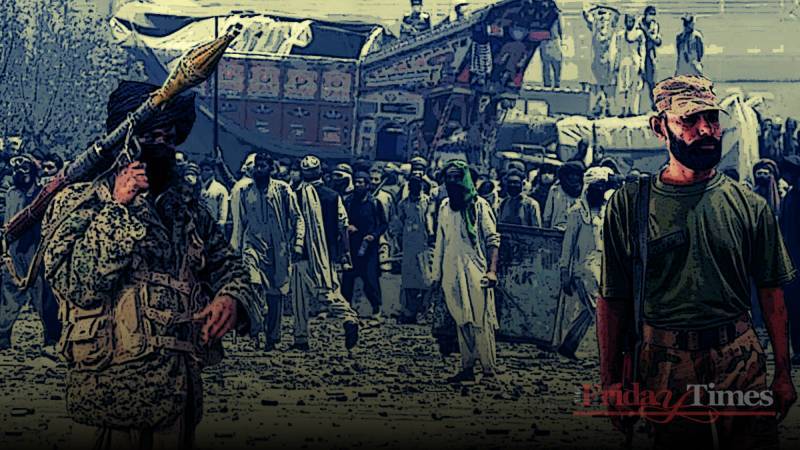
Terrorism is not just measured in body counts. Pakistan’s militants understand this well: by setting off bombs that rarely kill but always terrify, they tighten their grip on communities, drive away investment, and slowly bleed the state’s authority.
From January through June this year, in addition to deadly attacks that claim lives, Pakistan has faced a steady wave of non-lethal but deeply disruptive violence — primarily sabotage and kidnappings — that rarely makes headlines and is barely tracked by conventional security reporting. Adding to this hidden war is a recent claim, circulated by Baloch separatists, that the Balochistan Home Department itself reported a 45 per cent surge in violence in the first half of 2025. According to this claim, 501 armed attacks left 257 dead and nearly 500 injured. So far, no official confirmation or denial has come from the actual provincial department — raising the possibility that insurgents are blending physical attacks with propaganda warfare to spread fear and contest the state’s narrative.
Over just six months, Pakistan recorded at least 289 sabotage incidents — from highway bombings to arson attacks — showing how militant groups adapt to inflict damage far beyond the battlefield. Balochistan remains the epicentre, with 168 sabotage attacks, many linked to the Baloch Liberation Army (BLA). Their tactics include raiding army camps, stealing rifles, and sabotaging banks, highways, coal mines, and factories — targeting the arteries of Pakistan’s struggling economy. In one district, Khuzdar alone saw 43 such attacks, followed by Kech, Gwadar, and Quetta — all key zones for the China–Pakistan Economic Corridor.
Khyber Pakhtunkhwa saw 99 sabotage incidents, many involving the Tehrik-i-Taliban Pakistan (TTP) and Afghan-based militants slipping across the border. They raided houses, hit security checkposts, and bombed gas pipelines — a tactic once mostly confined to Baloch insurgents but now echoing in Punjab’s Rajanpur district too. This overlap suggests possible tactical learning or imitation between groups, despite distinct ideologies.
The Islamic State of Khorasan Province recently declared its war against Baloch separatists, turning Balochistan’s already tangled conflict into an even deadlier battleground
Punjab and Sindh saw fewer attacks — 12 and 8, respectively — but the spread is worrying. Dera Ghazi Khan alone accounted for three-quarters of Punjab’s incidents, with sabotage of pipelines and schools. In Sindh, attacks targeted police posts, trains, and political figures’ homes. Even Islamabad and Gilgit-Baltistan, usually calmer, reported single but symbolic sabotage attempts: a police post and a polio team vehicle.
A closer look at sabotage methods shows a hybrid insurgency model: low-cost arson and grenade attacks paired with complex operations like improvised explosive devices (IEDs), rocket fire, and suicide vehicle bombs. In Balochistan, 102 sabotage cases were studied in detail: arson alone damaged 39 properties, while grenade attacks and armed raids remain common. In Khyber Pakhtunkhwa, IEDs and suicide bombings caused significant destruction, with just two suicide attacks alone wrecking 13 buildings. Militants have even deployed quadcopters — drones once used by United States forces in Pakistan’s tribal areas — turning the same tool back on the state.
Parallel to sabotage, kidnapping remains a powerful psychological weapon. Seventy-one people were abducted in the first half of 2025 — 59 in Khyber Pakhtunkhwa, 12 in Balochistan. Lakki Marwat was the hardest hit, with 38 victims, mostly labourers — likely targets for forced recruitment or extortion. Police officers, a soldier, and government workers were also taken, sapping morale and giving militants leverage for propaganda or prisoner swaps. In Balochistan, kidnappings of students, contractors, and customs officials show how even the mere threat of abduction can paralyse daily life.
Complicating this bleak picture are longstanding allegations by groups like the Baloch Yakjehti Committee, which accuse Pakistan’s security forces of enforced disappearances — a claim the government denies. For over 15 years, the BYC has staged sit-ins demanding the recovery of missing persons, yet the protests remain unresolved. Meanwhile, a murky network of so-called ‘death squads’ — believed to be pro-government militias — is also blamed for abductions and targeted killings, adding another layer of fear to daily life.
And in a new twist, the Islamic State of Khorasan Province recently declared its war against Baloch separatists, turning Balochistan’s already tangled conflict into an even deadlier battleground.
Pakistan’s security challenge today is not just bombs that kill. It is sabotage that stops a convoy, kidnappings that silence a village, and propaganda that bends the truth to breed fear. This hidden war rarely makes the front page, yet it steadily undercuts the state’s ability to govern, attract investment, and protect its people.
It is time Pakistan — and its allies — looked beyond the body count. Breaking this cycle demands more than force. It needs region-specific strategies that blend security operations with economic development, community trust, and credible information campaigns to reclaim both physical and psychological ground. Otherwise, the silent war of sabotage and fear will keep bleeding the country dry.