

Pakistan’s monsoon season from June to August 2025 has exposed numerous vulnerabilities. Catastrophic cloudbursts and floods have claimed hundreds of lives and displaced hundreds of thousands, while the state continues to face a debt crisis, constrained governance and dwindling resilience. Confronting this is not a matter of pity but of urgent institutional reform.
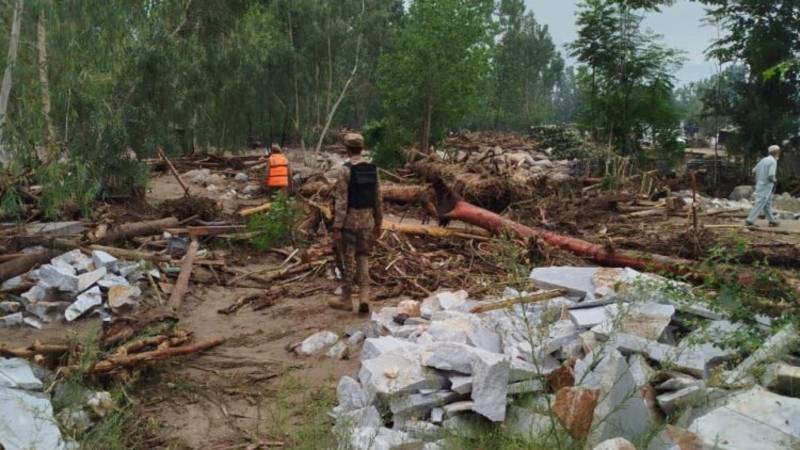
Cloudbursts are sudden, intense downpours of more than 100 millimetres per hour in a small area. This year, they devastated regions such as Buner, where over 150 mm of rain fell in a single hour, triggering flash floods, killing more than 200 people and leaving many still missing. Overall, by 22 August, the United Nations Office for the Coordination of Humanitarian Affairs (OCHA) reported 785 deaths, over 1,000 injuries, damage to nearly 4,700 homes, 234 bridges and more than 661 kilometres of road. Livestock losses exceeded 5,400 animals, undermining agriculture and rural livelihoods.
Such storms are not merely heavier rain; they are concentrated torrents that overwhelm terrain and infrastructure within minutes. Their localisation means radar networks can miss them until it is too late, and traditional flood warnings designed for river basins fail to capture the explosive intensity of these events.
Punjab has borne its worst flood in decades. Heavy monsoon rains, combined with water releases from Indian dams, submerged over 1,400 villages and displaced nearly 1.2 million people. More than 15 lives were lost in this province alone, while flood-borne diseases triggered hospital emergencies. The nationwide death toll has surpassed 800, with Khyber Pakhtunkhwa hit particularly hard. In cities such as Lahore and Karachi, drainage systems collapsed, and knee-deep water paralysed daily life, spreading sewage and sparking a surge in cholera and diarrhoeal disease. Hospitals, already overstretched, reported shortages of clean water and antibiotics. UN agencies have warned that children are at heightened risk of malnutrition and infection as displaced families crowd into temporary shelters without sanitation.
These disasters reflect more than natural fury. Climate change is amplifying monsoon extremes. Scientific attribution studies have shown that human-induced warming has increased the intensity and frequency of extreme rainfall in South Asia, and that Pakistan is now entering an era where what was once considered rare can occur regularly. A warmer atmosphere holds around seven per cent more moisture per degree Celsius, providing the fuel for convective storms that release sudden ‘rain bombs’. This science explains why cloudbursts, once freak occurrences, now punctuate almost every monsoon season. Yet the governance framework remains locked in outdated assumptions.
Either Pakistan reforms for resilience, or it will face repeated calamities in a hotter, wilder monsoon era
Early warning systems are configured for basin-scale floods with days of lead time, not the hours or minutes that matter with convective bursts. Reservoir release protocols remain opaque; in Punjab, sudden discharges from upstream dams exacerbated downstream flooding, yet notification was inconsistent and reactive. Land-use planning failures are equally stark: in mountain valleys, hotels and markets have been built directly on flood channels; in cities, unchecked encroachment on drains and floodplains magnifies disaster. The outcome is predictable – natural hazards convert into state failures.
The policy response must encompass four reforms. Cloudburst nowcasting must be institutionalised under the Pakistan Meteorological Department (PMD) and the National Disaster Management Authority (NDMA). Radar, satellite and local rainfall gauges should feed into threshold-based alerts that are automatically transmitted to communities. This will shift the response from reaction to anticipation. Reservoir management must become transparent and coordinated. Legal mandates should require real-time release notifications, provincial acknowledgement and public dashboards. Only such clarity can prevent downstream surprises that cause avoidable harm.
Land-use regulation must be enforced. Construction in flood-prone and unstable areas must be banned. Tourist infrastructure in corridors like Buner and Babusar should undergo risk audits. In cities, floodplain buffers and permeable infrastructure must be restored to absorb deluges. Finally, nature-based resilience must be scaled. Slope stabilisation, reforestation and wetland buffers in headwater regions remain among the most cost-effective mitigations. These measures complement technology with a sustained environmental absorption capacity.
But these solutions are not hypothetical. They are administratively feasible within existing government mandates and budgets. Weaknesses in current systems, not a lack of capacity, are failing citizens. The UN has emphasised that anticipatory action can save lives at a fraction of the cost of post-disaster relief, yet Pakistan spends the bulk of its funds after calamities strike.
Meanwhile, Pakistan’s economic backdrop deepens urgency. The country faces over US$23 billion in external debt repayments in the 2025–26 fiscal year—almost half its federal budget. Public debt stood at approximately PKR 76 trillion by March 2025, with external obligations rising steadily while domestic borrowing dominates. Half of federal revenue is consumed by debt servicing, leaving little for health, education or disaster response. Rating agencies have warned of severe external financing risks unless structural reforms are adopted. These floods will add billions to repair costs, diverting funds that could have strengthened resilience. Each monsoon disaster, therefore, accelerates the debt spiral, as emergency imports and reconstruction inflate deficits.
Flood losses – to lives, livelihoods, infrastructure and agriculture – only worsen Pakistan’s fiscal strain. They make long-needed reforms harder. But they also underline that the choices ahead are clear. The government must recalibrate: from indebted inaction to climate-aware governance. The alternative is a continuous loop where floods destroy, the state borrows to rebuild, and the next season erases progress again.
Pakistan now stands at a crossroads. It can continue treating each flood as an isolated catastrophe, drowning in debt and delayed response. Or it can modernise its disaster protocols, manage water with transparency, enforce planning that respects nature’s paths, and invest in ecological buffers. Doing so will require political will and public accountability, not more loans on sustainability-free terms. As the waters recede and the monsoon fades, the country must not drift back into denial. Either Pakistan reforms for resilience, or it will face repeated calamities in a hotter, wilder monsoon era. The cost of inertia is too high to pay.