

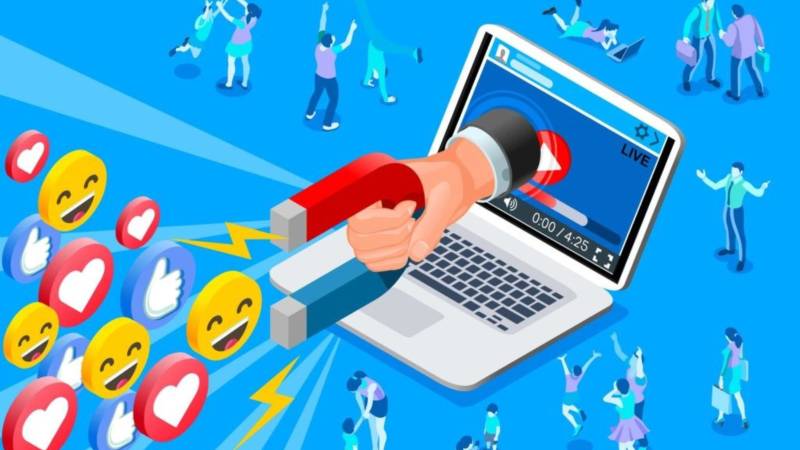
Social media has shifted from a pastime to a parallel economy in Pakistan. Platforms like TikTok, Instagram, and YouTube are no longer just outlets for expression; they are arenas where fortunes are made, careers launched, and influence monetised. Ten years ago, young people aspired to become doctors, engineers, or civil servants. Today, they increasingly aspire to become content creators. This change reflects not only global digital trends but also deeper local realities—slumping university enrolments, weak job markets, and the lure of fast success.
A New Aspirational Pathway
Pakistan is home to one of the world’s youngest populations, with nearly 65 percent under the age of 30. Internet penetration has climbed to over 57 percent in 2025. TikTok alone now has more than 60 million active users in the country, while YouTube’s reach is estimated at over 70 million.
This expansion has created an entire ecosystem of influencers—individuals who monetise creativity, humour, lifestyle, or commentary. Unlike traditional professions that require years of training, success online can hinge on a single viral video.
For many, especially from lower socio-economic backgrounds, this pathway is appealing. Graduate unemployment continues to pose a structural challenge: more than 30 percent of university graduates remain jobless in 2025. In such an environment, the sight of peers earning through brand sponsorships or platform monetisation strengthens the perception of digital influence as a viable career.
Reality Versus Perception
The reality, however, is narrower. While success stories abound, consistent financial stability is limited. PTA’s 2025 report notes that fewer than 2 percent of digital creators earn above a professional wage level.
By choosing transparency over expediency and aligning endorsements with audience realities, influencers can evolve into constructive role models
Regulators have begun to intervene. The National Cyber Crimes Investigation Agency (NCCIA), created in 2024, has opened cases into undisclosed sponsorships, misleading advertising, and the promotion of illegal gambling platforms by influencers. These investigations highlight the emerging need to regulate influence not only as an economic sector but as a matter of public accountability.
Meanwhile, university enrolments have stagnated. HEC’s 2024–25 statistics show declining admissions in private universities, where rising costs and weak job prospects are undermining confidence in higher education.
Influence Beyond Entertainment
Influencers today do more than entertain; they shape purchasing decisions and trends. Endorsements in fashion, technology, or wellness carry credibility for millions of young followers. Yet recent NCCIA actions demonstrate how easily audiences can be swayed by paid promotions that may not always align with consumer protection standards.
Authenticity matters. With such wide reach, influencers hold responsibility to promote products and partnerships they genuinely use or understand. Misaligned collaborations not only mislead but erode long-term trust with audiences.
The Generational Mirror
The influencer economy mirrors the ambitions and insecurities of Pakistan’s youth. It represents opportunity in a stagnant job market, access for brands to young consumers, and visibility for voices outside traditional platforms. But it also raises broader questions about what kind of futures young people aspire to build.
Behind every viral success are thousands of creators struggling to monetise their work. The danger is that the promise of overnight fame overshadows the longer-term importance of education, training, and sustainable skill development.
Toward Responsible Influence
The debate is not about silencing influencers but about broadening their awareness. NCCIA’s oversight reflects that influence has societal consequences. With reach comes responsibility—to audiences, to industries, and to the next generation.
By choosing transparency over expediency and aligning endorsements with audience realities, influencers can evolve into constructive role models. They already shape ambition and aspiration; the challenge is to do so responsibly.
Conclusion
Pakistan’s social generation is not just consuming content; it is being shaped by it. The influencer economy provides visibility and opportunity, but it cannot replace education or solve unemployment. It is a mirror of deeper economic and social currents.
Harnessed responsibly, digital influence can complement not substitute the pursuit of sustainable careers and education. The burden lies not only with policymakers but also with influencers, who carry symbolic weight in guiding a young nation. Digital influence already defines much of Pakistan’s future. The question now is how responsibly it will be exercised.