

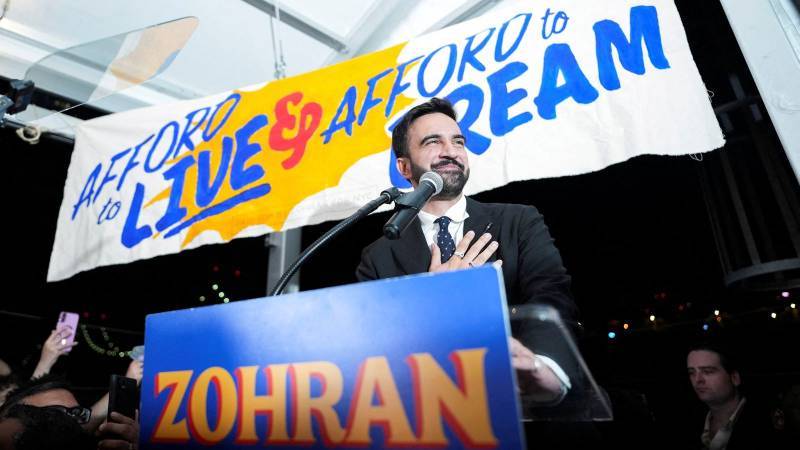
Zohran Mamdani promised so much in the Mecca of Capitalism that it triggered a question which we have been struggling with lately. Is democracy inherently populist, or are leaders manipulating it for their own benefit? Scholars have mainly maintained the view that democracy is not inherently populist in nature. Instead, populist leaders capitalise on democratic weaknesses and exploit them to further their own goals. However, allow us to differ in this regard. The inception of democracy was marked by populist moves, which prioritised their own interests over the greater good.
Starting with the mother of democracy, the United Kingdom in 1689 witnessed the “Glorious Revolution”. The Glorious Revolution was a move by Parliament following a series of conflicts with the crown. In the end, Parliament won. However, a few things need to be considered now. The parliament was not representing the masses. The franchise was very much limited.
It was captured by oligarchs, who wanted to preserve their own interests. The crown and parliament consisted of elites. With the ousting of James II, Parliament brought in William of Orange, who rubber-stamped those laws that were populist in nature and did not serve the whole. For example, the phrase “no taxation without representation” was initially limited to the elites. There was no relief for the poor.
The second example is of the United States of America, when it was fighting for its freedom in 1775. The federalist forces, under the command of General Washington, fought against the British. The populist narrative is designed to garner massive support, centred on not paying taxes to foreign masters.
It was promised that after winning freedom, Americans would be their own masters, and no one would be able to demand a nickel from them. It was a hot seller. However, this slogan was out of the window as soon as the war was over. The newly formed American government levied taxes to build itself and pay for the war debt. A dream was sold during the war to rally the masses behind the freedom struggle. As soon as the war was over, the government started taxation. In the end, a significant difference came out when reality checked populism.
The new mayor of New York does not make national policies on interest rates, and he cannot control the damage caused by tariffs. Inflation would continue to rise, and there would be little he could do
Here, one may argue that democracy was in its inception and crawling stage. Let us examine the infamous names in history, Hitler and Mussolini. Both came to the throne through democratic setups. Moreover, the Enlightenment had crossed the Industrial Revolution, and it seemed that after World War I, human suffering would come to an end. Scientific advancements were curing people, and people believed that democracy was the best way forward, quashing the divine rights of kings. Instead, the twentieth century had something else in its pockets. Mussolini and Hitler engulfed the world in another world war.
The usurpation of power was by the vote. They sold people dreams about getting out of debt and avenging humiliation. They told them that by electing them, the people would be living in a “paradise”. The masses bought the dreams and had to pay the price dearly.
Now, in the twenty-first century, we have human rights movements, international sanctions to prevent democratic backsliding, media to educate people about populist tactics, and easily accessible information to fact-check. However, in all of this, the world has witnessed Brexit, Donald Trump assuming power twice, Modi running well in his third term and more. Still, people choose populist leaders, and the answer is simple. As mentioned above, the masses often seek quick fixes for complex problems. Populist leaders capitalise on these facts.
Circling back to Mamdani, he made big commitments about housing, childcare and transportation. These are the pain points of the masses. Throughout his election campaign, he reiterated his promises. Amid U.S. President Donald Trump’s tariffs, purchasing power declined, while wages were either stagnant or insufficient to cover rising costs.
Zohran kept saying that he would get things under control and make them affordable for his fellow New Yorkers. However, here is the catch: the new mayor of New York does not make national policies on interest rates, and he cannot control the damage caused by tariffs. Inflation would continue to rise, and there would be little he could do. Moreover, as the rich and mighty lobbied against him, he did not have access to deep pockets to fund his way through the term.
In a nutshell, Zohran was the Pied Piper, and his fellow New Yorkers were the children following his tunes while the populist leaders continued using the democracy verbiage to seize power by offering deranged quick fixes.