

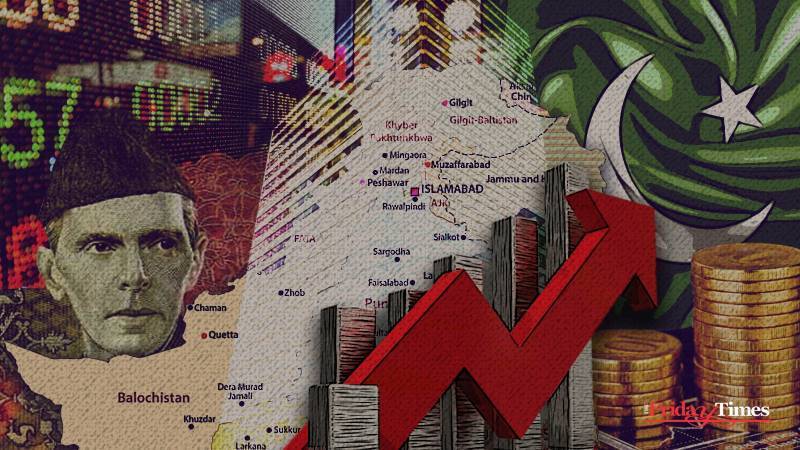
As Pakistan unveils its Economic Survey for FY 2024–25, the nation finds itself delicately poised between the residues of macroeconomic fragility and the promise of structural recovery. The economic narrative that emerges is neither euphoric nor bleak—it is calibrated, cautiously optimistic, and grounded in the sober realities of global headwinds, domestic capacity constraints, and the pressing imperatives of reform.
A Macroeconomic Pivot: From Stabilisation to Consolidation
Pakistan’s economy grew at a measured 2.68% in FY25—modestly above the previous year’s outturn but shy of the 3.6% growth target. This performance must be viewed in context: a year ago, Pakistan stood at the brink of default, with dwindling reserves, runaway inflation exceeding 25%, and severe investor anxiety. Today, the economic dashboard reveals early signs of macroeconomic stability—inflation has been brought down to 4.7%, the current account has turned to a surplus of US$ 1.9 billion, and foreign exchange reserves have climbed to US$ 16.6 billion.
Perhaps the most telling indicator of macroeconomic healing is the return of investor confidence. The KSE-100 Index surged by over 50%, with market capitalisation rising 38.5%—a signal that capital markets are regaining depth and pricing in political clarity and policy consistency.
Fiscal Responsibility Restored—But at a Social Cost
In a major milestone, the government achieved a primary surplus of 3% of GDP over the first nine months—its strongest fiscal showing in over two decades. Revenue mobilisation rose 26%, crossing PKR 13.3 trillion, driven largely by FBR reforms, an expanding tax base, and improved compliance. This discipline has been necessary, if painful, to meet IMF benchmarks and unlock external financing.
The upcoming IMF programme and its successor arrangements must, therefore, be negotiated with a clear national development lens, not merely short-term liquidity management
Yet, these gains have not been costless. Public investment, though up 34%, remains below potential. Health, education, and urban development continue to suffer from underfunding. The burden of adjustment has been borne disproportionately by the lower-income segments, where inflation, though tamed, remains regressive in nature. A more inclusive fiscal framework is urgently needed in the next phase of reform.
The Duality of Sectoral Performance: Fragile Fundamentals, Emerging Opportunities
The structural composition of growth reveals persistent vulnerabilities. The agriculture sector grew by only 0.56%, primarily driven by livestock (+4.7%), while staple crops like cotton, wheat, and maize experienced steep declines. With climate volatility now a permanent fixture, the case for agritech modernisation, water governance, and high-yield seed innovation becomes critical.
Conversely, the industrial sector posted 4.77% growth, driven by construction and utilities, though large-scale manufacturing (LSM) remained under stress. Pakistan’s industrial base remains narrow, energy-dependent, and poorly integrated with global value chains—an area that requires both policy and capital infusion.
The services sector, growing at 2.91%, benefited from digitisation, financial services, and public administration reforms. Telecom and IT exports crossed US$ 2.8 billion, while net-metered solar energy generation exceeded 2,800 MW, showing clear signs of green transition readiness—if regulatory certainty is sustained.
Investment & Debt: The Balancing Act
Total investment rose to 13.8% of GDP, a notable improvement, but still lagging regional peers. The national savings rate climbed to 14.1%, and both public and private investment grew, indicating renewed business sentiment. Yet, this resurgence coexists with a public debt stock now nearing PKR 76 trillion and external debt at US$ 87.4 billion.
Pakistan’s fiscal future hinges on a delicate balancing act: driving growth without reigniting inflation, sustaining social protection without deepening the debt spiral, and attracting investment without compromising policy sovereignty. The upcoming IMF programme and its successor arrangements must, therefore, be negotiated with a clear national development lens, not merely short-term liquidity management.
Toward a Strategic Reform Agenda
The 2024–25 survey is best understood not as a verdict, but as a blueprint. The fundamentals of macroeconomic management—stabilisation, reserve accumulation, currency reform—are on track. But Pakistan’s future cannot be built on austerity alone. It will require productive transformation, including:
- Agricultural modernisation to achieve food security and rural income growth.
- Industrial upgrading and export diversification via special economic zones and technology corridors.
- Human capital investment, especially in health, education, and youth entrepreneurship.
- Energy reform and climate resilience, including transition to renewables and circular economy models.
- Tax reform, aimed at equity, digitisation, and a broader base.
For Policymakers and Investors Alike
Pakistan is once again open for business—but this time, cautiously. The return of macroeconomic predictability and market confidence must be converted into long-term FDI, infrastructure finance, and public-private partnerships, especially in urban development, logistics, energy, and digital infrastructure.
For investors, the opportunity lies in being early entrants into a reforming frontier market with deep demographic potential and strategic geographic leverage. For policymakers, the challenge is to convert the gains of 2024–25 into a sustained development narrative, anchored in institutional strength and political consensus.
Conclusion: A Moment to Seize
In closing, the FY25 economic survey is not a celebration—it is a strategic checkpoint. The fires of crisis have not been extinguished; they have been contained. The path forward demands resilience in policy, agility in governance, and unity in national purpose. If Pakistan can stay the course—deepening reforms, protecting the vulnerable, and mobilising its domestic genius—it can not only recover, but lead.
Pakistan’s recovery is not inevitable. It is a choice, and it must be made every day—in budgets, in boardrooms, and in ballots.