

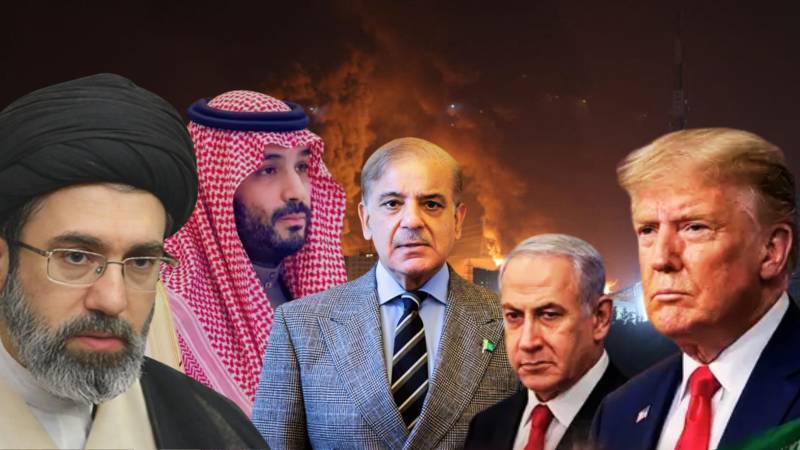
In an increasingly fractured global order, diplomacy is no longer the exclusive domain of superpowers. The recent role played by Pakistan in brokering a temporary ceasefire between the United States and Iran raises a provocative question: are we witnessing the rise of middle-power mediation as a defining feature of contemporary conflict resolution?
For much of the post–Cold War period, global crises were managed, often imperfectly, through direct engagement between major powers or through multilateral institutions. Today, however, geopolitical rivalries, declining trust, and domestic political constraints have made direct negotiations between adversaries more difficult. In this context, countries like Pakistan are stepping into the breach, leveraging their relationships, geographic positioning, and strategic ambiguity to facilitate dialogue where others cannot.
Pakistan’s involvement in the U.S.–Iran ceasefire is notable not simply because it succeeded in de-escalating a volatile situation, but because of how it did so. Islamabad occupies a unique diplomatic space: it maintains longstanding, if complicated, ties with Washington, while also sharing a border and historical relationship with Tehran. This dual positioning, often seen as a liability, has become an asset.
This is the essence of middle-power mediation. Unlike great powers, which are often perceived as partial or self-interested, middle powers can present themselves as more flexible interlocutors. They are not neutral in the purest sense, but they are often “acceptable” to multiple sides. Their influence lies not in overwhelming force, but in access, credibility, and the ability to communicate across divides.
Pakistan is not alone in this role. Countries such as Norway, Qatar, and Türkiye have, in recent years, carved out diplomatic niches as mediators in conflicts ranging from Afghanistan to Ukraine. What distinguishes the current moment, however, is the increasing necessity of such actors. As great power competition intensifies, particularly between the United States and China, traditional diplomatic channels are narrowing. Middle powers are not just helpful; they are becoming indispensable.
Yet this moment is unfolding against a backdrop of unusually sharp global polarisation. In recent months, geopolitical alignments have hardened, with regions increasingly coalescing into blocs defined by security interests, ideological affinities, and economic dependencies. From the Middle East to Eastern Europe and the Indo-Pacific, conflict dynamics are being shaped not only by local grievances but by overlapping regional and global rivalries. Multilateral institutions are struggling to mediate effectively, while bilateral diplomacy is often constrained by domestic political pressures and strategic mistrust.
This deepening regionalism raises an important question: is Pakistan’s intervention a sign of an emerging middle ground in global diplomacy or simply an exception made possible by a uniquely urgent crisis?
When adversaries cannot engage directly without political cost, third parties become essential channels of communication
Here, the concept of a “middle ground” becomes analytically useful. In international relations, middle ground theory suggests that in highly polarised environments, actors that are not fully aligned with competing blocs can occupy intermediary spaces that enable dialogue, reduce misperception, and facilitate incremental cooperation. These actors do not eliminate conflict, nor do they stand outside power politics; rather, they operate within it by lowering the costs of engagement between adversaries.
In such contexts, the middle ground is not a fixed position but a relational one. It is produced through credibility, access, and the perception of relative impartiality. Crucially, it depends on trust from multiple sides. Trust, that is often thin, contingent, and reversible. The middle ground, therefore, is inherently fragile: it exists only so long as the intermediary can maintain legitimacy across competing actors.
Pakistan’s recent role can be understood through this lens. Its ability to engage both Washington and Tehran allowed it to temporarily occupy this intermediary space, facilitating communication at a moment when direct engagement was politically constrained. In doing so, it did not resolve underlying tensions, but it helped create a narrow corridor for de-escalation.
But this moment also invites a more fundamental set of questions, ones that go beyond structure and strategy, and speak to political will.
Who was willing to broker?
Who was willing to serve as the intermediary, to carry messages between adversaries who would not speak directly?
Who was willing to absorb the risks (diplomatic, political, and reputational) of stepping into a volatile space?
And perhaps most importantly: who was willing to care enough to keep channels open, rather than allow them to close?
In an era defined by hardened positions and rapid escalation, mediation is not only about capability; it is about willingness. It requires actors who are prepared to enter uncomfortable conversations, to remain engaged when trust is low, and to resist the political incentives of disengagement and alignment.
Pakistan’s intervention, in this sense, reflects not only its strategic positioning but a choice. A choice to act, to engage, and to keep dialogue alive at a moment when silence or escalation would have been easier.
On one hand, the very conditions of polarisation create demand for such middle-ground actors. When adversaries cannot engage directly without political cost, third parties become essential channels of communication. In this sense, middle-power mediation may be less a choice than a necessity in a divided world.
On the other hand, polarisation also limits how far such mediation can go. The same divisions that make intermediaries useful also constrain their influence. Middle powers must navigate increasingly rigid alignments, where even perceived neutrality can be questioned. In such an environment, sustaining trust across competing blocs becomes more difficult, and mediation risks being episodic rather than systemic.
This tension sits at the heart of Pakistan’s current role. Its ability to engage both Washington and Tehran reflects a degree of diplomatic flexibility that is becoming rarer. But whether this flexibility can be sustained (or replicated in other contexts) remains uncertain.
For the United States, Pakistan’s role offers both an opportunity and a test. It suggests that Washington may need to rethink how it engages with countries that have traditionally been viewed through a narrow security lens. Rather than treating such states as either allies or liabilities, there is value in recognising their capacity to act as diplomatic bridges in complex regions.
For Pakistan, the moment is equally consequential. Acting as a mediator provides an opportunity to redefine its international image, from a state often associated with instability to one associated with problem-solving. But this role will require consistency, credibility, and a willingness to engage constructively across multiple fronts.
The broader implication is clear: the future of diplomacy may be less about who holds the most power and more about who can connect those who do not speak to each other.
Pakistan’s role in the U.S.–Iran ceasefire does not, on its own, confirm a new global order. It may represent the opening of a middle ground in an otherwise polarised landscape, or it may prove to be a rare convergence of circumstances that is difficult to reproduce.
What it does offer is a glimpse of possibility: that even in an era of deep division, there remains space, however narrow, for actors who can bridge divides and keep lines of communication open.
In an era defined by division, that may be one of the most important forms of power witnessed.