

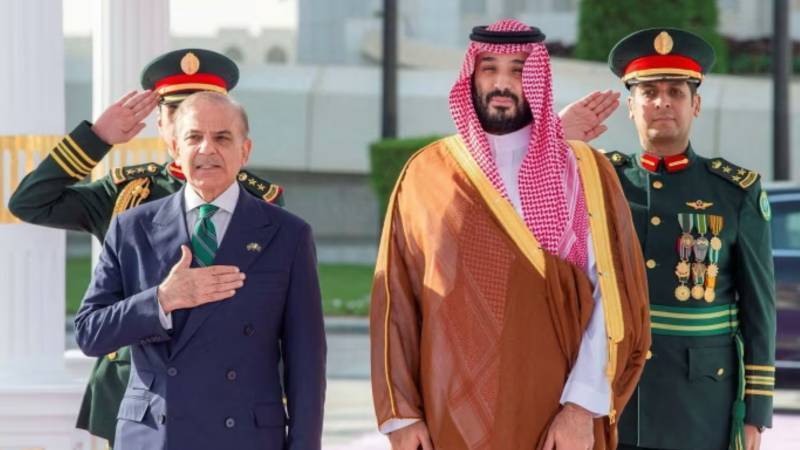
Pakistan and Saudi Arabia are moving towards a Strategic Mutual Defence Agreement (SMDA), under which an attack on either country will be treated as an attack on both. More than a military arrangement, this pact carries profound implications for regional alignments, Muslim solidarity, and global diplomacy.
For Pakistan, the pact signals a step towards foreign policy independence. Often seen as overly reliant on Western powers, Islamabad is now asserting autonomy by deepening ties with key Muslim states. Closer alignment with Riyadh strengthens Pakistan’s Islamic credentials and reinforces its traditional support for Palestine. At the same time, the agreement elevates Pakistan’s role in Middle Eastern security while balancing its relations with China, the United States, and the Gulf.
For Saudi Arabia, the deal offers strategic reassurance at a time of uncertainty. With Iran’s influence rising, the Yemen conflict unresolved, and doubts about American security guarantees, Riyadh gains from Pakistan’s military backing—especially as Islamabad is the only nuclear-armed Muslim state. Saudi Arabia has traditionally relied on the United States for security, but by signing a defence pact with Pakistan, it signals diversification—reducing dependence on Washington and broadening its strategic options.
The pact also strengthens Saudi bargaining power with Washington and Tel Aviv. While the United States urges normalisation with Israel, Riyadh can now negotiate from a stronger position, showing that it has other reliable partners within the Muslim world.
Iran will be the most unsettled. Despite the recent Saudi–Iran rapprochement, Tehran is likely to see the pact as a potential encirclement strategy. Pakistan must tread carefully to avoid being drawn into an anti-Iran bloc. India, too, will be watching closely. Pakistan will now appear to enjoy stronger backing from Saudi Arabia in the event of hostilities with India. Although Riyadh has traditionally avoided direct involvement in Pakistan–India disputes, the proposed pact alters this perception. It could harden India’s stance towards Pakistan and prompt New Delhi to further strengthen its partnerships with other Gulf states, particularly the United Arab Emirates, to offset the growing Saudi–Pakistan closeness.
The Pakistan–Saudi defence pact is a double-edged sword. It enhances security, strengthens Islamic solidarity, and boosts the bargaining power of both states on the global stage
China is likely to welcome the pact, as both states are central to its Belt and Road vision, while Russia may use the opening to expand its influence in the Gulf.
The pact also affects Israel’s calculations. On one hand, Israel benefits from a stronger Saudi deterrence posture against Iran, its arch-rival. On the other hand, it may be concerned about Pakistan’s involvement, particularly the potential of a nuclear umbrella extending to Riyadh. For Saudi Arabia, the defence pact provides balance. While normalisation with Israel remains on the agenda, the agreement reassures the Muslim world that Palestine remains a priority. This could slow the pace of formal Saudi–Israel ties.
For Pakistan, recognition of Israel remains politically impossible. Public opinion is firmly pro-Palestinian, and any attempt to normalise relations would face fierce backlash. Yet, if Saudi Arabia eventually moves towards recognition, Islamabad may come under indirect pressure to soften its position, though not in the immediate future.
The United States will watch developments cautiously. While Washington remains Riyadh’s traditional security guarantor, the new pact highlights a shift towards regional independence. If the arrangement helps contain Iran, the United States may quietly accept it, though it reduces American monopoly over Saudi security. China, already a strong partner of both Pakistan and Saudi Arabia, will see the pact as stabilising for its economic projects. Russia, facing strained ties with the West, could also find opportunities to engage more deeply with both capitals.
The Pakistan–Saudi defence pact is a double-edged sword. It enhances security, strengthens Islamic solidarity, and boosts the bargaining power of both states on the global stage. Yet, it risks fuelling regional polarisation, particularly with Iran and India. For Pakistan, the pact confirms a more independent and Muslim-centric foreign policy. For Saudi Arabia, it provides reassurance while preserving its freedom to negotiate with Washington and Tel Aviv on its own terms. For Israel, it is both an opportunity and a concern, depending on how far the cooperation extends.
The challenge for both states will be to ensure that the pact is not seen as a provocation but as a platform for regional diplomacy, Islamic unity, and peacebuilding. If managed wisely, this agreement could mark the beginning of a more balanced and independent era in Muslim world politics.