

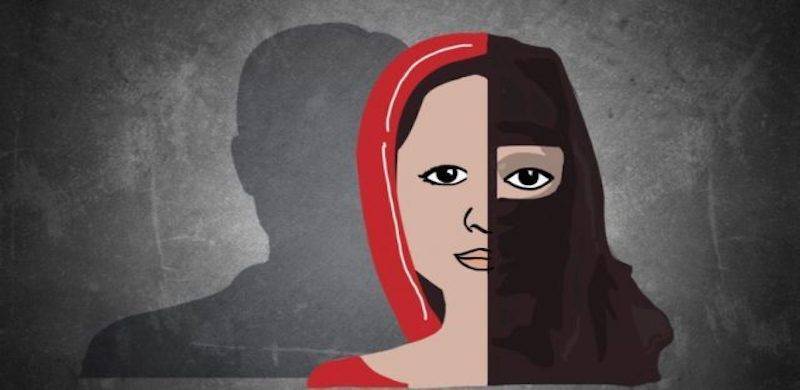
The National Commission on the Rights of the Child (NCRC) launched the report “Situation Analysis of Children from Minority Religions in Pakistan” in Lahore on 1 August 2025, which underscores, “the government must establish and enforce robust legislation at the national and provincial levels criminalising forced conversions, ensuring perpetrators face accountability.”
Earlier, on 30 April 2025, NCRC launched their report “State of Children in Pakistan 2024” in Islamabad and highlighted, “forced conversions, especially of young girls from Hindu and Christian communities, are a serious violation of their fundamental rights and freedoms. Abductions and subsequent forced conversions and marriages to older men are frequently reported in Sindh and Punjab. The situation is particularly critical in Sindh province, which accounts for 69% of all reported cases, followed by Punjab with 30%. Among these, 71% of victims are children under the age of 18, while 22% were under the age of 14.”
The National Commission on the Status of Women (NCSW) has consistently condemned forced conversions of women and girls and called for the enactment of laws addressing forced conversions, recognising these as a form of gender-based violence. In W.P.P. No.1113/2019) andW.P..P No.1711/2019 at the Islamabad High Court, the NCSW questioned the age of the girls for conversion and marriage in their statements.
The National Commission on Human Rights (NCHR) has even recovered minor girls from perpetrators in Sindh and Punjab, considering forced conversion a violation of human rights. NCHR stated in their report to the Committee on the Elimination of Racial Discrimination (CERD) for the 113th session, “NCHR has taken various suo motu notices of forced marriages and abductions of girls who were forced to convert to Islam. Due to the intervention of the Commission, relief has been provided to the victims and their families.” Thus, all three NHRIs in Pakistan realise the problem of forced conversions and recommend legislation and its implementation.
The concerns regarding forced conversion are not a new phenomenon for this region. The All India Muslim League adopted a resolution in December 1927 at Calcutta, which addressed the issue of forced conversion. Historian Ghulam Ali Allana’s book Pakistan Movement: Historic Documents describes the League’s demand: “Every individual or group is at liberty to convert or re-convert another by argument or persuasion, but that no individual or group shall attempt to do so or prevent its being done by force, fraud or other unfair means, such as the offering of material inducement. Persons under eighteen years of age should not be converted unless it be along with their parents or guardians.”
There is no law specifically dedicated to curtailing the tide of forced conversions. Two bills, tabled in 2016 and then 2019, were shot down
Pakistan has endorsed the Universal Declaration of Human Rights, which states that the right to freedom of religion includes the right to change one’s religion, but no one shall be subject to compulsion to change their religion. Since 2010, Pakistan has been a party to the International Covenant on Civil and Political Rights, where Article 18(4) respects the right of parents to determine their child’s religion up to the age of maturity in conformity with their own convictions. Pakistan ratified the United Nations Convention on the Rights of the Child in 1990, where Article 14(2) describes the same right of parents for their children’s religion.
In concluding observations of the report on the International Covenant on Economic, Social and Cultural Rights on 20 July 2017, the committee expressed concerns on forced conversion and forced marriages, and the lack of legal protections for minorities in Pakistan’s law. In concluding observations on the combined 24th to 26th periodic report on CERD, the Committee recommended formulating specific legislation to criminalise abductions for forced conversions and marriages, and to ensure effective implementation of laws. Forced conversion is highlighted in all four Universal Periodic Reviews of Pakistan by member states.
The Constitution of Pakistan (Art. 20) gives the right to profess, practise and propagate religion to every citizen. Furthermore, Section 498B of the Pakistan Penal Code prohibits forced marriages, making the marriage of a minor and a non-Muslim woman an offence. However, the perpetrators convert the minors first and forge their ages, thus this legal safeguard remains unimplemented. Additionally, in cases of forced conversion, there is hardly any will from the government to effectively implement the child marriage restraint laws in place.
Nonetheless, there is no law specifically dedicated to curtailing the tide of forced conversions. Two bills, tabled in 2016 and then 2019, were shot down. On 24 September 2020, the Standing Committee on Religious Affairs and Interfaith Harmony rejected The Protection of Rights of Minorities Bill, 2020, which also covered the subject of forced conversion. The Prohibition of Forced Conversions Bill, 2021, drafted by the Federal Ministry of Human Rights, was “dismissed” by the Parliamentary Committee to Protect Minorities from Forced Conversion. The Committee did so at the objections of the Ministry of Religious Affairs and the Council of Islamic Ideology, who discussed with the notorious Mian Mithoo. These bills recommended an age limit of 18 years upon conversion.
The relative ease and impunity with which minority women are kidnapped, forcibly converted to Islam, and unlawfully married to Muslim men is attributable to several systemic factors
There is no dearth of cases, yet a response from the government has been missing, visibly owing to a lack of consensus among ministries, and with excessive involvement of the clergy and religious groups. Data show that episodes of forced conversion are accompanied by a range of other criminal offences, including, but not limited to, assault, kidnapping, abduction, forced marriage, child marriage, rape and forced prostitution.
The relative ease and impunity with which minority women are kidnapped, forcibly converted to Islam, and unlawfully married to Muslim men is attributable to several systemic factors. The neglectful, complicit and even hostile attitudes of the police, medical authorities and judicial officers put the aggrieved party at a disadvantage. Often, courts have displayed bias and a lack of conviction to enable proper procedures in cases that involve indictment of forced conversion and forced marriage.
An inclusive set of legal, policy and administrative measures is required at the federal and provincial levels to prevent forced conversions, as NHRIs suggested. A comprehensive law is needed that protects the potential victims of forced conversion. State personnel (judges, police, medical officers, etc.) involved during the reporting, investigation and prosecution of forced conversion cases should be sensitised and held accountable on the issue.
Special safeguards, including protection, rehabilitation, pro bono legal facilities, and expedited procedures, are required for the victims. Personal laws for minorities should be updated. Lastly, to keep up with advances on the legislative front, it is essential that an awareness campaign be launched to educate minority citizens about their fundamental rights and freedoms. The general public should be aware of the punitive laws about forced faith conversions and related crimes. Educating the masses should also be a priority because it is the responsibility of all citizens to speak against injustice.