

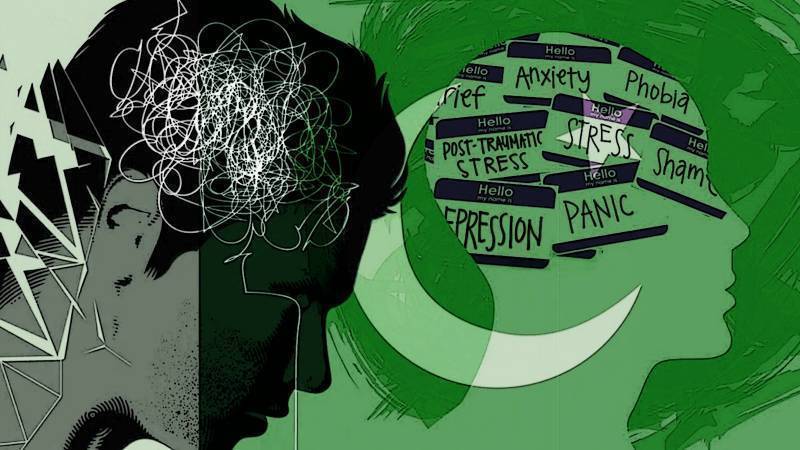
The recent news about two private university students’ suicide attempts has set social media ablaze. While one attempt proved fatal, the other student survived. Although investigations are still underway, the discussion around mental health is doing the rounds, something which is repeatedly brushed under the carpet. There are umpteen cases reported every day where young people attempt suicide due to the relentless pressure to excel.
While working at one of the top institutions of the country, the pressure on children as young as six to clear the admission test was mind-boggling, to express it mildly. Preparing for it was likened to a full-term pregnancy; the Bollywood film Hindi Medium captured the desperation of parents to attain admission in top-notch schools quite accurately, and of course, Saba Qamar was a delight to watch on screen and was paired with the extremely enigmatic Irrfan Khan.
Without being preachy, that film drove home the message that attaining admission in top-notch schools is not a passport to success, and in addition, being able to speak fluent English is not a measure of intelligence. English Vinglish was another gem, with Sridevi essaying the role of Shashi, who is constantly humiliated by her husband and daughter for not being able to speak fluent English.
Without digressing from the topic, nobody is questioning the valuable networking opportunities that top-notch elite schools offer, among other things, but the pros and cons have to be evaluated realistically. In addition, the mental, psychological and emotional well-being of children should not be compromised to keep up with the Joneses or to tick another box in your checklist.
And the torture does not end with clearing the admission test; that is where it begins. If the admission test is not cleared in the first attempt, many children keep reappearing until the maximum number of attempts has been exhausted or until the child is successful. The rejection, humiliation and mortification faced by the children who are made to go through the drill year after year is a story for another day, and one that merits serious discussion.
Living vicariously through your children and pressurising them to fulfil your dreams and aspirations is a common affliction, not only limited to South Asian parents. Recognising and acknowledging your children’s limitations is equally important; not every child is cut out to be a lawyer, doctor, dentist or engineer. It is far more important that children mature into level-headed, balanced and compassionate human beings, and research has proven that generally, the average students in school go on to do far better in life than their brighter and more intelligent counterparts.
Academic excellence is a noble pursuit, but not if it comes at the expense of your emotional, mental and psychological well-being
Richard Branson, the prominent business tycoon, was dyslexic, but the kind of coping abilities this affliction equipped him with from a young age were instrumental in his success. Facing rejection and humiliation from an early age taught him grit and perseverance, so failure ceased to discourage or dissuade him from following his dreams. Whoopi Goldberg, the actress, is another example of a dyslexic individual who went on to do extremely well in life.
Chasing academic excellence is laudable, but it should not be the only goal in life. In fact, universities want individuals who are all-rounders and have excelled in both academics, sports and extra-curricular activities. Sports teach you enviable qualities like perseverance, determination, tenacity, forbearance and teamwork, that are instrumental in your personal and academic development.
Some things are not meant to be, and it is a well-known fact that when one door closes, another opens. If something proves to be just out of reach, despite your hardest attempts to grab hold of it, it is wiser to just let go and let life take its course. Maybe the Almighty has something better planned for you, but unfortunately, we tend to obsess over what we do not have, rather than what we do. The glass is always half-empty.
Mental health is as, if not more, important than physical health; in fact, the two work in tandem. Subjecting children to intense pressure or forcing them to live your dreams is a gross injustice, to use a euphemism. As individuals in their own right, their wishes, desires and decisions should be respected, and remember: it is easier to mend broken children than to heal dysfunctional and emotionally unstable adults.
Childhood traumas manifest themselves later in life; subjecting children to constant pressure to excel, forcing them to face rejection repeatedly, and drawing unfair comparisons with their counterparts or siblings causes irreparable damage to their self-respect and self-esteem. Raising healthy, well-adjusted and balanced individuals with the ability to form meaningful relationships is far more important than raising dysfunctional, unstable and unbalanced adults who are complete failures in practical life.
Failure, rejection and an empty pocket teach you far more than any school ever can, so it is important to equip your children with the abilities and skills they need to live meaningful and productive lives. Let them follow their dreams and aspirations, rather than living vicariously through them. Academic excellence is a noble pursuit, but not if it comes at the expense of your emotional, mental and psychological well-being.