


Each village and town in Rawalpindi, including Sagri, has a unique cultural identity shaped by layers of history, beliefs, and social interactions. These settlements, with their lasting traditions and material heritage, reflect the region's complex cultural landscape. Sagri, in particular, stands out as a living repository of Pothohar’s historical memory and communal harmony. Having visited Sagri since 2000, most recently in April 2025, I have witnessed how its built environment and oral traditions continue to tell its story, offering a distinctive cultural experience.
In my explorations of Pothohar’s cultural landscape, Sagri often emerges as a microcosm of the region’s diverse heritage. Once a thriving marketplace before Partition, it served as a social and economic centre where different communities, Muslims, Hindus, and Sikhs, interacted and coexisted. The architectural fabric of Sagri, though changed over time, still shows signs of this shared history. Pre-1947 structures such as the Choubara of Ratan Singh, old temples, wells, tanks, and the gurdwara remain tangible symbols of the town’s multi-religious heritage. Even in their current state of decay or adaptation, these sites hold collective memories and shifting identities, making Sagri not just a historical place, but an ethnographic landscape where history, memory, and material culture come together.
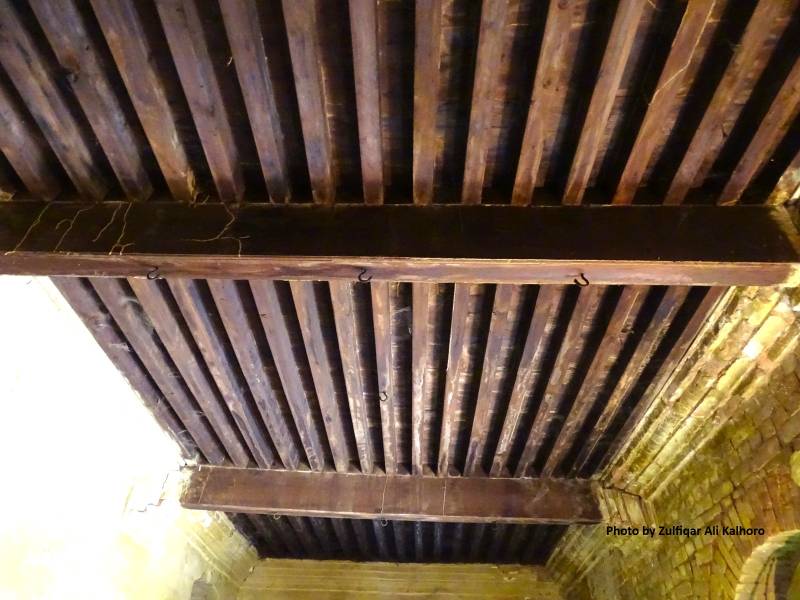
Mansions (Choubaras and Maris) serve as important identity markers for their respective villages and towns in Pothohar. In Sagri, one of the most notable Choubaras is that of Ratan Singh, a prominent figure before 1947. This Choubara was originally a double-storey building with eight rooms, noted for its intricate wooden doors and ceilings. However, today, only the single storey of the Choubara remains.
When I first visited the Choubara in 2000 and later returned in 2003, 2005, 2007, 2008, and 2009, the second storey was still intact. However, during my visit in 2019, I found that the second storey had either been demolished or had caved in. The walls of the upper-storey rooms were once beautifully painted. The Choubara is accessed through a narrow alley that was previously covered. The grill brackets still adorn the wall that supported the roof over the street where the Choubara is located. Notable features of the Choubara included the intricately carved entrance door and the balcony with elaborate woodwork and grillwork. Many Choubaras in Sagri are recognised for their beautiful wooden doors and balconies. Unfortunately, much of this heritage has been lost; many wooden doors have been removed and sold in the market.
In addition to the Choubaras, Sagri is also famous for its historic bazaar, which once had shops owned by Sikhs and Hindus.
During my visits to Sagri, I engaged in insightful conversations with many locals, including Baba Munir, Javed Iqbal, Shaikh Munir, and several others Each of them shared unique perspectives and personal memories that helped me uncover the layers of Sagri’s rich history, heritage, and culture.

According to Shaikh Munir, a notable resident of Sagri, there once stood a shop owned by Abdul Aziz in the local bazaar. Known for his warm and friendly relations with both Sikhs and Hindus, Abdul Aziz was a respected figure in the community. The Sikhs of Sagri contributed significantly to the town’s development, constructing several tanks and wells—some of which still survive today, though in a dilapidated state. Among these benefactors was Tara Singh, another prominent figure of Sagri, who built a well on the premises of the former Khalsa High School, now known as Government High School.
Pre-1947 structures such as the Choubara of Ratan Singh, old temples, wells, tanks and the gurdwara remain tangible symbols of the town’s multi-religious heritage
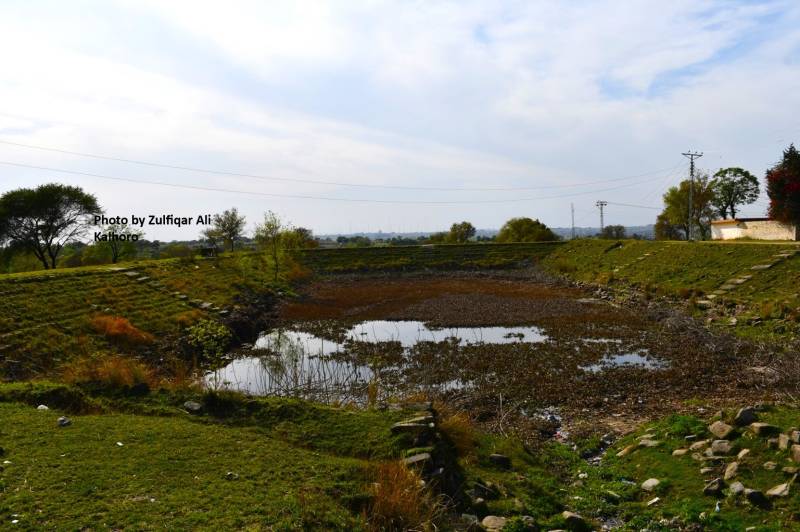
At the entrance of the bazaar, near an old banyan tree, there once existed a beautiful stepped well (baoli), which sadly no longer remains. However, one baoli still exists in Sagri near the tank of Sagri village. According to the inscribed slab on the baoli wall, it was built by Raja Muhammad Ali Khan in 1861. The water tank in Sagri near the school is one of the oldest in the Rawalpindi district. It seems to have been built in the pre-Islamic era and later rebuilt by the Mughals in the 16th century, and by the Sikhs and Hindus of Sagri in the 19th century. Large stone-dressed slabs were used to construct the water tank. Today, this historic water tank is in poor condition. It should be restored to its original glory and promoted as a potential tourist attraction in the town.
Apart from mansions, wells, and tanks, Sagri hosts the remains of a gurdwara and two temples.

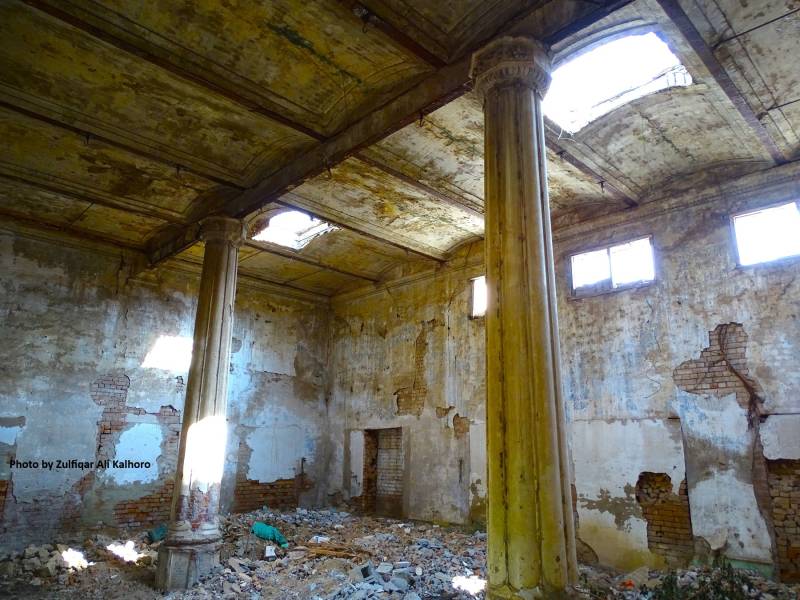
The Sagri gurdwara is one of the town's landmarks, which lies in a dilapidated condition. It is a grand structure and well known for its two beautiful pillars which support the ceiling which are constructed in ribs and panels style. The bases of both pillars are octagonal, decorated with marble slabs bearing the names of the donors There are two entrances to the main hall, flanked by cusped arches. Some inscriptions are also fixed on the bases of the pillars The capitals of the pillars are decorated with floral designs.

The floor of the main hall features many slabs bearing the names of donors who contributed to the construction of the gurdwara. Some of the names, along with their contributions, are inscribed on the slabs of the main hall of the gurdwara. I read the names of a few donors The following list is shown on the slabs: Chaudhary Deedar Singhji Kohli contributed Rs317, in the memory of his father Chaudhary Ghanda Singh Ji, Bakhshi Narender Singh of Sagri Rs30, Ram Singh, Master Surender Singh Rs41, Babu Devi Das Rs 25, Bai Surop Singh Gujral Rs 35 Rs, in the memory of his father Chaudhary Ganesha Singhji, etc. At present, the gurdwara is in a dilapidated condition. The ceiling is falling into pieces, and the boundary wall has collapsed. Plaster on the outer walls has also come off. The cusped arches that flank the entrances of the gurdwara are also in deplorable condition. This should also be preserved for posterity and promoted as a potential tourism attraction in Sagri town.
Apart from the gurdwara remains, there are two temples in the town of Sagri. Both temples have a square plan superimposed by a square shikhara carrying an amalaka atop. One of the temples, facing north, is smaller than the adjoining temple. The bigger temple faces west. This latter is decorated with floral designs inside and outside. However, the outer paintings have not survived, but their traces are still visible. The garbhagriha of this temple has three sides, decorated with arches: two on the northern and southern walls with cusped arches, and one on the eastern wall with a split arch, which was apparently made to place the image of the deity. The temple's ceiling is adorned with floral patterns, notably lotus motifs.
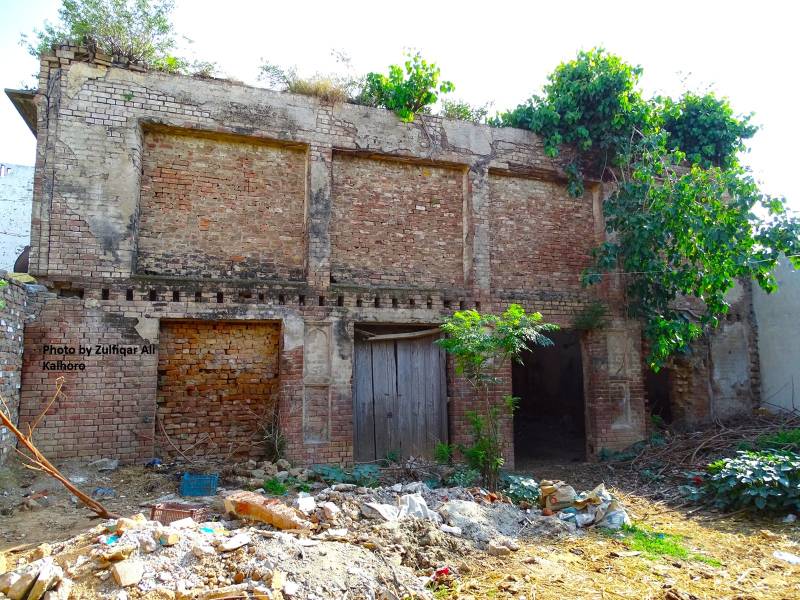
Nevertheless, the paintings have been defaced by the locals. The chhaja or dripstone of the temple has partially collapsed. One finds traces of the paintings on the temple's cornice. The people have greatly damaged the inner sanctum of both temples.
One of the temples resembles the Lakshmi Devi temple in Arazi Pind. This temple is located 4 km south of Chowk Pindori in Kallar Syedan tehsil. This temple is built on a square plan. At present, the temple is in a poor state of preservation, the exterior featured images whose traces are still visible. Likewise, the temple's interior was painted.
Given its historical buildings and landmarks, Sagri should be declared a heritage town. These architectural and cultural treasures reflect the town’s rich past and shared communal legacy. Restoring and preserving these sites would not only safeguard Sagri’s history but also transform the area into a lively cultural and tourist destination, drawing visitors eager to explore its heritage and charm.