

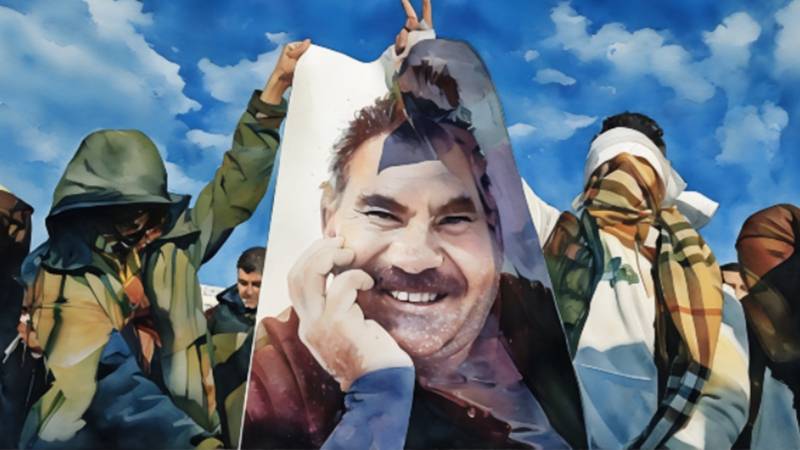
When Abdullah Öcalan speaks, people listen—whether they agree with him or not. The imprisoned leader of the Kurdistan Workers’ Party (PKK) has been a polarizing figure for decades, a symbol of resistance for some and a terrorist for others. So, when news broke that Öcalan had announced the suspension of hostilities in a letter from his prison cell on İmralı Island, it sent ripples through the region. For a man who has spent his life at the center of one of the world’s most difficult conflicts to resolve, this was no small statement.
But what does it really mean? Is this a genuine step toward peace, or just another strategic move in a long and bloody game?
The Kurdish question is one of those issues that feels almost too big to solve. It’s about identity, land, history, and power—all wrapped up in a conflict that has dragged on for decades. Öcalan, as the founder of the PKK, has been both the face of this struggle and its most controversial figure. His latest letter, calling for an end to armed conflict and a focus on dialogue, is being hailed by some as a breakthrough. But for others, it’s just another chapter in a story that’s seen too many false starts.
By renouncing violence and pushing for a “democratic solution,” he might be trying to win over international support and ease the pressure on Kurdish groups
This isn’t the first time Öcalan has talked about peace. Back in the early 2000s, after his capture and imprisonment, he declared a ceasefire and expressed a willingness to negotiate with the Turkish government. There was even a peace process between 2013 and 2015, which raised hopes before collapsing into renewed violence. So, when Öcalan says he wants to end hostilities now, it’s hard not to wonder: why should we believe him this time?
Timing is everything, and Öcalan’s announcement didn’t come out of nowhere. The Middle East is a mess right now—shifting alliances, ongoing wars, and the fallout from the Syrian conflict have left everyone scrambling for position. The Kurds, who have been fighting for recognition and autonomy for generations, are caught in the middle. In Syria, the Kurdish-led Syrian Democratic Forces (SDF) received support from the US and other Western powers. But Turkey sees the SDF and its political wing, the PYD, as extensions of the PKK and has launched military operations against them.
Against this backdrop, Öcalan’s call for peace feels like an attempt to reposition the Kurdish movement. By renouncing violence and pushing for a “democratic solution,” he might be trying to win over international support and ease the pressure on Kurdish groups. But it could also be a response to internal challenges within the Kurdish movement itself, which has faced divisions and setbacks in recent years.
Of course, none of this matters if Turkey isn’t on board. And let’s face it: Ankara hasn’t exactly been eager to negotiate with the PKK. President Recep Tayyip Erdoğan has built much of his political career on a hardline approach to the Kurdish issue, framing it as a matter of national security. For years, the Turkish state has treated the Kurds as a threat to be neutralized, not a people to be understood.
Could this be a moment for Ankara to rethink its strategy? Maybe. But it would require a huge shift in mindset—something Erdoğan hasn’t shown much appetite for.
Let’s say, for a moment, that Öcalan’s announcement is sincere. What would peace even look like? To begin, the PKK would have to stop all military operations and disarm—which is already quite a lot. Turkey, in turn, would have to end its military campaigns in Kurdish regions and address the legitimate grievances of the Kurdish people. That means recognizing Kurdish identity, granting cultural and political rights, and maybe even revisiting the idea of autonomy.
It’s a tall order, and it’s hard to imagine either side making those kinds of concessions. But if there’s one thing we’ve learned from other conflicts, it’s that peace is possible when both sides are willing to take risks.
This isn’t just a Turkish or Kurdish problem—it’s a global one. The US, the EU, and other international players have a role to play here. They can support efforts to revive the peace process, provide resources for dialogue, and put pressure on both sides to stay at the table. But they also need to be careful not to take sides in a way that undermines the process.
Öcalan’s announcement could be the start of something new, or it could be just another footnote in a conflict that seems to have no end. As someone who has followed this conflict for years, I have seen that the conflict gained an entirely new dimension as it spilled across the border into Syria: leading to internationalisation of Turkey's military efforts against Kurdish nationalist rebels.
To end this violence, it requires courage, compromise, and a willingness to see the humanity in the other side. Whether that’s possible in this case remains to be seen.
For now, all we can do is watch, wait, and hope that this time, things might be different.