

Artificial intelligence (AI) refers to the ability of computer systems to perform tasks typically associated with human intelligence. Indubitably, the technology has become a centrepiece of geopolitical power struggles, with nations increasingly wary of relying on foreign technology for critical systems. Rising competition over AI is nothing less than digital warfare, marked by imposing trade barriers, high tariffs on tech products, banning the supply of rare earth minerals used in chips, and cyberattacks. The growing race in AI will shape the idea of who leads in AI in futuristic terms.
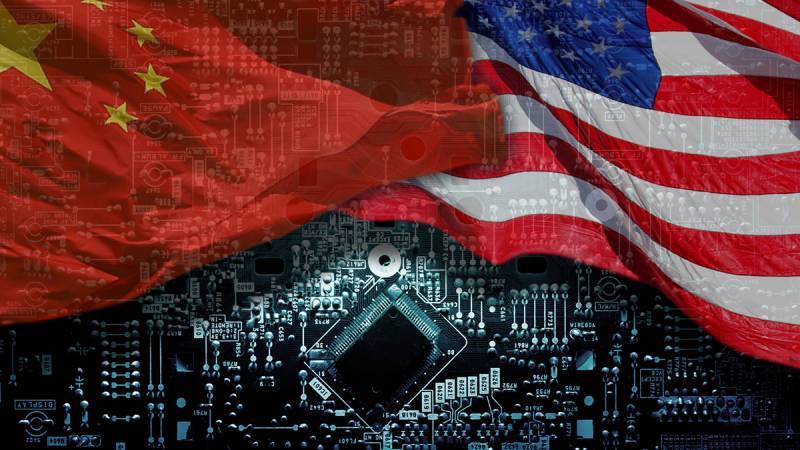
In the wake of technological competition between powers, distrust between major countries is increasing, as exemplified by the United States and China in particular. These infamous rivals have entered a new phase of strategic competition over artificial intelligence. The global arena in 2025 is more well-defined by geotechnical disputes compared to traditional geopolitics, where on global forums, alliances are being shaped by the reality of who holds the most digital dominance.
The US and China's conflict is giving rise to the idea of a “Digital Cold War”. AI is an element of national power for both, beginning with sweeping export controls in 2022, when the US tightened the flow of advanced chips and equipment to China. The other side of the reality is that the US is heavily reliant on China for rare earth minerals, as 70% of them are imported by the US from China.
To reduce its reliance on China, the US is developing friendly frameworks with countries like Japan to mitigate the problem of rare earth minerals. The two are involved in activities to curb each other's ambitions to become global leaders in the realm of technology. Beijing, by using its monopoly on rare earth minerals, has banned exports to the US, which are used in making semiconductors and specialised chips.
Moreover, an export licence is required by companies from Beijing’s government; the order was passed solely for the purpose of controlling exports to the US. This means companies have to seek China’s government approval before conducting export deals with foreign states. China has also restricted the export of technological machinery to the US, which is needed to refine rare earth minerals. The export curb on the US led to a 37% decline in sales of rare earth supplies from China, ultimately causing panic in the US market. To control the brewing tech-war between the two rivals, they decided to hold talks in Geneva, and the US proposed a 90-day pause on the trade war.
AI-powered disinformation campaigns, deepfakes, and AI-generated content are increasingly becoming tools in digital warfare
In parallel, a new tech alliance is emerging in the form of the ‘Chip 4 Alliance’, comprising the US, Japan, Taiwan, and South Korea. This partnership aims to strengthen the global semiconductor supply chain and reduce redundant dependency on China. China, on the other hand, through its mega vision of forming the “Digital Silk Road”, aims to build global digital infrastructure such as 5G networks, satellites, and smart city centres. This strategy is designed to target developing nations to reduce their dependency on Western technology. This fragmentation could lead the world to slide into a "Digital Iron Curtain", separating the US and China-led tech spheres.
AI-powered disinformation campaigns, deepfakes, and AI-generated content are increasingly becoming tools in digital warfare. Russia's alleged spread of disinformation during the US election campaign of 2024 is an example of states using AI against each other. Russian media outlets like RT were blamed for using the media to spread propaganda. Russia even paid content creators in the US to promote a pro-Russian stance regarding the war in Ukraine. Leaked fake AI-generated videos and articles were also used to spread propaganda, influence voter mindsets, and manipulate decisions.
AI-powered fake videos and audios may seem highly believable, but in reality, they are tools used by states to pollute each other’s political culture. Similarly, in South Asia, the use of AI exacerbated the battleground between India and Pakistan a few months earlier. Fake videos worsened the situation, such as one showing the Pakistani Prime Minister conceding defeat to India. Likewise, videos of drone strikes in India and Indian troops entering Pakistan were used by India to pose threats. AI has thus transformed conventional warfare into psychological warfare by targeting citizens and creating unrest and panic.
Moreover, DeepSeek in China and ChatGPT in the US have become symbols of the growing technological rivalry between the two powers. Interestingly, DeepSeek has amazed the world, as despite being developed with less funding and weaker computer chips, it produces strong results. The US sees DeepSeek as a potential threat and has banned its military from using it. Some studies have found that DeepSeek’s answers are more supportive of China’s government, which worries American experts. The US continues to improve its power projection in the form of ChatGPT to stay ahead of China. The competition is not about which app performs better, but about which country will lead in the future.
The escalating race to dominate AI has added fuel to the fire in the US–China rivalry, increasing the risk of misinformation and surveillance. To tame this rivalry, the idea of global governance in AI is needed to control its reign, which could become devastating if left unchecked. UNESCO, in 2021, developed the ‘Recommendation on the Ethics of Artificial Intelligence’ to guide states on using AI responsibly. It emphasises that AI should respect human rights, dignity, and promote fairness and non-discrimination, ensure transparency, and protect privacy and data security.
Similarly, in 2024, the UN General Assembly adopted the first-ever framework on “Seizing the opportunities of safe, secure and trustworthy artificial intelligence systems for sustainable development.” It proposes that AI should support Sustainable Development Goals, fight poverty, and improve education.
An independent international body, ideally under the UN, including experts and members from international NGOs, could monitor adherence to AI ethics. As a result, strict penalties would be imposed for the criminal use of AI. This body would act as global governance in both letter and spirit, ensuring accountability and cooperation among states. Its purpose would be to ensure that AI benefits humanity rather than becoming a cause of its destruction.