

A Personal Preamble
I believe in memory as coexistence, not competition. I believe in acknowledging the pain of the “stateless” Biharis, a community that has endured immense suffering, and I insist on recognising the genocide not out of emotionalism but academic rationality. Yet this does not, and should not, lessen the enormity of the ordeals faced by Bengalis in the former East Pakistan at the hands of the elites of West Pakistan. Rather, this dual truth enriches our shared moral panorama.
What troubles me is the persistent bias towards my community, the lack of empathy, remorse, and the evident disdain shown when describing their situation, particularly their decision to side with the soldiers in the hope of keeping Pakistan unified.
In the following passages, I have attempted to capture some of these biases across key segments of society that shape narratives, the politics of priorities, and the collective memory of a deliberately erased and denied history.
Selective Empathy of Historiography
South Asian historiography has been prolific about 1971 but selective in its empathy.
The atrocities attributed to the Pakistani Army against Bengalis (anti-Pakistan, anti-state, in other words, traitors?) occupy the centre of this moral and scholarly narrative, presented as the sole axis of suffering and righteousness. The toxicity of nationalism and the disproportionate responses are casually ignored.
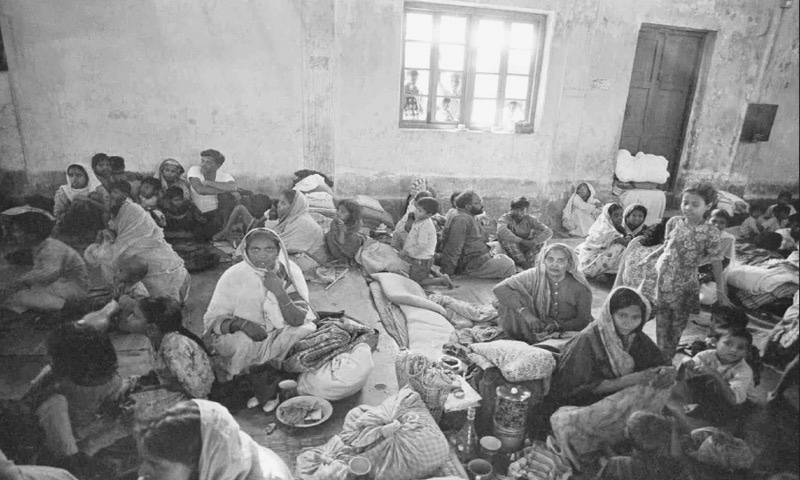
What remains almost absent is the non-glorified patriotism: the stories of Urdu-speaking civilians (mostly Biharis) and even Bengali citizens who sided with the Pakistan Army in the belief of preserving a unified nation. Within this moral universe, the violence inflicted upon them receives only marginal attention, frequently dismissed as “retaliatory killings”.
This imbalance is not merely academic; it shapes the collective conscience. It defines whose pain is considered grievable, and whose suffering remains administratively inconvenient.
Publishers and the Politics of Credibility
Global and regional publishers act as gatekeepers of legitimacy and validity. Works focusing on Bengali suffering have received considerable scholarly attention from prestigious presses; those centred on Bihari experiences have not.
Books from major publishers such as Cambridge, Oxford, and Penguin tend either to reinforce this one-sided focus or to engage in a cautious balancing act that still privileges the dominant narrative. The plight of the Biharis becomes a sub-clause rather than a subject.
This is less a conspiracy than a consequence: access, networks, and ideological comfort dictate visibility. The hierarchy of horrors and hardships is reinforced through the hierarchy of publication and promotion.
Acts of Omission or Commission?
Narratives of Selective “Acknowledgement” from Bangladesh
Inside Bangladesh, institutional discourse continues to revolve around the nationalised trauma of the Bengali genocide.
The Liberation War Museum’s documentation of non-Bengali killings as “isolated incidents” illustrates a tendency to recognise violence without naming it as systematic persecution.
Events such as the Santahar massacre, in which over a thousand Biharis were killed, are framed as sporadic acts of mob violence rather than components of a broader pattern of ethnic targeting. This state-sanctioned framing fortifies social and historical marginalisation, leaving the emotional and political suffering of the Bihari community largely invisible and non-existent.
Within Pakistan’s universities, mostly elite private ones, a newer generation of scholars has begun revisiting 1971 with greater honesty and nuance
Many Bangladeshi historians contextualise the slaughter of Biharis as spontaneous reprisals following a brutal occupation, a framing that empathises but avoids equivalence. Recognising the destruction and discrimination faced by Biharis is often perceived as a threat to the singular moral authority of Bangladesh’s liberation narrative.
I have documented eyewitness testimonies of rape, looting, killings, and disappearances affecting members of my community. Yet such writings have rarely been cited, referenced, or discussed in mainstream media or activism in Pakistan.
The newer generation, shaped by selective historical narratives and political agendas, often knows only about the alleged rape of Bengali women and the killings of Bengalis, remaining either unaware of or indifferent to the Bihari tragedy.
Some senior journalists and influential voices (sadly and regretfully) in both countries have, consciously or unconsciously, underpinned this fractional narrative — and their work has often been rewarded within established media and scholarly circles.
Examples from the Works of Pakistani Academics and Scholar-Warriors
Within Pakistan’s universities, mostly elite private ones, a newer generation of scholars has begun revisiting 1971 with greater honesty and nuance.
Ali Usman Qasmi, in Sorry for What? Asking the Right Questions about 1971 (2023) questions the politics of apology and briefly notes counter-claims about Bihari suffering.
Ilyas Ahmad Chattha has explored the treatment of Bengali detainees in West Pakistan, while Dr Ejaz Hussain examines the politics of memory and apology.
Together, these works represent a reflective turn in Pakistani academia. Yet their focus continues to centre primarily on Bengali suffering, leaving the Bihari experience comparatively underexplored. The Bihari story flickers at the edge of their narratives, acknowledged but seldom examined in depth.
This is not a critique of intent but of emphasis: even within critical and self-reflective scholarship, certain silences endure perhaps less from denial than from the weight of inherited national narratives.
Pakistan’s retired generals have produced an extensive body of memoir literature.
Major Iftikhar-ud-Din Ahmad’s Memories of a Lacerated Heart (1971): A War Memoir and Lieutenant General Khadim Hussain Raja’s A Stranger in My Own Country recount the conflict from within the military hierarchy.
The term “Bihari” refers to all Urdu-speaking communities stranded in Bangladesh, including those who migrated from other Indian provinces after 1947
These works capture the confusion, disillusionment, and fragmented loyalties of that period, yet like others, they frame the war largely through the lens of institutional experience rather than civilian agony.
Lieutenant General A.A.K. Niazi’s The Betrayal of East Pakistan and Siddique Salik’s Witness to Surrender (written when he was a Lieutenant Colonel, years before his later promotion to Brigadier) mention attacks on non-Bengalis but never frame them as genocide. Salik’s account is observant and often humane, yet remains cautious, defending the institution rather than dignifying the victims. His later rank did not alter the restrained tone of a soldier attempting to make sense of the collapse within military discipline.
While such books offer valuable insight into the Pakistani military’s perspectives, broader regional and global historiography continues to centre on the “violence” perpetrated by the Pakistan Army against “Bengali civilians” (rarely identified as Mukti Bahini combatants).
Violence against Biharis by Bengali forces did occur, with estimates ranging from 1,000 to over 15,000 deaths according to various Pakistani and Bangladeshi sources. However, systematic academic study of this violence remains scarce and politically sensitive.
The 1971 conflict was complex, involving atrocities by multiple sides, yet the scale, documentation, and narrative power remain asymmetrical. No military general has yet written a full or candid account of the oppression and genocide of Biharis. The silence of command continues to speak louder than any justification.
Fragmented Archives from Civilian Chroniclers
In my various blogs, columns (in both Urdu and English), and podcasts, I have cited important yet often overlooked references, notably Qutubuddin Aziz’s Blood and Tears (1974), Junaid Ahmad’s Creation of Bangladesh: Myths Exploded and 1971: Ethnic Cleansing of Biharis in East Pakistan, and Sarmila Bose’s Dead Reckoning.
These civilian attempts remain among the few sustained, though limited and contested, efforts to document the ordeal of Urdu-speaking and Bihari communities in the former East Pakistan. Their emotional tone and modest circulation have kept them outside mainstream academic citation. Yet they preserve eyewitness voices that would otherwise be lost to the political amnesia pervading not only state institutions but also academia, media, and activism.
Closure Needed — But How?
The Bihari community deserves repatriation, irrespective of nationalism, demography, or other “pragmatic” considerations. Empathy must not be confused with vain emotionalism.
Closure comes not only through sincere acknowledgement and apology from Bangladesh, Pakistan, and from all human rights and feminist champions who have either carefully highlighted only one side of the story or chosen to remain ignorant or silent, but also through concrete action.
Silence aches. Silence is complicit.
True reconciliation requires the ethical courage to remember all who suffered, not only those who fit within dominant narratives or the agendas of international brokers of power, politics, and peace.
Author’s Note
The term “Bihari” refers to all Urdu-speaking communities stranded in Bangladesh, including those who migrated from other Indian provinces after 1947.
All references have been fact-checked. Opinions are the author’s own, though AI-assisted reviews were used to enhance coherence and accuracy.
This feature draws upon the author’s research on social invisibility, gendered marginalisation, post-conflict memory, and publicly available sources, including court rulings, NGO reports, and academic works.