

I cannot shake the image of two little girls trapped in a car on a deserted mountain road in Balochistan. Their father lay dead behind the steering wheel. Their mother, shot multiple times, struggled to remain conscious—not for herself, but for her daughters.
The attack took place late at night on June 27, 2026. The family was returning to Karachi after a holiday in Balochistan when they apparently took a wrong turn. According to reports, they encountered suspected Baloch insurgents who signalled for the vehicle to stop. Fearing for his family's safety, the father accelerated in an attempt to escape. Gunfire erupted. He was killed instantly.
Inside the vehicle, the horror was only beginning. The burst of gunfire left the two little girls terrified. Despite her own critical injuries, their mother fought to stay conscious, comforting them while desperately trying to contact relatives in Quetta. She could tell them what had happened, but not where they were. Lost on unfamiliar roads in a remote mountainous area, the family remained stranded in the darkness.
Every passing minute reduced the family's chances of survival, yet more than five hours elapsed before the search party finally located them. Those long hours are difficult to comprehend. Two little girls remained inside the vehicle beside their father's body while their wounded mother struggled to stay conscious and reassure them. Around them stretched darkness, silence, and a remote mountainous landscape with no sign of human presence. The isolation itself became part of the ordeal. When relatives and security personnel finally reached the vehicle, the girls reportedly broke down, crying, "Uncle, they killed our daddy!"
The story, however, does not end with the rescue. Tragedies like this test not only our humanity but also the narratives through which we choose to see them. What followed demonstrated how quickly even the suffering of innocent civilians became filtered through competing political and ideological lenses.
The girls' grandfather later praised the Balochistan government for maintaining regular contact regarding his daughter-in-law's treatment. At the same time, another family member publicly expressed disappointment that the Sindh government, despite the family's home being in Karachi, offered neither support nor even words of consolation.
When journalism mourns only those whose suffering fits an ideological narrative, it ceases to illuminate conflict and begins, however unintentionally, to sustain it
Mainstream television channels and national newspapers covered the attack extensively, questioning the brutality of targeting a family of civilians. One television channel displayed a simple but heartbreaking message across its screen:
"دو کمسن بچیاں بچ گئیں، تصویر نے ہر دل کو لرزا دیا"
("Two young girls survived; the image has shaken every heart.")
Yet another silence was equally revealing.
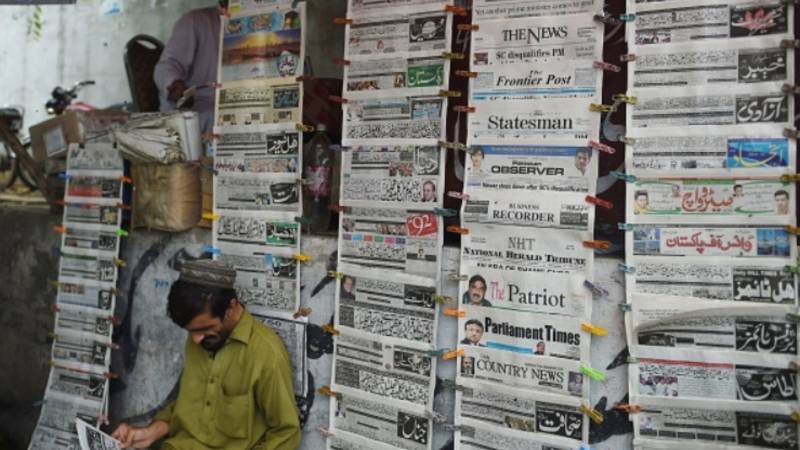
Several partisan media outlets in Balochistan, which regularly document enforced disappearances and alleged state abuses, gave little or no attention to the attack. This was not, in my observation, an isolated omission. Over time, I have tracked reporting patterns in which attacks on civilians belonging to non-Baloch communities frequently receive limited or no coverage, even as abuses against Baloch civilians receive extensive attention. The concern is therefore not a single editorial decision but a recurring pattern of selective visibility.
A similar contrast emerged after the suicide bombing of a military train near Chaman Phatak in Quetta on May 24, 2026.
Soon after the attack, the BLA's media wing released a statement portraying the bombing as a military success while denying that civilians had been harmed. A report published in a local newspaper of Balochistan reproduced the insurgents' operational claims in considerable detail, including their denial of civilian casualties.
Mainstream newspapers, however, reported a very different human reality. The blast extended beyond its intended target into nearby residential areas. Houses were damaged. Civilians waiting to buy breakfast were among the casualties. One family living close to the railway tracks - a father, mother, son, and daughter—was reported killed inside their home.
Whether the omission of those civilian deaths was intentional, ideological alignment, or some other consideration, the consequence was unmistakable: readers received a detailed account of military damage but little indication of the civilian suffering that accompanied it.
The issue extends beyond one newspaper or one attack. Every prolonged conflict risks creating a hierarchy of victims. Some deaths become symbols that dominate headlines, speeches, and campaigns. Others pass with little acknowledgement because they complicate preferred narratives. Once empathy becomes selective, journalism gradually shifts from documenting human suffering to reinforcing political identities.
This selective compassion has consequences. It encourages each side to view only its own losses as morally significant while dismissing the suffering of others as irrelevant, exaggerated, or deserved. In such an environment, violence acquires its own logic, with every atrocity becoming justification for the next.
The state bears its own share of responsibility for this cycle. For decades, its failure to address legitimate grievances in Balochistan has deepened alienation and mistrust. The peaceful, fifteen-year campaign led by Mama Qadeer under the banner of the Voice for Baloch Missing Persons remained largely ignored by the national political establishment. When Mama Qadeer died in December 2025, he left behind a sobering reminder that peaceful activism often fails to draw the attention that armed violence so readily receives.
At the same time, Pakistan's political leadership has repeatedly explored negotiations with religious militant organisations, including the Tehreek-e-Taliban Pakistan, while no comparable national consensus has emerged around sustained political engagement with Baloch insurgent groups. Whether one agrees with such dialogue or not, the disparity itself has shaped perceptions of exclusion.
None of these realities can justify the deliberate targeting of civilians. Nor can insurgent violence excuse the state's failures. Both must be confronted if the cycle is to be broken.
Violence survives not only through weapons but also through selective empathy. When journalism mourns only those whose suffering fits an ideological narrative, it ceases to illuminate conflict and begins, however unintentionally, to sustain it.
A society in which "our" pain matters but "theirs" does not gradually lose any common understanding of justice. Until both the state and the media learn to recognise the equal humanity of every innocent victim—regardless of ethnicity, profession, or political identity—Balochistan's tragedies will continue to produce not only more violence, but also more silence.