The Pew Research Center in America is a well-respected, nonpartisan, nonprofit organization that monitors global social and political trends. A recent study it published states that during the past six years the number of countries experiencing religion-based terrorism has doubled worldwide. Pakistan has been listed on the top of countries that in 2012 suffered severe sectarian and social conflagrations. Unfortunately, most Pakistanis don’t need to read published reports from think tanks to learn about the scourge of terrorism; they experience it firsthand every day.
For the younger generation that has grown up in a climate of ubiquitous conflict and unremitting urban terror, it might be natural to assume that it has always been the normal state for Pakistan; that the country has always been a hotbed of religious extremism where militant groups operate freely. However, not so long ago, Pakistan was a prized destination for foreign visitors, businessmen and investors who came here seeking new opportunities for commerce, or to enjoy the country’s abundant natural beauty. In the fifties and sixties, a number of foreign heads of state – kings, prime ministers, presidents – came on state visits to forge ties with an economically stable country on a trajectory of growth and prosperity. In turn, Pakistani leaders were invited to and received as honoured guests in foreign lands.
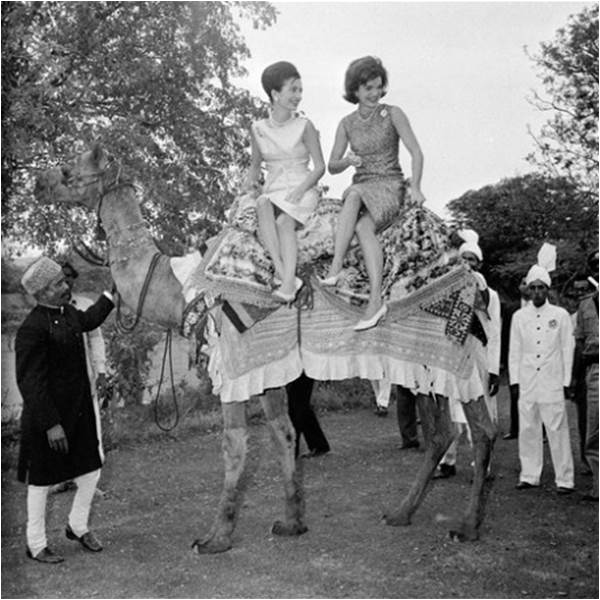
Karachi 1962 Jacqueline Kennedy perches on camel in Karachi while on a visit to Pakistan
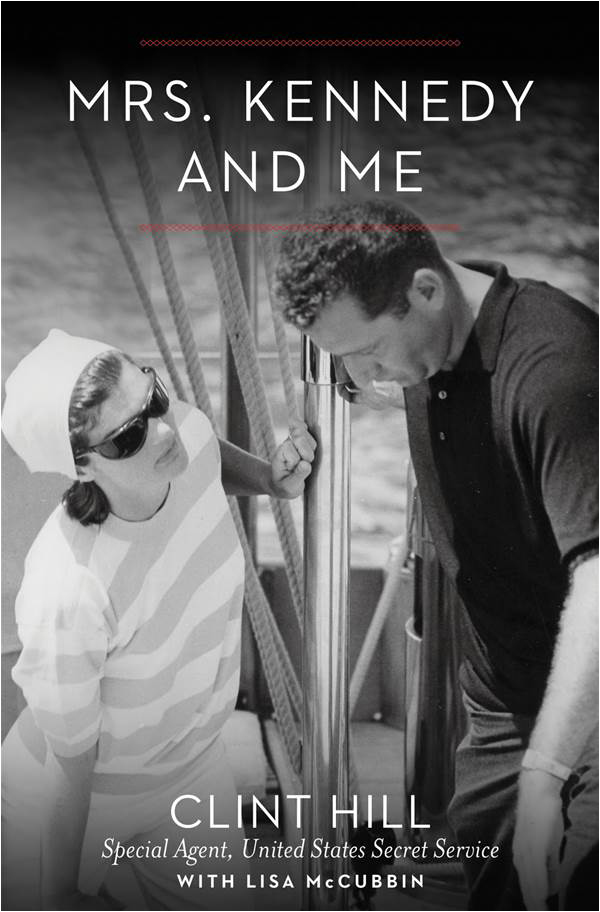
Two recent books provide some glimpses into the Pakistan of the sixties, when religious fanaticism had not soiled the fabric of society yet. The books, These Few Precious Days, by Christopher Andersen, and Mrs Kennedy and Me, by Clint Hill, published by Gallery Books, are not about Pakistan. Focused on John Kennedy and his wife, Jacqueline (Jackie) Kennedy, they provide a behind the scenes, intimate narrative of the president and the first lady’s complex relationship, along with personal accounts of the world leaders they met. Buried in the texts are some captivating details about President Ayub Khan’s historic state visit to America in July 1961, and Mrs. Kennedy’s fairytale journey to Pakistan a year later in March 1962. These details sound surreal today, not so much of the visits themselves, but more of what they tell us about the Pakistan of yore and the societal mores and cultural milieu of the time, serving as powerful indices of how much the country has changed.
John Kennedy, the young, charismatic American president, who had infused a new sense of energy and vitality into the American public invited President Ayub Khan on a state visit just a few months after taking office in January 1961, revealing the importance he attached to Pakistan. Ayub Khan, travelling in a PIA plane, accompanied by his daughter, Begum Nasim Aurangzeb, was received personally by the US President, a rare occurrence. Foreign dignitaries are generally welcomed by the president at the White House, not at the airport.
Jackie Kennedy, the young, beautiful American First Lady, who had a reputation for being a highly accomplished woman with a refined and sophisticated taste, decided that she would do something distinctive to honour the Pakistani president. She decided that the dinner would be held on the lawn of the historic Mount Vernon mansion instead of the White House, with a spectacular view of the Potomac River, some 16 miles from Washington DC. The estate had been the home of the first president of the Republic, George Washington, who is much revered as the father of the nation for expelling the British in 1776.
[quote]Fine china, crockery and cutlery were shipped in from the White House[/quote]
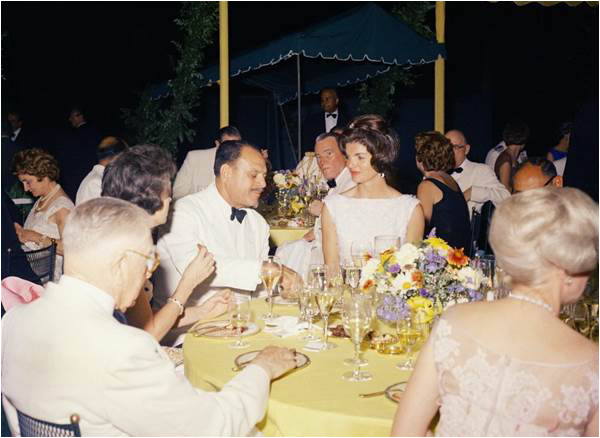
In his book, Andersen recounts the logistical difficulties of organizing such a large, formal event at the mansion which, although exotic, did not have electric power at the time. Jackie’s resourcefulness and organizational skills were put to work. Giant electric generators were brought in by riverboats to provide electricity. Fine china, crockery and cutlery were shipped in from the White House and huge tents were erected to accommodate the orchestra that played during the event. The guests were brought in three boats, each with its own musical band to entertain the guests during the one hour ride to the mansion. President Ayub’s lavish state dinner was the first and the last; there has never been another state dinner at Mount Vernon. Before leaving Washington, the Pakistani President was invited to address the joint session of the US Congress, a singular honour. All these honours were not designed to compliment President Ayub personally; rather they were a tribute to Pakistan’s status in the comity of nations.
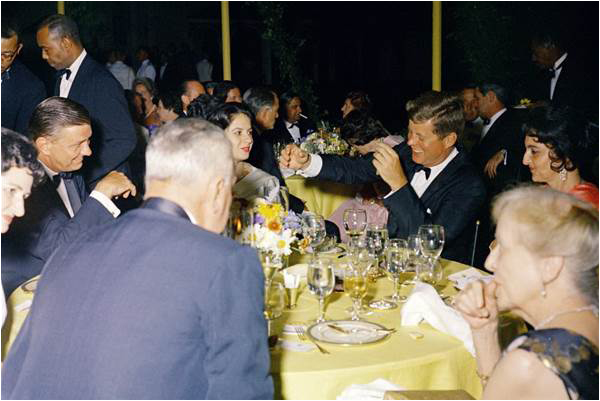
President Ayub dines next to Jackie O at the Mount Vernon guest house near Washington DC
President Kennedy with Ayub Khan's daughter Begum Nasim Aurangzeb at the state dinner at the Mount Vernon guest house
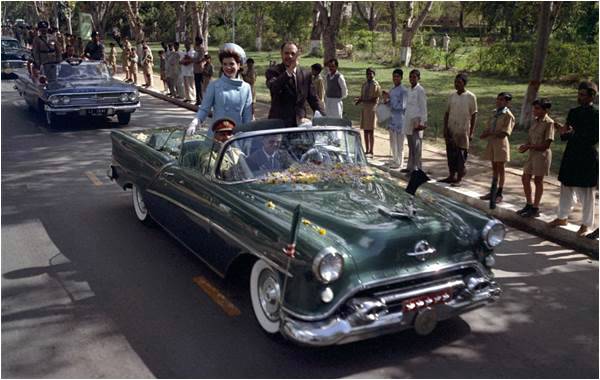
A few months later Ayub Khan had the opportunity to reciprocate some of the hospitality he had received in America when, in March 1962, Jackie Kennedy came on a visit to India and Pakistan. Clint Hill, who was the chief of her security, provides some captivating details of her trip that now, five-decades later, sound beyond belief. Arriving in Lahore from India, Jackie Kennedy and her sister Princess Radziwill were received at the airport with full honors by President Ayub, as children waved festive banners and balloons.
As the motorcade progressed, with Jackie Kennedy in an open car, thousands of people were lined up on both sides of the road, excitedly cheering and waving. Then, incredibly, Hill writes, “The president convinced the American First Lady to stand up so that the people could see her.” Just the idea today of a foreign celebrity travelling in an open car in the middle of a major metropolis in Pakistan is enough to make one’s hair stand on end. Hill cites the words of appreciation from Kennedy, “Mr. President, the people in your country are so warm and friendly. It is just wonderful to be here.”
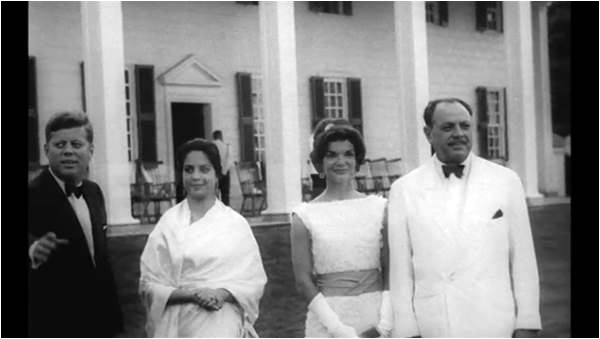
The Kennedys and Khans during President Ayub's state visit to the US
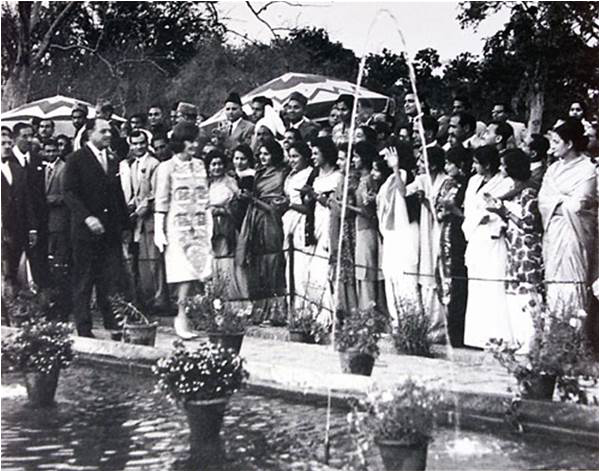
President Ayub and Jackie Kennedy greet well wishers at the Shalimar Gardens
Then there was the superlative open-air reception given to the visiting First Lady in Emperor Shah Jahan’s historic Shalimar Gardens to which more than seven thousand guests had been invited. When countless colorful light bulbs concealed in the trees came alive they presented a magic panorama. Hill quotes Jackie Kennedy’s stunned remark: “All my life I dreamed of coming to Shalimar Gardens. I thought fate would never get me here, but it is lovelier than I’d dreamed.”
The most audacious part of the itinerary was a thirty-four mile trip to the Khyber Pass from Peshawar, moving through winding, narrow roads and hairpin turns through mountainous terrain, leading to the border with Afghanistan. Arriving at the Jamrud Fort, the party was warmly greeted in the traditional style by waiting tribal chiefs and elders who presented Mrs. Kennedy with a dagger. On the way back, Hill noticed that the surrounding hills were dotted with Khyber Rifles militiamen keeping an eye on potential troublemakers. All the details of the trip are detailed minutely in the book.
It is the chronicle of a time when the only problem the visiting Americans faced was how to ship a horse, named Sardar, to Washington which had been presented to the American First Lady by President Ayub Khan.