

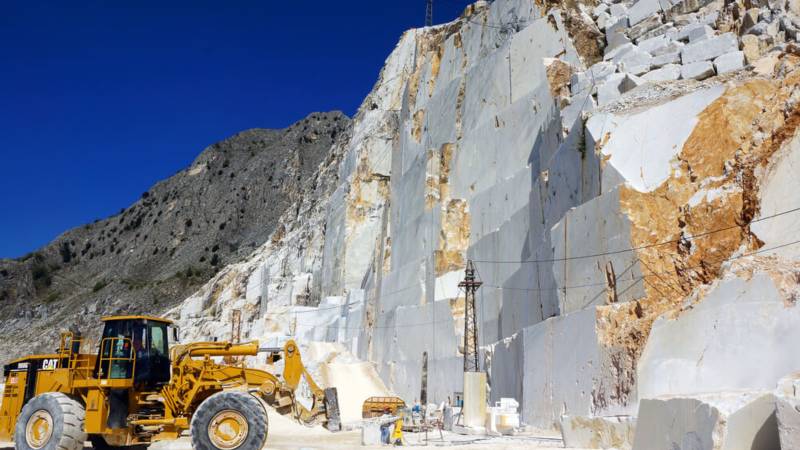
Khyber Pakhtunkhwa (KP) is home to some of the finest marble reserves in Pakistan, with districts such as Buner, Mardan, Swabi, Mohmand, Charsadda, Malakand, Nowshera, and Mansehra leading in extraction and processing. These areas have witnessed a rapid rise in marble factories, feeding national demand for construction and decorative stone. While this industry symbolises economic progress, the reality behind its glossy surface reveals a much darker narrative—one of environmental degradation, public health emergencies, and unchecked industrial sprawl. The beauty carved from our mountains is coming at a steep and silent cost.
Beneath the hum of cutting machines and the glint of polished stone lies a rising tide of pollution. Marble processing releases vast amounts of fine dust particles into the air—microscopic fragments produced during cutting, grinding, and polishing. These particles drift and settle over homes, schools, and marketplaces, gradually invading the lungs of residents. Inhaling such dust over time leads to chronic respiratory conditions like asthma, silicosis, bronchitis, and persistent coughing. The impact is especially severe on children, whose lungs are still developing, and the elderly, who often battle pre-existing health conditions. In affected communities, people are forced to stay indoors, seal their windows even in blistering heat, and depend on medication to survive what has become a daily struggle to breathe. Yet, many have no alternative but to live beside these factories—often without warning or protection from the risks.
The environmental damage does not stop with the air. Marble slurry—a thick mix of stone powder and water—is frequently discharged untreated into streams, canals, and agricultural lands. Rich in calcium carbonate and often laced with heavy metals, this waste contaminates drinking water sources and irrigation systems. Families, unaware of the source of their health issues, report a growing incidence of kidney stones, digestive problems, and skin diseases, especially among women and children who are most involved in household water use. Meanwhile, farmers find their soil turning white and hard, unable to retain moisture or support healthy crops. Once-fertile fields are silently being stripped of life—not by drought or climate change, but by human negligence.
The stone that adorns our homes and offices is leaving lasting scars—on our environment, our health, and our future
While environmental laws exist, they are rarely enforced. Many marble factories operate without the necessary approvals from the Environmental Protection Agency (EPA) and ignore pollution control standards. Official inspections are infrequent, penalties are minor, and public complaints rarely lead to action. The absence of proper zoning regulations allows industrial units to be set up near homes, schools, and clinics, leaving entire neighborhoods exposed to constant pollution. Workers in these factories, many of whom lack formal training or safety gear, are exposed daily to hazardous dust and chemicals—without health insurance, protective equipment, or legal safeguards. For them, every breath is an occupational hazard.
Yet the situation is not beyond repair. The marble industry can still play a vital role in KP’s economy—if it shifts toward responsible and community-focused operations. This means enforcing environmental regulations more rigorously, ensuring all factories obtain EPA clearance and undergo regular audits. Dust suppression systems and slurry treatment facilities should become mandatory. Industrial units must be relocated away from residential areas, guided by environmental impact assessments and proper urban planning. Regular medical camps are needed to monitor and treat diseases linked to marble pollution, particularly among vulnerable groups. And above all, communities must be informed and involved—educated about the risks, their rights, and how to hold violators accountable.
KP’s marble belt may gleam with promise, but beneath its surface lies a public health emergency that can no longer be ignored. The stone that adorns our homes and offices is leaving lasting scars—on our environment, our health, and our future. True progress lies not just in economic output, but in protecting the land and lives it depends on. The time has come not only to polish marble—but to polish our conscience.