

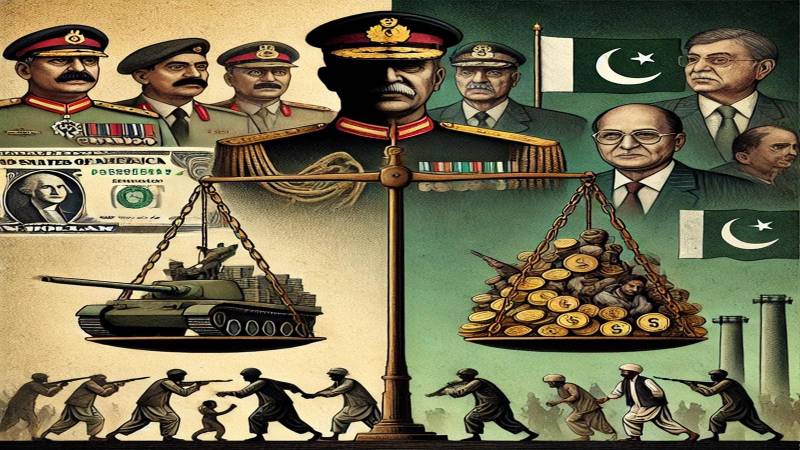
In the spring of 1997, I did a fellowship with a Washington-based think tank on conflict resolution in the context of Pak-India relations. The people at the institute arranged my meeting with the then senior US diplomat, Robert Oaklay, the famous American Ambassador in Islamabad who was often dubbed as Viceroy in the later 1980s. Mr Oaklay was visibly excited to receive a Pakistani journalist. Now and then during the meeting, he would use the refrain, “Pakistanis are our friends”. He delivered a very perceptible analysis of India-Pakistan relations. After listening to his oft-repeated refrain for the third time, I gathered the courage to interject, “No sir, Pakistanis are not your friends, you never considered Pakistanis your friends, and neither do Pakistanis consider Americans or America their friends now”. He was not incredibly pleased.
However, I explained that there had been two occasions before the 1990s when US-Pakistan relations appeared to be deeply rooted and extensive. First during 11 years of Ayub Khan and then during 9 years of Zia-ul-Haq’s rule. Both times Americans wanted to play geo-politics games against Soviet expansionism in the region. Both the times when the Americans were supporting the military governments, popular political movements were going on in Pakistani society against the military regimes. In fact, during both these periods, people, substantive segments of the society were opposed to the military governments that Americans were supporting in Islamabad, “You were there in our region to play geo-political games and in these endeavors, Pakistani military, intelligence services, and army generals were your allies, not the people of Pakistan” I told Mr. Oaklay. He remained unmoved and kept on insisting that, “Pakistanis are our friends”.
Washington provided billions of dollars worth of military, financial, and economic assistance to the military government of Ayub Khan, General Zia-ul-Haq, and later to General Musharraf, who was only two years away from imposing Martial Law in October 1999, when I met Robert Oaklay in the National Defense University of Washington D.C, in the spring of 1997, where he was posted then.
All three military governments were extremely unpopular, a reality attested by the fact that every time the military government ended, the parliamentary elections that followed brought anti-military campaigners to power in Islamabad
General Musharraf’s military coup and the way Washington footed the bill for his adventure proved my point beyond any reasonable doubt. Musharraf era started with the distribution of sweets in the streets of urban Pakistan—a not-so-secret display of trickery on the part of state machinery, something which has become a ritual accompanying military takeover, to prove that military coups are welcomed in Pakistan—and ended at a point where Musharraf became a hate figure for Punjabi middle classes.
All three military governments were extremely unpopular, a reality attested by the fact that every time the military government ended, the parliamentary elections that followed brought anti-military campaigners to power in Islamabad. These military governments faced the challenge of legitimacy on constitutional and political levels and their sources of power stemmed from their international connections and the naked power of the gun that the military possessed. To all three military governments Washington provided financial and military assistance, a reality that consolidated military leaders' hold on the power structure within the country. There is another commonality between these three military governments: during the tenure of all three military governments, Pakistan’s economic growth rate was close to or above 6 percent, which was the highest if we compare it with the economic growth rate during civilian rule that preceded or followed them.
To use Harold Goswell's definition of politics as an activity that revolves around the question, “Who gets how much and when”, I would like to draw the attention of my readers to another common feature of Pakistan’s three military governments: They were all pro-rich. Economic growth during these eras was especially designed to disproportionately favor the rich. Pakistan, on the other hand, right from the very beginning, and especially during the tenures of military governments, was a country of the poor. Ayub Khan's government adopted the advice of the Harward Group—a team of American developmental economists—to focus on economic growth, even if it favors the rich capitalists, as growth will automatically take care of the poor in society. This trickle-down economics was the buzzword during the rest of the two military governments. Zia was no less a follower of trickle-down economics as is evident from his policies of favoring capitalists and rich traders in his economic policies. They were offered tax holidays, duty-free imports of capital goods, and subsidies.
Not only American financial support but favorable conditions for obtaining loans from international financial institutions were available to all three military governments in our history
The only thing during the Zia period that favored the lower classes and the middle class was not something that was the making of military dictatorship—it was the rising demand for unskilled labor in Persian Gulf sheikhdoms that brought remittances from abroad which in turn provided some semblance of affluence to Pakistani middle classes, mostly in Central Punjab. The generous financial support received from the West was another factor that stabilized the economy, but the fruits of growth went into the pockets of already rich capitalists and big traders. The Musharraf regime was another recipient of Western financial largesse in the country's history. Another story of the high growth rate took place during his nine-year rule. So, this was the last time Pakistan’s economic growth rate crossed 6 percent.
There has been a very lively debate among Pakistani economists on the point related to how US financial assistance influenced high growth rates during the three military governments. While everyone agrees that foreign financial assistance and the favored political climate this gave rise to, played a crucial role in making higher growth rates possible during the military governments of General Ayub Khan, General Zia, and General Musharraf, there are people associated with one or the other military government who claim that these high growth rates were the outcome of “liberal economic reforms” introduced by military governments such as the one led by Pervaiz Musharraf. For instance, Dr Ishrat Hussein, former State Bank Governor during the Musharraf era, noted in one of his old writings that high growth rates during the Musharraf regime were not the result of US financial assistance but rather the outcome of his liberal economic reforms.
There is a second more lively debate among the pro-military and anti-military government economists about why these military governments failed to make the growth in their eras more pro-poor. Among Pakistani economists, it is agreed that a substantial growth rate is essential for reducing poverty in Pakistani society. However, growth does not automatically reduce poverty. Growth must be pro-poor to make a dent in the logjam of poverty in our society. The government in power must institute a public policy of sharing the fruits of growth with the poor. A case in point is pro-rich growth during the Musharraf era, “The results show that 80 percent of the growth during the period was contributed by the services sector, consisting of banking, telecommunications, and to a lesser extent, trade, and transport. In the case of the large-scale manufacturing sector, the predominant driver of growth was automobiles and consumer electronics. These sectors neither produce goods for the poor nor employ them. Therefore, the structure of the growth process during the Musharraf period was such that it could not be expected to have a substantial positive impact on poverty,” reads a newspaper column by the country's leading Economist, Dr Akmal Hussein.
Is it just a coincidence that all three military governments in our history designed their economic and public policies, which were pro-rich? Why did they always and in every case disproportionately favor the rich, the capitalists, industrialists, and big traders? Was Ignoring the poor a deliberate policy among the military regimes that ruled Pakistan for more than 70 years of our existence? It seems that Washington’s financial largesse and political support played a significant role in making these military dictatorships succeed on the economic front. Not only American financial support but favorable conditions for obtaining loans from international financial institutions were available to all three military governments in our history.
So, can we assume—because there is no plausible evidence available to support this argument—that it was Washington and its Western partners, that wanted certain social and economic classes to flourish during the periods they were extending political and financial support to Pakistan? Every time Washington withdrew its financial and political support, the Pakistani economy nosedived in terms of growth rates. After Ayub’s growth rate of close to 6 percent, the growth rate during the Bhutto period declined to less than 5 percent. After Zia’s above 6 percent growth rate, Pakistan witnessed the worst decline in economic conditions when the growth fell merely 4 percent. Similarly in the post-Musharraf period, the economic conditions have been continuously worsening. Of course, Washington’s ignoring Pakistan was not the only reason behind the post-military government decline in the growth rates of our economy.
They were first here to defeat Soviet Russia; the second time they were here to defeat Islamic extremism. Poverty in Pakistan became their concern only when they perceived it as the basis of terrorism and militancy
Political instability, terrorism, militancy, the war in Afghanistan, and the inaptitude of successive civilian governments are among some of the culprits. It would be highly unjust if we say that these military governments did not mismanage and if we say that these military governments were any less inept. But certainly, American dollars were flowing into their coffers at a steady pace, which made the difference. Both Ayub Khan and Musharraf made poverty alleviation part of their stated policies. However, their overall economic policies favored the rich. Pakistan’s serious-minded economists agree that poverty alleviation programs such as cash transfers could provide time-bound relief to the poor and downtrodden, but these programs cannot reduce the level of poverty in Pakistani society.
We need to seriously investigate whether there is a correlation between American financial assistance to military governments and deliberate pro-rich policies designed by these military governments. There is no available evidence to suggest that Washington specifically wanted these military governments to favor the rich in the process of consuming US financial assistance. Harward Group and its advice to the Ayub Khan government to embrace a trickle-down economic paradigm appears to be only a sign that Washington also favored the rich in Pakistan. Otherwise, USAID was working in full swing during the Musharraf period and invested massively in educational, social, and basic amenities programs in Pakistani society.
During the Musharraf period, US officials were concerned about the possible correlation between poverty in Pakistani society and the rise of terrorism and militancy in Pakistan. This also compelled Washington to invest in social and educational programs in poverty-stricken areas of Pakistan. But all these programs failed to change the power structures in our society. These three military governments and the generals who were leading them presided over Pakistan’s power structures—some of these generals in the later years and decades became the owners of leading business and industrial concerns. Pakistan’s military governments were modeled on the premise that the military junta was holding on to power with great difficulty among an ocean of anti-American feelings. At least Musharraf’s government structures were deliberately based on this theme. So, it was thought better to keep the ocean of anti-American feeling deprived of American largesse. Only cosmopolitan business classes should be given a share in resources coming from Washington and Western powers into the coffers of the military regime. Pakistan’s emergent middle classes were the second beneficiaries of Washington’s largesse which translated into higher growth rates during Musharraf’s tenure. Part of these emerging middle classes are no less cosmopolitan.
Similarly, Ayub Khan also tried to alleviate poverty by introducing the agricultural revolution in Pakistan’s rural areas. But his revolution, in which American experts and financial resources helped him, disproportionately favored big landlords and bypassed the poor tenants and farmers—many of whom migrated to urban areas in search of employment in the newly growing industrial sector and later became staunch followers of Zulfiqar Ali Bhutto who gave them voice. I think no society in the modern age could ignore the impact of its past on its present and its future.
Unfortunately, we are such a society—we do not know how deeply American influence has impacted our society and in how many ways. How American financial largesse during military governments deeply entrenched specific social and economic classes in our economy, our power structures, and our leading institutions? How have the poor suffered badly because of the distortions introduced in our economy and power structures by the three military governments? These specific social and economic classes not only control our resources but play a decisive role in our political and social life. I think we should ponder upon the following question: Whether Pakistan’s fate have been different in case we had received American financial assistance during legitimate democratic elected governments, which would have spent American financial assistance on the social and educational development of the poor and downtrodden to recruit these lowers classes and their potentials for increasing the economic productivity of Pakistani society?
It is useless to blame the Americans who were in the region to play geo-political games. There was not an altruistic mission. They were first here to defeat Soviet Russia; the second time they were here to defeat Islamic extremism. Poverty in Pakistan became their concern only when they perceived it as the basis of terrorism and militancy. We should start introspection—an introspection which will take us to questions as to how and why we squandered away our economic potential by depriving the poor of their rightful place in the society and its economic growth and why we spent all our resources, both national and foreign, on building artificial classes of entrepreneurs, which can’t even prepare our economy to be competitive enough to be a player in the international market.