

A colleague of mine told me his dream and said:
“I saw you in my dream, and you asked me what should be the title of my article?”
I replied: “Challenging the norm”.
As a healthcare provider in an impoverished region of Punjab, “challenging the norm” and breaking free from the comfort zone will push the medical frontier to a higher bar. Too often, people scoff, laugh, or dismiss thinking that does not conform to the way we do things. But it is new thinking that inspires us to challenge convention and complacency, and sometimes even bring about meaningful change.
These days, data sharing and new technology are driving a proliferation of channels that are enabling new thinking and ideas to find solutions to disrupt new vistas in the healthcare sector.
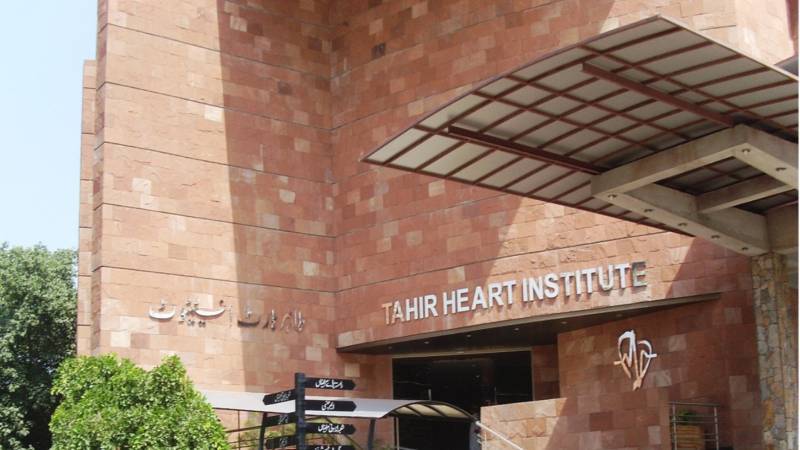
Moving into a rural set-up in the most impoverished region of Pakistan was a challenge in itself. The complete lack of infrastructure, poor sanitation, inadequate sewerage facilities, and frequent electricity outages were significant obstacles. To add to this, the lack of healthcare staff and limited financial resources further compounded the challenge. Under such trying conditions, opening a cardiology and cardiac surgery hospital seemed a far cry.
Many “well-wishers” argued that “a heart hospital should be established in a big city. Here, in the village setting of Pakistan, the population is minimal, the incidence of heart diseases is low, and the income of the inhabitants is less.” One elder even remarked, “Are you insane?”
Finding myself standing at the crossroads of two important tasks, each one demanding my attention and pulling me in different directions, I felt a profound truth settle in my heart. I said to myself, “Not all battles are fought with action. Some are won through stillness and prayers.” Against my better judgment, I chose not to dive into the sea of tasks that lay before me. I chose to pray instead. This was not a fleeting prayer or a quick “help me God” moment. The situation I was facing was complex and weighty. I decided to take a step back and seek clarity through extended prayer. I took a few days off work and went to meet a saintly person in a far-off land, where I could truly disconnect. I spent those days praying, fasting, seeking advice, and sitting in the silence of God’s presence.
The experience with the saintly person was transformative. The first thing I noticed was a profound sense of peace that washed over me— a peace I had not realised I was missing. It was not the kind of peace that comes from solving problems or making material progress. It was the kind of peace that comes only when you surrender fully to God’s presence, trusting that He is the best guide. As the days passed in stillness, clarity began to unfold. After a few days, I was ready. I rose from the place of prayer and dedicated my life to the service of humanity.
There is no burnout. There is no exhaustion! Challenging the norm has paid off in saving a life
Since then, I have seen God’s hand in everything I have done. He has orchestrated every step, bringing exactly the right people and resources at exactly the right time. At Tahir Heart Institute, I want us to focus on making prayer central to everything we do, not only as staff but also as a community. I know we are blessed to be part of a praying community. I believe prayer is the greatest ingredient in pursuing our hospital’s mission in God’s way. “Prayers without ceasing” is a central theme in the working of Tahir Heart Institute.
The building of the hospital was completed in a record time of four years. All equipment and essential machinery were installed. A core team of dedicated doctors and paramedics was recruited. Although most of them were ‘untrained’, they were passionately committed to serving ailing humanity. I was amazed at their dedication, selflessness, loyalty, and keenness to learn.
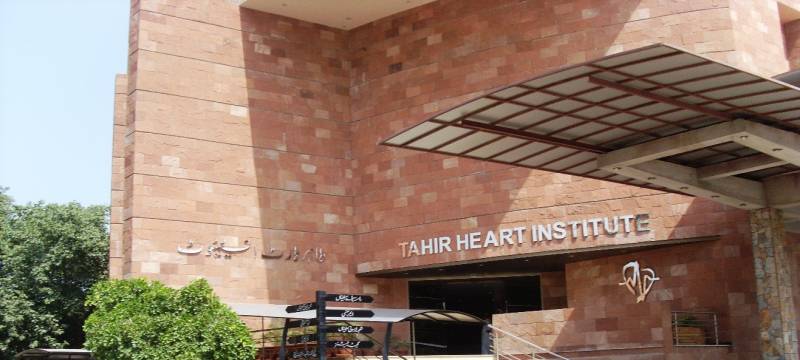
Cardiological services, unlike a general hospital, are extremely demanding and require a high level of skill, expertise, and above all, compassion. With God’s help and the prayers of the elderly, the hospital took off to an amazing start. Over the years, the hospital’s work skyrocketed, and countless heart patients were treated, saving numerous lives each year. However, this comes at a price — the job of doctors also comes with a significant amount of stress and pressure. This must be balanced between pressure and compassion. While ‘challenging these norms’, the rewards and blessings that follow are immensely gratifying.
In the following narrative, we take a closer look at the stressful life of doctors working in a heart hospital and the ways they balance pressure and compassion.
Long Hours
Doctors in a cardiac hospital often work long hours, including nights and weekends, to meet the needs of their patients. Ordinarily, this should lead to exhaustion and burnout and make it difficult to maintain a healthy work-life balance. But not so in Tahir Heart Institute, where passionate commitment to their profession keeps them ‘flying high’.
On a particular weekend when work ends and the workforce leaves for their homes, the phone rings and the doctor on duty calls:
An emergency with a massive heart attack has arrived in the Chest Pain Centre. He is gasping for breath and is semi-comatose. His ECG shows an acute heart attack.
The cardiologist, who had just entered home and was about to join his family for dinner, called back:
“Please start all emergency measures, call the cardiac catheterisation laboratory team immediately. I’m on my way.”
On arrival, the doctor rushes upstairs to attend to the dying patient.
With meticulous care, he operates on the critically ill patient. Two of his blocked arteries are opened with stent deployment. A life is saved! The patient opens his eyes and, with a gentle smile, thanks the doctor and his team.
Outside, a crowd of anxious relatives and friends eagerly await the news.
The doctor emerges from the operating room with hands held high in prayer, greets the family smilingly and announces: “With Allah’s grace, He has given your patient a new lease of life. Prayers have stood by his side.” Tears roll down everyone’s cheeks. Some fall into prostration, thanking Allah. Some hug each other. His wife embraces the doctor, her heart overflowing with emotion.
After the doctor leaves the hospital, his heart is filled with gratitude, and he recollects the entire event. He says to himself, “There is no burnout. There is no exhaustion! Challenging the norm has paid off in saving a life.”
A doctor’s life is about helping those in need, and God invariably helps. Such incidents are everyday occurrences
Hardly a couple of hours pass, well past midnight, and the phone rings again.
“Sir, another patient with excruciating chest pain has been admitted. He desperately needs angioplasty and pacemaker implantation. He is penniless and cannot afford it.”
The doctor wearily replies, “I’m on my way. Please shift the patient to the operating room.”
While rushing through the corridors of the hospital, the patient’s wife — a young woman in tattered clothes, clinging to her two malnourished boys — is weeping bitterly. The doctor reassures her: “No stone will be left unturned for your husband’s treatment, and do not worry about the hospital bills.” With prayers, the doctor and his dedicated team proceed with the interventional procedure. After two long hours, the procedure is completed. The wife and children, still weeping, are immensely delighted as the patient’s life is saved. They raise their arms in gratitude, still sobbing. The doctor reaches home late. It is dawn. He thanks Allah and smilingly says, “Allah helps the brave!”
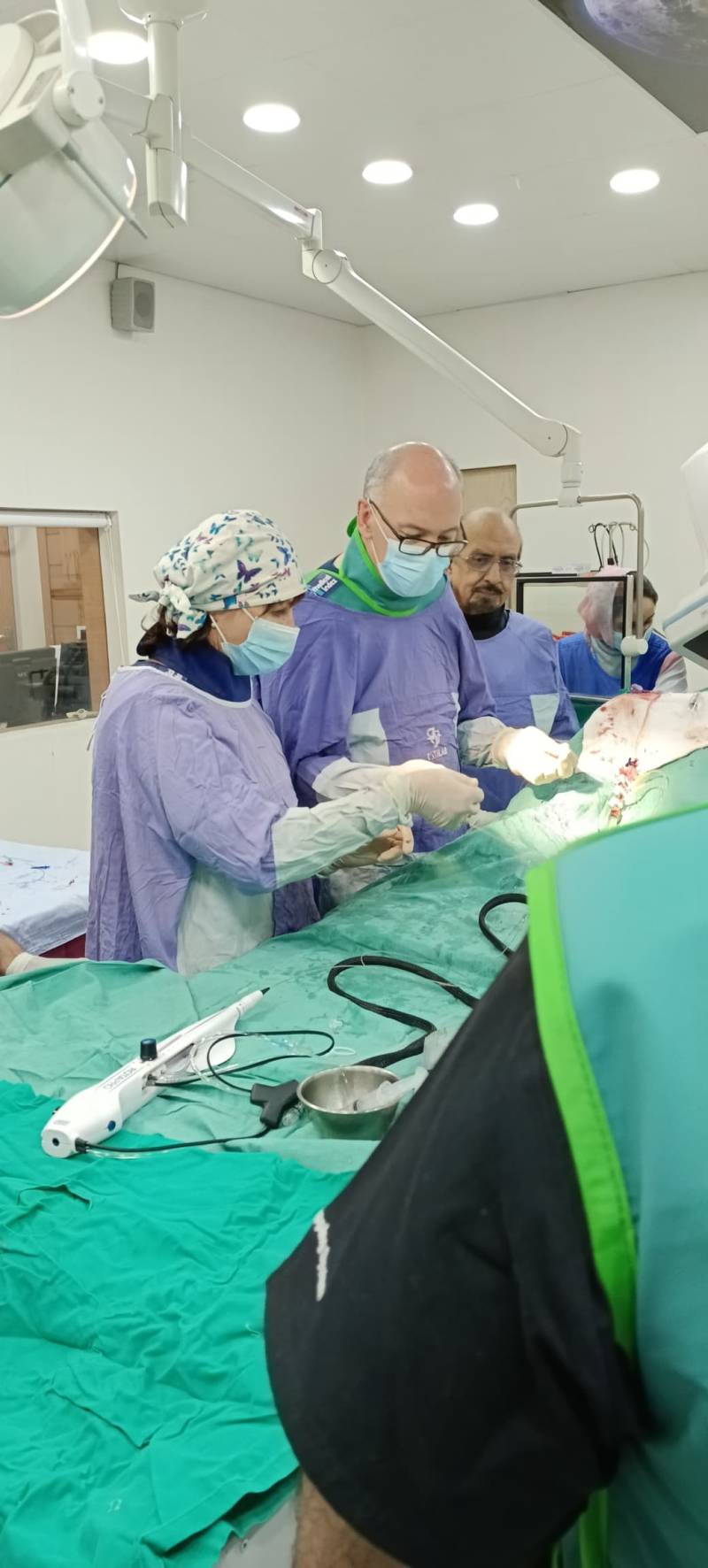
A doctor’s life is about helping those in need, and God invariably helps. Such incidents are everyday occurrences.
Another area where the hospital “challenges the norm” is in performing high-risk cardiac surgical interventions in the rural setting of Pakistan. The cardiac surgeon makes life-or-death decisions daily. They must weigh the risks and benefits of each procedure and make quick decisions in high-pressure situations. This can be extremely stressful and challenging, especially when lives are on the line.
These committed surgeons travel long distances from the USA and Europe at their own expense, leaving their busy work and families behind for a noble humanitarian mission. This is undoubtedly a great sacrifice for the good of suffering humanity.
Upon arrival, these doctors are rushed straight to the operating theatre where the patient is prepared for bypass surgery. On average, four hours are spent as the surgical team performs the ‘plumbing work’, bypassing blocked arteries, replacing diseased heart valves, or correcting congenital cardiac defects in children. It is a daunting task requiring concentration, decisive thinking, and expertise. But with prayers and passionate commitment, the results are second to none.
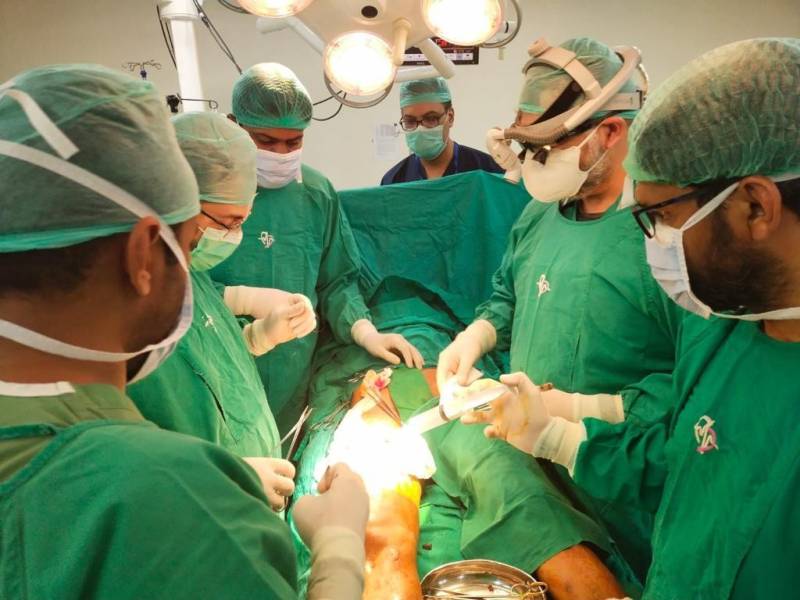
When asked: “How do you and your dedicated team perform so well?”
The cardiac surgeon, wearing his hospital dress and looking through his operating glasses, smilingly replies: “It is all Allah’s immense grace and mercy. The prayers of our elderly stand by our side. The well-disciplined surgical team, ably supported by the administration, makes the impossible possible.”
Another patient with disabling angina had severe heart disease. All his blood vessels were critically blocked. The pumping function of the heart was reduced to a mere one-third. With prayers and using an artificial circulatory assist device, the operation was completed. The patient left the hospital after seven days.
Before being discharged, he commented:
“God saved me from the clutches of certain death. I was declined surgery from three major cardiac centres, stating that I was very high risk. However, my agonising symptoms and fear of impending death forced me to come to you. Expert and tender care, constant assurance, and above all, prayers saved me, and I am alive and well. God be praised. I thank all of you, especially the visiting surgical ‘angels’ who flew from the US, especially for me. Allah bless them all.”
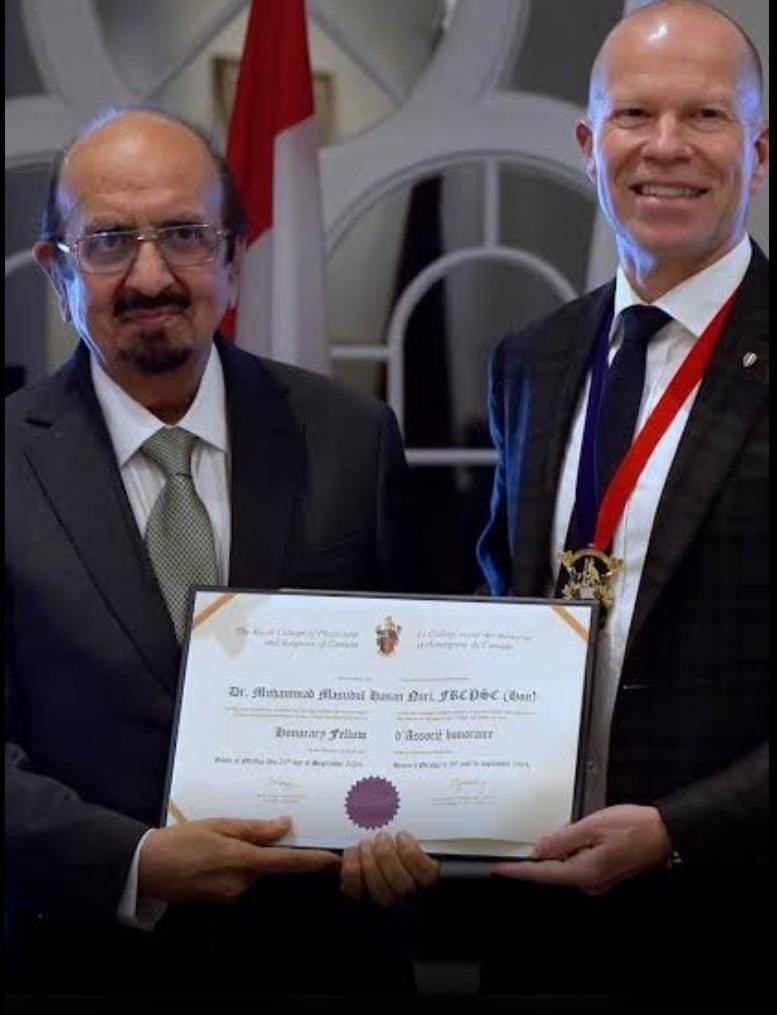
It was only last year, in September 2024, that a senior doctor of Tahir Heart Institute was “named a 2024 Honorary Fellow of the Royal College of Physicians and Surgeons of Canada
Emotional Toll
Doctors in the heart hospital deal with life-threatening conditions daily and often form close bonds with their patients. This can take an emotional toll, especially when patients do not recover or pass away.
When asked: “How do you feel when a patient expires even after the best possible treatment?”
The doctor in SICU replies with eyes filled with tears:
“My emotional response to a patient’s tragic death includes sadness and grief. There is a feeling of powerlessness.”
Wiping his tears, he adds: “But these tragic incidents, though infrequent, shift one’s perspective to see challenges as stepping stones rather than threats. They transform into gateways for growth and self-improvement. This shift in mindset is crucial. It prevents one from being discouraged by the deaths witnessed and keeps the focus on one's long-term vision.
Failure is reframed as a learning opportunity, with each tragic incident providing valuable feedback and encouragement for the next effort.
It is a reminder of the fragility of human life, and it makes us realise that God is the Ultimate Healer.”
Continuous Learning
Medicine is a rapidly evolving field, and these doctors must continuously update their skills and knowledge to stay current with the latest advances. This can be stressful, especially when trying to balance a heavy workload with ongoing clinical responsibilities. In the rural setting, continuous learning is a challenge in itself. Thanks to the internet, much can be gained from this God-gifted medium of learning and successfully translated into clinical practice. In this way, our doctors stand shoulder to shoulder with their counterparts in the developed world.
Overcoming Challenges and Rewards
Despite the challenges in a rural hospital, the rewards are immense and fulfilling. These compassionate professionals, with their God-gifted talents, find meaning in their work knowing that they are making a difference in the lives of their patients. God rewards them in turn as they pursue professional excellence.
Two young doctors who served in Tahir Heart Institute were interviewed online by a selection team from Scunthorpe and Dublin in the UK. Their professional competence was highly appreciated, and both were fortunate to receive coveted placements in those hospitals.
When asked about their feelings after selection, both replied with one voice:
“Allah be praised. Without passing any entrance examination, we were selected. This is purely Allah’s blessing and the dedicated training of our senior colleagues.”
Allah’s blessings are too many to be counted. It was only last year, in September 2024, that a senior doctor of Tahir Heart Institute was “named a 2024 Honorary Fellow of the Royal College of Physicians and Surgeons of Canada.” A rare honour indeed. The citation read:
“The Honorary Fellowship is one of the most esteemed recognitions in the medical field, awarded through a meticulous review process by the Awards Committee. This committee evaluated a diverse range of nominations using a rigorous scoring system to select individuals who have demonstrated exceptional contributions in healthcare…”
In conclusion, nothing is gained without ‘disruptive thinking’ and ‘challenging the norm’. This journey is stressful and challenging, no doubt, but the result is immensely fulfilling and rewarding. The heroes in this journey are heroes in their own right, balancing prayers and compassion every day to help others.