

I had the opportunity to present my paper at the prestigious Shanghai Forum, hosted by the Fudan Development Institute (FDDI) of Fudan University. The event featured keynote speeches by distinguished global leaders, including Dilma Rousseff, former President of Brazil and current President of the New Development Bank, and Yukio Hatoyama, former Prime Minister of Japan. With over 600 participants in attendance—ranging from academics and policymakers to diplomats and think tank experts—the Forum provided a dynamic platform for global dialogue on development, governance, and international cooperation.
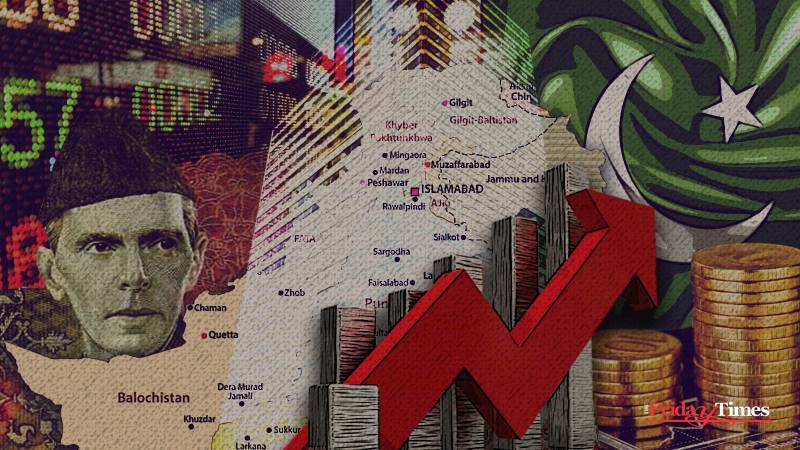
Building on this international platform, my paper explored how Pakistan’s economic history since 1947 vividly illustrates the extent to which political forces—not purely economic rationale—have shaped development models. The country’s journey is marked by sharp oscillations between state-led industrialisation, military-controlled liberalisation, and market-oriented neoliberalism. Each model, while promising transformation, has ultimately produced inconsistent outcomes, persistent structural inequalities, and a pattern of short-lived booms followed by stagnation or crisis.
To begin with, the early decades of Pakistan’s independence were dominated by the Import Substitution Industrialisation (ISI) strategy. This model, driven by strong state intervention, prioritised rapid industrial growth through import restrictions and heavy investment in domestic industries. While this approach did stimulate industrial expansion—manufacturing grew at an impressive rate in the 1950s—the neglect of agriculture and social sectors sowed the seeds of deep socioeconomic disparity. The benefits of growth accrued mainly to urban elites and large landowners, while the rural poor and East Pakistan were marginalised. By the late 1960s, the income disparity index between West and East Pakistan had more than doubled, laying the groundwork for political unrest and eventual secession.
This experience underscores a recurring flaw in Pakistan’s development thinking: the tendency to prioritise rapid growth in select sectors without a parallel commitment to equity or broad-based human development. The ISI model’s urban and elite bias, as well as its failure to integrate the majority of the population into the growth process, set a pattern that would haunt subsequent regimes.
Only by addressing the structural roots of inequality and moving beyond episodic, elite-driven growth can the country hope to achieve sustainable prosperity for all its citizens
The next significant shift occurred following the military takeover in 1958, which marked a transition towards controlled liberalisation. Ayub Khan’s regime introduced policies that promoted exports and eased trade restrictions, supported by foreign aid inflows. The so-called “Green Revolution” boosted agricultural output, and the economy grew at a robust annual rate. Yet, this growth was highly concentrated: by the end of the 1960s, just 22 families controlled 66% of the country’s industry, and regional disparities intensified. The doctrine of “functional inequality”—the belief that concentrated wealth would trickle down—proved deeply flawed, fueling resentment and contributing directly to the political alienation of East Pakistan.
In response to these imbalances, the Bhutto era attempted to reverse the excesses of military capitalism through widespread nationalisation and social sector reforms. While these measures aimed to dismantle monopolistic structures and promote economic justice, they often resulted in inefficiency, bureaucratic expansion, and the emergence of a new class of state-dependent elites. Short-term export booms were quickly offset by natural disasters and poor planning. The state-led model, while rhetorically committed to redistribution, failed to deliver sustained or inclusive growth.
Following this phase, the Zia regime and subsequent democratic governments embraced neoliberal reforms, privatisation, and integration into global markets. Massive inflows of foreign aid (especially during the Afghan War and post-9/11 era) and remittances from overseas workers fueled artificial booms, with GDP growth averaging high rates in the 1980s and peaking in 2005 under Musharraf. However, these gains were not rooted in productivity or structural transformation; instead, they were driven by external shocks, consumption, and a burgeoning parallel economy. Poverty and inequality persisted, and the benefits of growth remained concentrated in urban centers.
This period also highlights the dangers of externally driven, IMF-led reforms that prioritise macroeconomic stability over human development. Structural adjustment programs increased dependency, failed to reduce poverty, and did little to address the underlying issues of governance and institutional weakness.
In more recent years, Pakistan’s economy has struggled with mounting debt, volatile growth, and rising unemployment. The launch of initiatives like “Uraan Pakistan” signals a renewed focus on sustainable, export-led growth and public-private partnerships. Yet, the underlying structural issues—a narrow tax base, weak institutions, and persistent inequality—remain unresolved. The pattern of crisis-driven reform, rather than proactive, inclusive development, continues to dominate policymaking.
Taken together, Pakistan’s development trajectory underscores the primacy of politics over economics in shaping policy choices. Each shift in model—whether towards state control or market liberalisation—has been driven more by regime interests and global alignments than by a coherent, long-term vision for inclusive growth. The result is a legacy of patchy reforms, missed opportunities, and enduring inequality.
To move forward, future development models must prioritise broad-based human development, institutional reform, and inclusivity. Only by addressing the structural roots of inequality and moving beyond episodic, elite-driven growth can the country hope to achieve sustainable prosperity for all its citizens.