

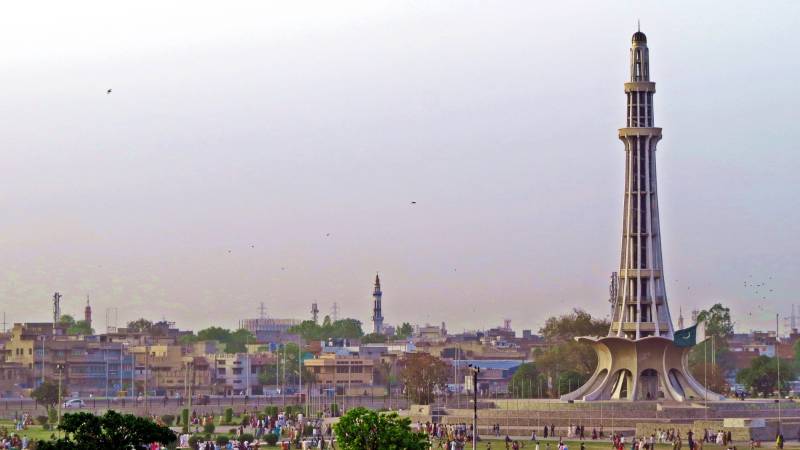
Lahore has changed by leaps and bounds in the last decade or so. Growing up in the nineties, the writer can still remember when the first McDonald's opened on the Main Boulevard in 1998, leading to traffic jams. As a young girl, Taiwah on Main Boulevard was her all-time favourite Chinese food and yours truly remembers frequenting it with her family as her uncle always used to entertain all his business clients there. Hsin Kuang became a firm favourite later in the nineties. Steve, the owner, appeared to have the Midas touch and knew that the way to the Lahoris’ hearts was through their protruding and forever empty bellies. The Punjabis have always been food lovers and the eateries cropping up in every nook and corner of the city are ample proof of the fact that this is something that has not changed over the years. All they seem to do is marry, procreate, and eat, and not necessarily always in that order.
The thoroughfares in this city, which have multiplied over the years to accommodate the growing number of vehicles, are heaving under the weight of the traffic. As an increasingly large number of people relocate to Lahore from smaller cities in search of greener pastures, the metropolis, like an octogenarian, is struggling to cope with the ever-increasing pressure on its finite resources. Once known as the city of gardens, it is now more popularly known as one of the most polluted cities in the world. November in Lahore, which once brought sun-filled days and some much-needed respite from the heat, now is compelled to welcome smog, which envelopes the city like a shroud and makes it difficult to breathe. The Air Quality Index reaches intolerable levels, leading to respiratory infections and a multitude of health issues.
Lahore of the eighties and nineties is now a distant memory but recently, while watching the film Na Baaligh Afraad in the theatre, the writer was once again reminded of her teenage years when watching films on VCR, chatting for hours on the landline with friends and reading letters and postcards sent by loved ones were some of the memories she cherished. Watching television in the evenings as a family, reading Mills and Boon by the light of the lamp while the entire world slept, and dreaming of the tall, dark, and handsome knight in shining armour to come and rescue you were some of her most vivid recollections while growing up.
The only constant in life is change, which is reflected in the way this city has evolved and changed over the years, and not always for the better either
Lahore of yesteryears was far greener, less polluted, and not the concrete jungle that it has turned into. Life and tastes were simpler and people were also friendlier. The advent of technology witnessed a quantum shift in the societal fabric and the onslaught of social media also brought about a sea change in the society. As the city expanded and metamorphosed into the crowded and congested metropolis that it has now turned into, the physical, social, and institutional infrastructure also changed in unprecedented ways. As the population increased and more and more people from smaller cities bought property and settled in Lahore, the city, which was already struggling to cope, witnessed mounting pressure on its limited resources.
The history, culture, and architecture of this city rival many in the world, and there is a famous saying that if you have not been to Lahore, you have not been born. Those who spent their formative years in the city, now settled and visiting from overseas, are in for a culture shock as they compare it with the city that once was, the one they were familiar with. As people grow and evolve, so do cities, and the majority of those who settled abroad are shocked by the sky-high prices and the glaring economic disparity that maybe was not so marked or apparent before. The only constant in life is change, which is reflected in the way this city has evolved and changed over the years, and not always for the better either.
While change is always hard to accept, there is almost always an upside to it, which is often overlooked. As concrete monstrosities mushroom all over the city and international food chains make their way to Lahore, the indigenous and the immigrant population now have more choice and access to a greater variety as the increased competition translates into lower prices and better service for the consumer. The greater supply due to increased demand also creates more employment opportunities, so people flock to big cities to look for work. As the city expands and grows, public transport has to be made available for the growing population, which means significant investment in the physical infrastructure of the city. More hospitals and schools are needed to cater to the demands of an ever-growing population. Businesses flourish and tastes evolve with the increased exposure to the outside world as a result of technological developments.
Lahore is also evolving and changing. The downsides are discussed more often than the benefits as the Indigenous population grieves at the way the city has been reduced to a shadow of its former self. The past is always a safe refuge from the present, so most of the senior citizens prefer to reminisce about the Lahore of their youth and bemoan the cultural, economic, political, and social degradation of the city. Lahore weeps and moans as the burden grows heavier with every passing day and begs for some much-needed relief from its responsibilities to replenish and recharge its batteries for the long journey ahead. The future does not look too promising!