

Family dynamics usually favour one sibling who makes the right choices over another who is always getting in trouble. “Just look at them,” desperate parents beg the transgressor to be “more like them.” Pakistani drawing rooms often fall back on America for this-is-how-it’s-done parallels. America is learning that the privileges of a good child, like everything else in life, are earned.
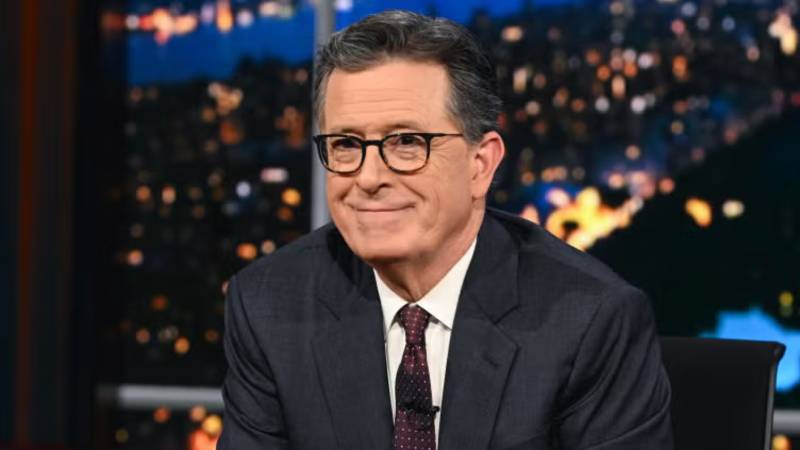
The unceremonious cancellation of Stephen Colbert’s late-night show tinges towards America’s overhaul of free speech: governments and corporations call the shots, and no one is pretending anymore. The influential world of late-night television is stunned by this blatant display of government overreach to tame liberal elements of the press. “So obvious who is silencing,” said one commentator reacting to the announcement.
Late-night comedy, a staple of the American popular media diet, has come a long way since McCarthy’s xenophobic crackdown on early independent voices in news television. Late-night hosts have earned their audience’s trust and loyalty over decades by vocalising shared pain. History is made on the late-night stage every night, with everlasting newsbytes and sketches worth teaching in history seminars. It has also produced some of the staunchest critics of the American government’s domestic and foreign policies. The strong reactions and outpour of support behind Colbert speaks for the fact that resistance, no matter how cracked, can be unrepentant.
Not that late-night’s subversion of political and cultural issues is noble. Or, that influential hosts over the years haven’t embarrassed themselves. Late-night hosts speak “opinions to television cameras” as Jon Stewart recently admitted, and not really “speak truth to power.” Infotainment, on both sides of the political spectrum, has gone through an overarching shift in the last three decades, especially online. News and commentary as entertaining, is reliable and pervasive across the globe and politically fluid. Ukraine’s Volodymyr Zelensky and Indian Punjab’s CM Bhagwant Mann were comedians, just saying.
The good sibling is in trouble, and the habitual offender is wondering when the parents will admit
I came to late-night television in 2011 when America was still high on Obamas, the Kardashians were desperate, and MAGA was still a farce. Cancel culture was simmering in the pots of disgruntled Americans. A few years later, Colbert took over from David Letterman, and Jon Stewart left The Daily Show only to return part-time in 2024. Late night’s facetiousness was deeply satisfying. For those of us who grew older in the moderation-infused 2000s of Pakistan, we were bewildered by the late-night hosts' prepotency. Mocking a sitting president? But also embarrassed by our understanding of hierarchies of power (I frequently drove past Jimmy Kimmel’s famous sign on Sunset Boulevard, whose LA-based show was ridiculed by the president repeatedly despite multiple Emmy nominations. “If I lose, I’ll say it’s rigged” the sign says). That brings you peace.
Back home, we were learning to laugh at ourselves on TV again. Or that’s what we were told. A proliferating commercialised news media was building a cult of its own and the liberal in us was immersed in revering prime time talking heads, mainstreaming patriotism and religion (a friend’s mother suggested Aamir Liaquat was the ideal son-in-law). A couple of decades down, the Pakistani audience feels neither enlightened nor moderate.
Pakistan’s independent content creators’ Sisyphean mountain was to narrow down an audience hooked on mediocre TV. Without commercial support, fancy sets and historic auditoriums, these content creators have achieved a faithful following of their own. Although nowhere close to the top of the mountain, they’ve achieved in over a few years what late-night television in America took decades to reach, with unmatched resources. Ali Aftab Saeed and Asad Nizami, Adeel Afzal, Shehzad Ghias, Tamkenat Mansoor, Faisal Warraich, and Syed Muzammil: burgeoning progressive voices advocating a fair justice system, reconciliation with the nation’s bitter past, and responsive governance. These young voices are resilient to the core, diverse in opinions and fairly frank about their own shortcomings. But if banned, can they expect a similar public outrage?
“Stephen Colbert brings me peace,” says one of the comments on YouTube. The left in America is shocked by this flagrant violation of ‘American’ norms and geared up for a fight. The Pakistani left is: Shocked. Instead of making far-fetched connections between two vastly different playing fields – banning of popular late-night shows and dozens of online platforms producing political content- embodies a new era of normalised authoritarianism. Its favourite enemy? Free speech.
The good sibling is in trouble, and the habitual offender is wondering when the parents will admit, “Don’t be like them. Be yourself.”