

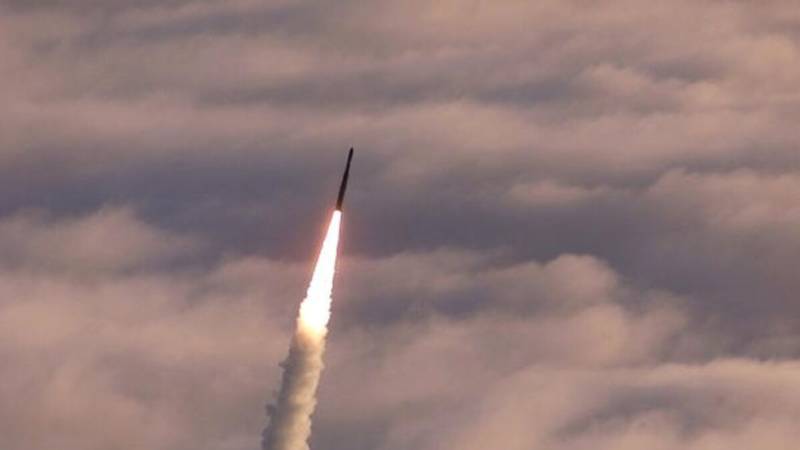
The global strategic landscape is undergoing its most profound transformation since the conclusion of the Cold War, evolving into what analysts term the Third Nuclear Age. This new era is characterised by multipolar competition, sophisticated delivery systems, and the normalisation of nuclear brinkmanship across multiple theatres. While international attention has largely remained focused on the ongoing Ukraine–Russia war and the escalating crises in the Middle East, the most volatile nuclear flashpoint may, in fact, be emerging in South Asia, where historical animosities, technological modernisation, and doctrinal evolution are converging to create an increasingly combustible environment.
The conflict in Ukraine offers a crucial context for understanding contemporary nuclear dynamics. Russia’s invasion—rooted in NATO’s post–Cold War eastern expansion and Moscow’s perceived security imperatives—demonstrates the enduring relevance of the classical dynamic whereby one state's defensive actions are seen as a threat by another, driving mutual escalation. Moscow’s strategic behaviour follows the predictable pattern in which great powers seek dominance to ensure their security. Its explicit nuclear signalling throughout the conflict reflects a strategy of leveraging nuclear threats to offset conventional vulnerabilities. This dynamic is further complicated by a cycle in which mutual suspicion between Russia and NATO has fostered a dangerous feedback loop of escalating tensions. However, the Ukrainian theatre represents only one dimension of the emerging nuclear landscape.
South Asia presents a far more immediate and underappreciated concern. India’s strategic modernisation programme, particularly its development of the Agni-VI missile, with reported ranges of 8,000 to 10,000 kilometres, and the speculated Surya system potentially exceeding 12,000 kilometres, signifies a qualitative leap in regional nuclear capabilities. According to the Stockholm International Peace Research Institute (SIPRI) 2023 assessment, India’s expanding strategic reach is transforming its nuclear posture from a doctrine of minimal deterrence towards one suggestive of global power ambitions.
The historical record underscores the volatility of the region. During the 1999 Kargil conflict and the 2002 military standoff, both India and Pakistan engaged in explicit nuclear signalling. More alarmingly, in May 2022, India tested a nuclear-capable ballistic missile that accidentally landed in Pakistani territory—an incident exposing both technical fallibility and strategic recklessness. Pakistan’s measured restraint in response reflected mature crisis management despite grave escalation risks. These lessons appear to have been forgotten in light of the 2025 clashes, during which India reportedly fired nuclear-capable ballistic missiles amid heightened tensions, further demonstrating the fragility of deterrence and the persistent strategy of deliberately creating a risk of war that could spiral out of control.
South Asia’s proximity, dense population, and compressed escalation timelines make its nuclear environment uniquely perilous
From a theoretical standpoint, one argument holds that nuclear proliferation can induce stability through mutual assured destruction. Yet the South Asian experience challenges this optimism. The region exemplifies how bureaucratic and procedural imperfections within states can amplify escalation risks. India’s Cold Start doctrine—designed to enable rapid conventional offensives below the nuclear threshold—compelled Pakistan to develop tactical nuclear weapons to restore strategic equilibrium and deter conventional coercion. This development created a posture that dangerously lowers the nuclear threshold. However, this calculus appears to have shifted following the May 2025 clashes, where Pakistan’s demonstrated capability and readiness arguably established deterrence superiority. Yet the balance remains perilous—the nuclear threshold has already been lowered. Recent statements by the Indian Army Chief, suggesting the possibility of “limited conventional retaliation” under a nuclear backdrop, further underscore the fragility of deterrence stability in the region.
Viewed through a classical strategic lens, these developments acquire profound significance. The conception of war as “a true political instrument, a continuation of political intercourse, carried on with other means,” finds disturbing resonance in South Asia’s nuclear posture. The region’s strategies increasingly embody the volatile interplay of passion, chance, and rational policy—now dangerously skewed towards passion and chance. India’s pursuit of intercontinental ballistic missile systems represents a troubling deviation from its stated policy of minimal deterrence, suggesting ambitions that exceed defensive necessity.
Against a backdrop of historical grievances and communal tensions, this expansion fosters an unstable fusion of emotion and strategy—a condition classical strategists warned could precipitate uncontrolled escalation. Rather than ensuring stability, these capabilities invite miscalculation and crisis instability across an already volatile theatre. The rapid induction of new nuclear systems, combined with ambiguous command structures, risks eroding the delicate equilibrium that has thus far prevented catastrophe.
It is, therefore, no longer a question of whether a nuclear clash likely involving tactical weapons might occur, but when. The pattern of impulsive provocations and doctrinal brinkmanship clearly indicates which party appears most likely to initiate such a conflict.
South Asia’s proximity, dense population, and compressed escalation timelines make its nuclear environment uniquely perilous. As noted in analyses of the nuclear age, the gap between deterrence theory and operational reality remains dangerously wide. The 2008 Mumbai attacks, the 2019 Pulwama incident, and the recent 2025 Pahalgam confrontation demonstrate how non-state actors can rapidly trigger crises between nuclear-armed states with minimal warning, placing enormous strain on crisis management mechanisms already tested to their limits.
Looking forward, the international community faces daunting challenges in addressing the opaque and evolving realities of the Third Nuclear Age. The existing non-proliferation regime conceived for a bipolar world appears increasingly ill-suited to managing a multipolar environment marked by regional rivalries, technological diffusion, and doctrinal opacity. As global attention remains fixated on Eastern Europe and the Middle East, the southern nuclear landscape in South Asia may present the most immediate test of international crisis management and arms control diplomacy. The ancient strategic wisdom endures: in the nuclear age, everyone may know who fires the first shot, but none can predict who will fire the last. Troublingly, current trajectories suggest which state appears most likely to cross that threshold first.