

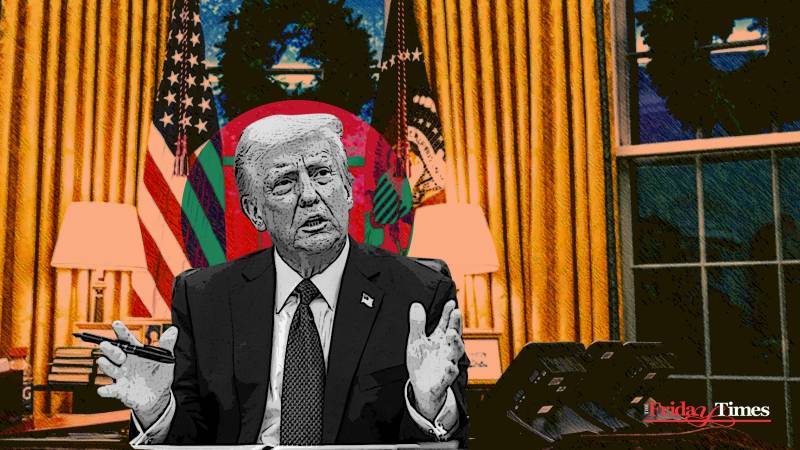
President Donald Trump’s recent declaration of a “Liberation Day” marks a significant shift in U.S. trade policy, which has profound implications not only for global trade dynamics but also for the political economy of South Asia. With tariff rates set to increase on imports from key South Asian economies, particularly India, Bangladesh, Pakistan, and Sri Lanka, the announcement underscores a larger political message that goes beyond trade balances: it is a strategic assertion of U.S. economic sovereignty and geopolitical dominance. However, for South Asia, the ramifications of these tariffs will reverberate far beyond their economic effects, influencing everything from local manufacturing and employment to international diplomacy and regional power structures.
A Snapshot of the Tariff Landscape
The new tariff regime impacts countries across South Asia with significant variability. According to BBC News (April 2, 2025), India faces a 26% tariff increase, Bangladesh 37%, Pakistan 29%, and Sri Lanka 44%. These numbers indicate a targeted approach that disproportionately affects economies with strong export ties to the United States, particularly in textiles, garments, and machinery.
Main Exports to the U.S. and Export Dependence
India’s primary exports to the U.S. include precious stones and metals, machinery, textiles and apparel, organic chemicals, and vehicles. According to the Office of the United States Trade Representative (USTR), the United States is India’s largest export partner, accounting for nearly 16% of India’s total exports. Precious stones and metals make up approximately 20% of India’s exports to the U.S., while machinery and electronics account for 15%. Textiles and apparel, another key sector, represent 10% of total exports to the U.S. The tariff increases on these sectors will likely diminish India’s competitive advantage, impacting both industrial growth and employment.
Bangladesh is heavily reliant on the U.S. for its textile and garment exports, which constitute 80% of its total exports to the American market. The country’s textile sector, a key driver of economic growth and employment, has been pivotal in lifting millions out of poverty. However, a 37% tariff hike threatens to significantly reduce demand for Bangladeshi products, pushing manufacturers to seek alternative markets or absorb higher costs. The remaining 10% of Bangladesh’s exports to the U.S. consist of textiles and fabrics, which are also vulnerable to the new trade barriers.
The era of economic interdependence is evolving, and South Asian economies must prepare for a world where trade is increasingly dictated by political power rather than market forces
Pakistan’s primary exports to the U.S. include textiles and apparel, rice, and surgical instruments. The textile sector alone accounts for 55% of total exports to the U.S., followed by surgical instruments at 10% and rice at 5%. The imposition of a 29% tariff will have a direct impact on Pakistan’s manufacturing sector, potentially leading to job losses and declining foreign exchange reserves. Pakistan’s economy, which is already struggling with inflation and fiscal deficits, may face additional stress as its largest export market becomes less accessible.
Sri Lanka exports a variety of goods to the U.S., with garments making up 40% of its total exports. Other major exports include tea (5%) and rubber products (10%). The imposition of a 44% tariff will disproportionately affect the textile industry, which has been a cornerstone of Sri
Lanka’s economic stability. Given the relatively small size of Sri Lanka’s economy compared to India or Bangladesh, the shock of such a tariff increase could lead to factory closures and reduced foreign direct investment (FDI) in the country.
The Political Economy of Tariffs
Tariffs have long been used as a tool of economic policy and political strategy. By imposing high tariffs on imports from key South Asian nations, the Trump administration is signaling its ongoing efforts to recalibrate global trade in favor of U.S. interests. The primary economic rationale for these tariffs is to address trade imbalances, encourage domestic production, and boost employment in U.S. manufacturing sectors. However, these measures also serve a broader political purpose: reinforcing economic nationalism and appealing to protectionist sentiments among American voters.
For South Asian countries, the consequences of these tariffs extend beyond immediate economic losses. The tariffs may incentivise some domestic industries to shift their focus towards regional trade alliances or alternative markets, but the loss of access to the U.S. market remains a critical concern. Countries like Bangladesh and Sri Lanka, where exports to the U.S. form a large portion of their GDP, will face the most severe economic repercussions. These nations often rely on U.S. markets for textiles, electronics, and consumer goods, and the tariff hikes could curb their economic progress, leading to higher unemployment and slower development.
Geopolitical Tensions and Shifting Alliances
The political consequences of these tariffs are equally significant. South Asian economies are already navigating a delicate balance between U.S. and Chinese influence. With China expanding its Belt and Road Initiative (BRI) and increasing trade partnerships with South Asian countries, the imposition of tariffs by the U.S. may accelerate the region’s economic pivot towards Beijing. India, for instance, has been strengthening economic ties with both the U.S. and China, but higher tariffs on Indian exports could push it to deepen its engagement with China to mitigate trade losses.
Pakistan and Bangladesh, which have historically relied on preferential trade access to the U.S., may also look towards China and the European Union as alternative trade partners. Sri Lanka, already heavily indebted to China, could become even more financially dependent on Beijing’s infrastructure investments as it struggles to counterbalance the loss of U.S. trade revenues.
The Shift in American Political Economy and Globalisation
Trump’s “Liberation Day” tariff policy signals a broader shift in American political economy, reflecting a move towards protectionism and economic nationalism. The rise of “America First” policies indicates a departure from decades of global trade liberalisation, reshaping market structures worldwide. The growing emphasis on domestic production suggests that U.S. trade policies will increasingly favor bilateral agreements over multilateral frameworks like the World Trade Organisation (WTO).
For South Asian nations, this shift means they must rethink their engagement strategies with the U.S. The unpredictability of American trade policies may push them to negotiate bilateral deals with Washington or seek alternative markets where tariffs and trade restrictions are less severe. However, such adjustments require long-term policy shifts and infrastructure investments, making them difficult to implement in the short run.
Impact on South Asia’s Development
South Asian countries have long depended on cheap labour and export-driven growth. The tariff hikes, particularly for labour-intensive industries like textiles and electronics, will raise costs for American consumers while simultaneously making South Asian exports less competitive. The resulting decline in export revenues could slow economic development and discourage foreign direct investment.
Countries like Sri Lanka, with smaller and less diversified economies, may suffer the most, potentially experiencing contractions in their GDP. Even larger economies like India and Pakistan will feel the strain, as declining exports could lead to production cuts and job losses, particularly in manufacturing hubs that depend on U.S. demand. Moreover, the cumulative impact of these tariffs may exacerbate regional inequality, disproportionately affecting small and medium-sized enterprises (SMEs) that lack the resources to navigate new trade barriers.
The Politics of Economic Power and Global Trade
President Trump’s tariff policy is more than just an economic strategy—it is a political statement aimed at reshaping global trade relationships. For South Asia, the implications are significant, ranging from economic slowdowns to geopolitical realignments. The shift in the American political economy towards protectionism signals the decline of unregulated globalisation and the rise of a more fragmented, politically charged trade landscape.
As the U.S. recalibrates its approach to global trade, South Asian nations must adapt by diversifying their economic partnerships and strengthening domestic industries. While the future of international trade remains uncertain, one thing is clear: the era of economic interdependence is evolving, and South Asian economies must prepare for a world where trade is increasingly dictated by political power rather than market forces.