

As Trump settles back into power, global diplomacy is shifting fast, but Pakistan’s foreign ministry seems missing from the action. With Trump reshaping alliances and imposing tough trade tariffs, countries are scrambling to adapt—yet Islamabad remains reactive, failing to step up when smart diplomacy is needed most.
Among Trump's recent major policy moves is the imposition of aggressive tariffs, shaking up global trade. While countries like China and India are swiftly reacting, Pakistan seems unprepared, even though US remains the top destination for Pakistan’s exports – generating over $5 billion annually, mainly through Textiles. With Washington deepening ties with India, Pakistan risks being sidelined in US trade policy. At a time when proactive diplomacy could help secure better trade terms, our foreign office remains absent from the conversation.
The USA is one of the largest trade surpluses run by Pakistan. Thus an imposition of 29 per cent tariff on goods the United States imports from Pakistan is not a good sign for local manufacturing and export industries. Meanwhile its regional competitors India and Bangladesh have been imposed with 26 per cent and 37 per cent tariffs respectively.
The imposition of tariffs is just another addition to his presidency of unpredictability. Well before that, he has sent enough shockwaves around the world already. Whether it is his sudden push for a deal with Putin that left Ukraine feeling abandoned, or his bold Gaza resettlement plan angering much of the Middle East. His offhand remark about annexing Canada also caught everyone off guard, and his deep cuts to foreign aid and NATO funding have left allies scrambling. Adding to the unpredictability, he’s also shown a willingness to engage with the Afghan Taliban.
Tariff having direct implications on Pakistan, another stark development with direct implications for Pakistan was Indian PM Modi’s, a long-standing foe, visit to the US and his meeting with Donald Trump. The visit saw both leaders reaffirming their strategic partnership, with defense cooperation taking center stage. Talks of a potential multi-billion-dollar arms deal, including a supply of F-35 stealth fighter jets, advanced drones, and missile defense systems, signal a deepening military alliance that directly affects Pakistan's security calculus. Beyond defense, the personal rapport between Trump and Modi reinforces a pro-India tilt in Washington, something Islamabad cannot afford to ignore.
Amidst these critical diplomatic developments happening worldwide, the pressing question arises: where is the foreign minister in Pakistan?
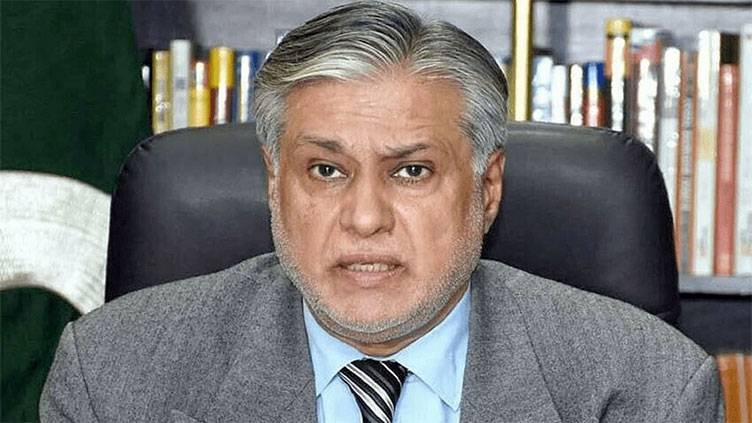
The current foreign minister who is also a deputy prime minister, Ishaq Dar, seems to be missing from several global stages, and his diplomacy lacks proactivity
One may argue about the ceremonial nature of the foreign minister in Pakistan, but that is not all. It is through an open secret that the foreign minister in Pakistan is only a ceremonial position; the real cards are dealt from precisely where the country's nucleus of power resides. However, Pakistan has always had foreign ministers who present the policies actively and aggressively, regardless of where these policies come from.
Even governments led by the military have had seasoned foreign ministers, such as Zulfiqar Ali Bhutto, Agha Shahi, Sahabzada Yaqub Khan, or Khursheed Mehmood Kasuri. Moreover, it is unlike that the previous foreign ministers during the last civilian governments underperformed. Nevertheless, their popularity might be questionable, whether it was Shah Mehmood Qureshi, Hina Rabbani Khar, or Bilawal Bhutto Zardari; all three were present on the diplomatic front. Presenting Pakistan’s case on every global forum and engaging in reciprocal offices.
Contrastingly, the current foreign minister who is also a deputy prime minister, Ishaq Dar, seems to be missing from several global stages, and his diplomacy lacks proactivity. The foreign ministry's statements are issued only in response to global developments, a stark contrast to the active and aggressive presentation of Pakistan's policies by previous foreign ministers.
It has been a year since Dar has been in the ministry, which is ample time to achieve or express one’s diplomatic appetite. So far, he has had a few international engagements individually, including his recent trip to the UN. A stark contrast is Bilawal Bhutto Zardari's tenure of less than two years as the foreign minister, who achieved much more internationally. Given the pace of the current foreign minister, even within the end of their tenure, they will not even come close to what the former foreign minister had achieved.
Bilawal, called out as an inexperienced foreign minister to lead Pakistan on the global front, defied all criticism and teamed up with Hina Rabbani Khar as his state minister; this strengthened diplomatic ties and Pakistan’s global standing. He then led global climate advocacy after the 2022 floods, securing international aid and contributing to the loss and damage funds at COP-29. Bhutto played a key role in Pakistan’s removal from FATF’s grey list and became the first Pakistani FM in 12 years to visit India, attending the SCO summit.
He also secured GSP+ status with the EU, strengthened trade ties, negotiated IMF support, and addressed Islamophobia on global platforms. In the US, he engaged with Secretary Blinken, promoted public diplomacy, positioned Pakistan as a US-China bridge, and pushed for US mediation in Pakistan-India trade talks. His tenure was an image of efficient diplomacy and economic stability efforts.
Dar, who has previously looked after the country’s finance ministry should figure out how to engage with the US in decreasing the Trade tariff on Pakistan so that our exporters and manufacturers are provided with a competitive and level playing field to compete in the US market
More so, Prime Minister Shehbaz Sharif was all praise for Bilawal. Sources say Premier Sharif strongly wished for Bilawal Bhutto to be his foreign minister during the current government if only a coalition government had been formed. This tells us significantly about the apparent marriage of convenience between the PM House and the Foreign Office.
People who have interacted with Ishaq Dar—journalists, business leaders, and even colleagues—often say he carries himself more like a deputy prime minister than a foreign minister. It’s naive of him to overlook how crucial the foreign office is in building not just state-to-state relations, but personal diplomatic ties that can shape Pakistan’s standing on the global stage.
By failing to recognise the weight of his role, Dar is not just sidelining himself—he’s sidelining Pakistan. The world isn’t waiting for Pakistan to catch up. As Trump reshapes alliances and imposes trade barriers, other countries are moving fast to secure their interests. But where is Pakistan’s foreign minister? Ishaq Dar seems more comfortable being a deputy prime minister than actually doing the job he was given. Diplomacy isn’t just about issuing statements—it’s about being present, making connections, and fighting for Pakistan’s place on the global stage. If Dar can’t step up, it’s time for someone who will. Pakistan can’t afford to sit this one out.
And this lack of diplomatic initiative is already costing us. While Pakistan remains on the sidelines, the US and India are moving forward with large-scale defense deals—agreements that could reshape South Asia’s security landscape. Hints of this were quite visible during Trump's oath-taking ceremony, where the Indian Foreign Minister was seated in the first row. To make matters worse, Pakistan now faces fresh US sanctions on its ballistic missile program, yet our foreign office has barely put up a fight.
Pakistan’s FM should have lobbied to show up at inaugural events of the President Trump, on the contrary former foreign minister Bilawal Bhutto Zardari was officially invited to Trump’s breakfast ceremony, despite not holding any government position.
This highlights the seriousness of an active politician who seizes every opportunity to engage strategically, whether for personal gain or to advance their country's interests on the global stage.
Another glaring shortcoming of the foreign office is its failure to secure Pakistan’s representation at the Artificial Intelligence (AI) Action Summit held in February 2025 in Paris. This summit, which gathered over one hundred countries, including Indian Prime Minister Narendra Modi was a missed opportunity for Pakistan to engage with global leaders in the field of AI.
Following this, at the 61st Munich Security Conference, Indian FM S. Jaishankar attended the conference and engaged with global leaders. However, once again, Pakistan had no official presence at the conference, except for the former foreign minister, Bilawal Bhutto Zardari, highlighting the foreign office's lack of engagement with global security issues.
Though foreign minister Ishaq Dar’s international engagements may be limited in scope, we hope that his next trip to Dhaka, Bangladesh, turns out to be fruitful. Dar has also yet to engage with Pakistan's regional partners, Sri Lanka, and the Maldives.
Most importantly, Pakistan needs to tap the potential of friendly reciprocation from the European Union and the United States. With Donald Trump in the White House, Pakistan should be tactically well prepared for any blows. Instead, it should engage with lobbyists to increase US-Pakistan exchanges.
On priority, Dar, who has previously looked after the country’s finance ministry should figure out how to engage with the US in decreasing the Trade tariff on Pakistan so that our exporters and manufacturers are provided with a competitive and level playing field to compete in the US market.
If Pakistan’s foreign office fails at renegotiating US tariffs, a wise decision would be Dar’s resignation from the office and the State finding an alternative, even out of the political pool, like the Interior Minister. If not, Dar needs to gear up and maintain Pakistan’s relations with the world, prioritising China, and not offending them as he did in October 2024. If Dar cannot rise to the occasion, then Pakistan must find someone who will. Diplomacy waits for no one, and neither should Pakistan.