

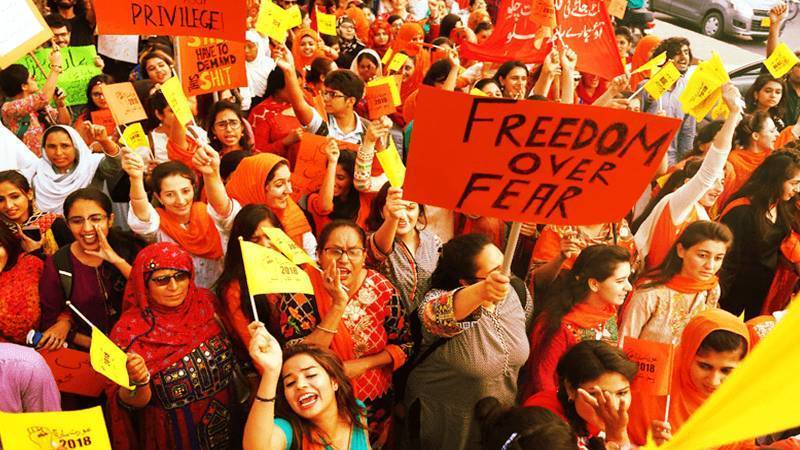
One is appalled at the ease and automaticity with which our government officials and representatives denounce monstrous incidents of rape, even those in which the survivors are atrociously injured and physically mauled. With increasingly aggressive and brutalised rape assaults occurring frequently, rape seems to have become a form of vigilantism and gangsterism in the country.
Words do not come easily as one struggles to express the disgust evoked by such acts of sexual abuse, which are replete with nauseating barbarity. This is not to suggest that sexual assaults causing less physical distress are any easier to discuss. Rape in itself, regardless of the physical and psychological mutilation it inflicts, is the most horrific attack on an individual’s bodily sovereignty, dignity, personal space, independence, freedom, and so much more. No amount of denunciation is sufficient to do even a fraction of justice to the survivors and victims. Moreover, all this condemnation without redressal or the creation of an environment of deterrence—where such attacks can be controlled by setting strong legal precedents—is utterly useless. It is a futile exercise that traps us in a constant loop, with no precedents of justice being served and no lessons ever learned or established.
As we count down to International Women’s Day 2025, themed ‘Accelerate Action,’ two particularly horrifying incidents of rape occurred on 25 February in Sargodha and Bahawalpur, once again shaking us out of our stupor. Yet, these incidents will likely be debated and castigated for a few days before descending into the black hole of our collective conscience, consigned to oblivion, as always.
In Sargodha, five men gang-raped a 22-year-old woman, luring her under the pretext of securing her a job abroad. The assault left the girl with fractured bones and severe internal injuries, an attack that is, regrettably, reminiscent of the Kolkata rape and murder of a 31-year-old doctor last year, which left India “appalled and triggered wide-scale protests.” In the other incident in Bahawalpur on the same day, a gambler “got his wife raped” by the winner after losing a bet. The rapist also filmed the heinous act, threatening to upload the video on social media if the woman ever reported the assault.
Without commenting on the depraved mindset of the husband who facilitated his wife’s rape by another pervert like himself, both of these horrid incidents are classic examples of how women are neither safe at home nor outside their homes. This underscores the established fact that there are no “safe spaces for women.” In such a scenario, quoting gender-based violence (GBV) statistics in media accounts and articles seems to have lost its impact, perhaps due to their overuse but underrepresentation of GBV, since the actual number of sexual attacks on women is much higher. Many cases go unreported due to fear of reprisal, prevailing stigmas, and a lack of faith in police investigations, while many more never come under the public or media radar. Almost all such cases never receive justice.
With increasing impunity and judicial processes surrendering to political influence, rape convictions seem to be becoming tougher
Repeated reporting of rape incidents, without follow-ups on the fate of the cases, has perhaps desensitised society and rendered it tone-deaf, making the whole process appear like a futile formality that never goes beyond hollow condemnation. This severely exposes our culpability. A rape case reported in the media might elicit significant anger and ignite protests, as the rape endemic continues to be reinforced by our patriarchal and misogynistic norms. However, we must realise that our society has become a breeding ground for toxic masculinity, which allows rapists to escape accountability and often resorts to victim-blaming. Pakistan seethed over the victim-blaming of the gang-raped Pakistani-French woman on the motorway in 2020 and the rape of a woman in F-9 Park in Islamabad two years ago.
Still, trolls who use threats of rape and sexual abuse on social media to silence outspoken women are never held accountable under the country’s cyber-crime laws. Are such threats a backlash against women occupying public spaces and challenging male hegemony, one may ask? Every year, we witness multiple cases of rape that stand out due to their ghastliness, like those committed on February 25, leaving us enraged for weeks, even months, while the survivors and victims are gradually reduced to mere hashtags.
This year’s International Women’s Day theme underscores the need to “accelerate action” around women’s causes, which is the need of the hour in Pakistan. Of all the women’s causes we pursue, women’s security—both physical and psychological—is perhaps the most fundamental of basic human rights. However, combating gender-based violence does not only involve creating a society free from the brutality of sexual violence but also ensuring that those committing such crimes face the law, are sentenced, and serve their terms. Yet, we lack “action” on both fronts, as we fail to curtail and convict, while a woman is raped every two hours in Pakistan, and our conviction rate in rape cases is less than 3%. Despite an increase in the number of reported rape cases and more women speaking up, the conviction rate remains abysmally low.
To “accelerate action,” as fostered by this year’s IWD theme, would mean not delaying justice to deny justice. It would mean ensuring that cases of rape and GBV do not get embroiled in police and legal complexities or clogged up in courts for years without reaching a fair conclusion. It would mean not having the open-and-shut Noor Muqaddam case hang in the balance for years with no foreseeable justice in sight. It would mean not having Kainat Soomro go from pillar to post, desperately searching for justice. With increasing impunity and judicial processes surrendering to political influence, rape convictions seem to be becoming tougher.
Hence, accelerating action would mean taking “quick action” and implementing meaningful changes for speedy trials and justice in GBV cases. It would mean taking “bold, decisive actions that positively impact gender equality and call for inclusion and transformative change.” Accelerating action signals that justice and equality cannot wait and that “all sectors of society must work together to quicken the pace of progress for women’s security and empowerment.” It also means there is no place for rape apologists in civilised societies.
Our laws, procedures, and judicial system are gravely invested in patriarchal values. Whether a woman is seeking legal redress for rape or any other form of GBV, challenges begin with doubts surrounding the survivor’s credibility and “end with a complete denial of justice.” Shoddy investigations and evidence collection are factors that allow those with influence to go scot-free. Justice also entails the restoration of a survivor’s dignity, her rehabilitation, and her reintegration into society.
There is also a dire need for drastic police reform in GBV cases and carefully designed training to inculcate a spirit of gender-friendly policing. Trained women staff, GBV hotlines, crisis shelters, medico-legal aid facilities, trauma counseling, and, most importantly, “accelerating action” in registering rape cases at the nearest police stations would be steps in the right direction.
It is utterly disappointing that insufficient police investigation and delays in registering cases have been used as grounds for the acquittal of the accused. The Human Rights Commission of Pakistan expresses concerns that the courts lack the capacity and sensitivity to properly appraise evidence in rape cases. According to a report, “It is neither unusual for police to submit flawed challans to facilitate acquittal, nor rare for courts to demand better investigation where they are not satisfied with the probe. The idea that delay in the registration of the rape case creates doubts about the veracity of the charge ignores the trauma and harassment rape victims face.”
The horrifying level of impunity with which crimes against women are committed has much to do with the fact that gender inequality remains deeply entrenched in our society. Ranking 145th out of 146 on the gender equality index, Pakistan has staggering statistics that expose the rape epidemic and how women endure not only sexual assaults but also abuse and harassment every day, because the state and society have failed to ensure their safety.