

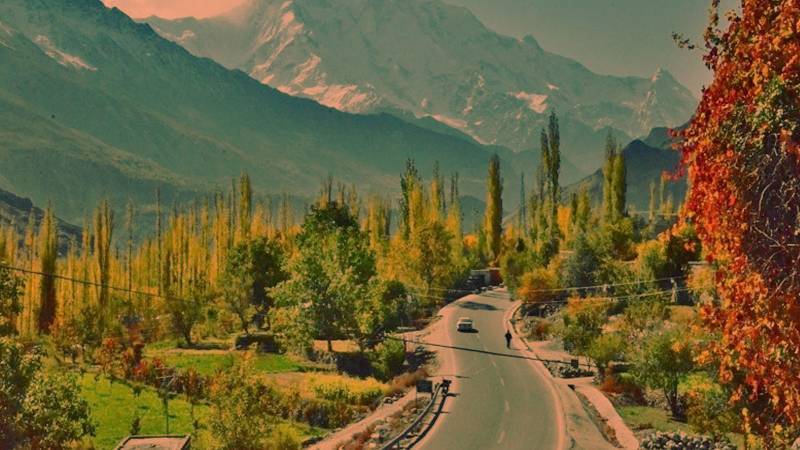
Pakistan has immense potential in the tourism industry, given its diverse natural scenery. The country is blessed with lush green valleys, rocky heights, plateaus, plains, and sweeping dunes. Additionally, Pakistan is home to some of the most ancient cities, such as Harappa and Mohenjo-Daro. The country also features mesmerising infrastructure from the Mughal Empire and the colonial era. Each region boasts its own rich, appealing culture, offering traditional tastes to its visitors.
According to a report by Waqas Elahi, Assistant Director of the Trade Development Authority of Pakistan, tourism contributes around 2.9% to Pakistan’s GDP and supports 1.5 million jobs. Despite these positives, Pakistan ranks 121 out of 140 on the Travel and Tourism Competitive Index—an alarmingly low position. This ranking is attributed largely to climate and security constraints.
Pakistan is one of the most vulnerable countries to climate change, suffering annually from various disasters. Floods, earthquakes, smog, and landslides are persistent threats, causing thousands of casualties. For example, in 2022, devastating floods affected 33 million people, resulting in over 17,000 deaths, as per the Provincial Disaster Management Authority. These floods also hindered macroeconomic growth, causing a 2.2% deceleration and increasing poverty by 3.7 to 4 percentage points.
Another major climate-related concern is smog, especially in urban areas. According to research by the University of Lahore, smog has led to a 96% rise in chest infections, coughs, eye irritation, and allergies. Water scarcity is another critical consequence, as noted in the Journal of Water and Climate Change. Pakistan heavily depends on the Indus Water Basin for agriculture and water supply, which is increasingly under threat due to climate change.
Tourism contributes around 2.9% to Pakistan’s GDP and supports 1.5 million jobs
A major driver of this crisis is the burning of fossil fuels. Anthropogenic greenhouse gases such as carbon dioxide, methane, and chlorofluorocarbons are the main culprits. Since the pre-industrial era, the average global temperature has increased by 1.3°C. According to the International Energy Agency, global carbon dioxide emissions reached record highs in 2024, rising by 0.8% and surpassing 2023 levels by 3 ppm.
Ironically, Pakistan contributes only 0.9% to global greenhouse gas emissions. According to Green Theory, major polluters are the industrialised nations of the Global North. Countries like India and China in Asia also significantly contribute to emissions. It is vital to develop and enforce pragmatic climate policies both nationally and internationally.
Efforts by the global community have included the 1992 United Nations Framework Convention on Climate Change (UNFCCC), adopted at the Earth Summit to stabilise greenhouse gas emissions. The Kyoto Protocol (1997) and its successor, the Paris Agreement (2015), have legally bound nations to limit carbon emissions. Under these treaties, climate finance commitments and annual progress reviews are held. Pakistan has been a member of the UNFCCC since 1994, has ratified the Kyoto Protocol, and is a signatory to the Paris Agreement. Pakistan submitted its first Nationally Determined Contribution (NDC) in 2016 and launched the Billion Tree Tsunami project in 2018. In 2024, it also became the first South Asian country to join the Fossil Fuel Non-Proliferation Treaty.
However, progress has been hindered by poor governance and political mismanagement. The rise of populist leaders who downplay environmental threats is a growing concern. As noted by the European Parliament President, Donald Trump withdrew the United States from the Paris Agreement and the World Health Organization. According to The Guardian, he even signed an order banning plastic straws but ignored larger environmental issues.
Domestically, Pakistan struggles with illegal construction along riverbanks, massive deforestation, and the use of substandard air purifiers in vehicles. In its 2025–2026 fiscal budget, the government imposed heavy duties on solar panels—discouraging a crucial renewable energy source.
Globally and locally, practical solutions are urgently needed. A shift to renewable energy sources—solar, wind, and hydro—is essential to reduce dependence on fossil fuels. Mechanisms like cap-and-trade systems should be implemented to fine major carbon emitters. Emission standards for industries must be globally enforced.
Governments should mandate tree plantations and support green infrastructure. Urban planning should prioritise eco-friendly transport and local renewable energy projects. Citizens can contribute by reducing plastic use, recycling, and supporting environmentally responsible brands and political leaders.
Climate change is a transnational issue with severe global implications. According to Green Theory, the Global North should financially compensate vulnerable nations like Pakistan for the damage caused by their emissions. At the same time, Pakistan must adopt stronger initiatives to mitigate risks and take precautionary measures against climate disasters.
Earth is our shared home. Humanity has thrived here—and it is our moral obligation to safeguard it.