

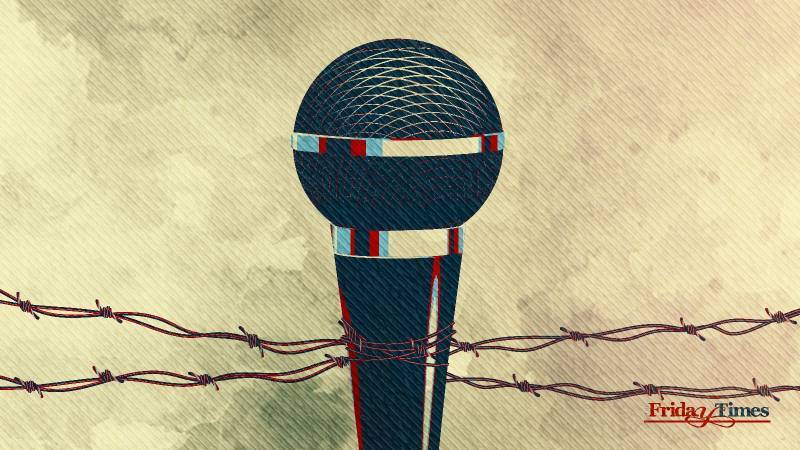
In a move that has sparked heated debate across Pakistan’s media and civil society, President Asif Ali Zardari recently consented to a series of controversial amendments to the Prevention of Electronic Crimes Act (PECA). Originally enacted in 2016 to curb cybercrime, the law has since been amended in 2025 in a manner that critics argue empowers police and other state agencies to silence dissenting voices. The amendments—especially those targeting “false and fake information” online—are seen by many as a clear example of abuse of power, where legal provisions are manipulated to stifle criticism and suppress free expression. The core of the controversy lies in the vague language introduced by the new provisions. One of the most contentious elements is Section 26A, which criminalises the intentional dissemination, public display, or transmission of information that an individual “knows or has reason to believe” is false, and which is “likely to cause or create a sense of fear, panic or disorder or unrest” in society. While the law is ostensibly designed to combat misinformation and protect national security, its ambiguous wording provides broad discretion to law enforcement agencies. This means that what qualifies as “fake news” or “false information” can be interpreted in an almost limitless manner, potentially leading to the arrest and harassment of journalists, activists, and critics of the government.
Critics argue that the amended PECA effectively transforms the law from a tool for fighting genuine cybercrime into an instrument of political repression. Numerous media organisations and civil rights groups have raised concerns that the law can be used to target dissenting opinions under the guise of maintaining public order. Journalists, in particular, have warned that the amendments will chill free expression online, as the threat of severe penalties—including up to three years in prison and fines of up to two million rupees—looms large over anyone daring to question state actions or expose governmental misconduct. This perspective is supported by recent protests and statements from journalist unions across the country, which have decried the law as “draconian” and “an attack on freedom of expression”. The process by which these amendments were enacted has further fueled allegations of abuse of power. Although President Zardari’s assent was reportedly influenced by consultations with senior political figures such as Maulana Fazlur Rehman, many stakeholders—including media unions like the Pakistan Federal Union of Journalists (PFUJ) and the Joint Action Committee of press organisations—claim that the law was passed without meaningful consultation. These groups argue that the lack of prior dialogue has not only undermined transparency but also paved the way for an environment where state agencies can act with unchecked authority.
The law undermines Pakistan’s constitutional freedoms and violates international human rights standards. It fosters self-censorship, restricts online discourse, and strengthens state control through social media restrictions and surveillance
Once the amended law is in place, state agencies are granted sweeping powers to regulate online content. For instance, the law empowers the newly established Social Media Protection and Regulatory Authority (SMPRA) to order the immediate blocking or removal of online content that it deems “unlawful.” This authority is not limited by clear judicial oversight, leaving decisions about what constitutes harmful or false information largely in the hands of executive officials. As a result, there is a real danger that SMPRA—and by extension, the police and other enforcement agencies—could use these powers to suppress political dissent, silence critical voices, and target opposition figures under the pretext of maintaining public order. Moreover, the law effectively blurs the line between combating cybercrime and curtailing free speech. While combating digital threats is a legitimate governmental concern, the enforcement measures under the new PECA amendments extend far beyond what is necessary to tackle cyber criminals. The broad definitions and harsh penalties serve as a legal smokescreen for political score-settling. There are already documented instances where police and investigative agencies have used PECA to arrest journalists for simply questioning official narratives or reporting on sensitive issues. In these cases, the law has been weaponised to intimidate media professionals and deter them from engaging in investigative reporting.
The PECA amendments have drawn widespread domestic and international condemnation, with organisations like Amnesty International and Human Rights Watch warning of state repression. Critics argue that the law undermines Pakistan’s constitutional freedoms and violates international human rights standards. It fosters self-censorship, restricts online discourse, and strengthens state control through social media restrictions and surveillance. The establishment of the NCCIA centralizes power within the executive branch, reducing judicial oversight and enabling political repression under the guise of cybercrime enforcement.
The PECA amendments approved by President Zardari expand state power under the pretext of combating cybercrime. With vague and punitive provisions, the law risks becoming an instrument of oppression, allowing authorities to define “fake news” and block content without judicial oversight. Critics argue it suppresses free expression, weakens media accountability, and facilitates state repression. As protests and global criticism grow, Pakistan faces the challenge of balancing digital security with constitutional freedoms. However, the law’s trajectory suggests it may be used to silence dissent rather than protect citizens