

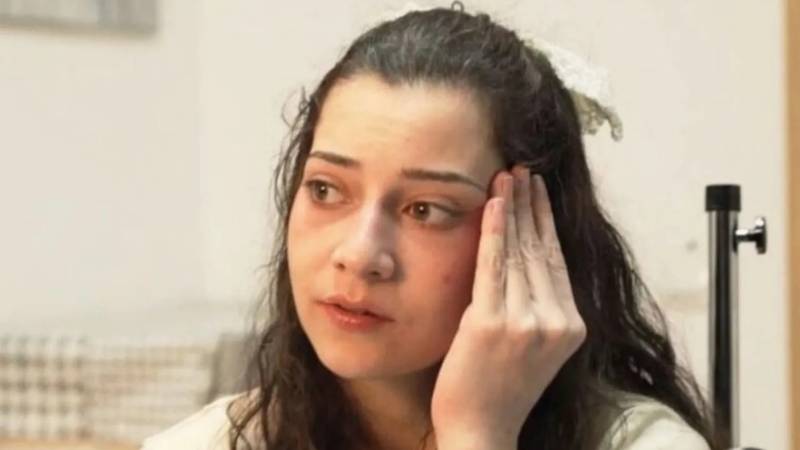
Most people will feel something shift in their chest before they even decide what they think about this one: a 25-year-old woman in Spain was legally helped to die.
And not because she was terminally ill, or because she had made some sudden, impulsive decision in a moment of panic. Her name was Noelia Castillo, and she had lived with psychiatric illness since her teens; with her parents divorced, she said she had been sexually assaulted multiple times.
After a suicide attempt in 2022, she was left paralysed from the waist down. Over time, her case became a long legal battle over whether she had the right to die under Spain’s euthanasia law. In the end, the system said yes. She died this year on 26 March.
What makes the story so unsettling is that it was not a hidden suicide. It was a case reviewed by doctors, challenged by the family, tested in court, and finally approved by the state. That changes everything.
Once the law enters the room, this stops being only a private tragedy and becomes a public moral question. Who gets to decide when suffering is too much? The person living it? The family watching it? The state that claims to protect life? Spain’s 2021 law allows assisted dying for adults with serious, incurable, or permanently disabling conditions that cause unbearable suffering, and Castillo’s case moved through that framework all the way to the top.
Beneath that sits an even quieter question we rarely ask out loud: is the role of a society to preserve life at any cost, or to reduce suffering even when life itself is the cost? And that is where the arguments start to pull in opposite directions.
At one level, assisted suicide can look compassionate. If a person is in pain, if the body has become a prison, if the mind has been battered by trauma, and the future feels bleak, then why should the state force endurance in the name of principle?
At another level, it looks like a brutal surrender. A young woman who had already survived violence and disability is now helped towards death by the same society that failed to protect her properly in the first place. But then again, even if the people who hurt her had been punished, would that have restored her body, her peace, or the lost years? Justice can punish, but it does not promise healing or a rewind button.
At a state level, assisted suicide can feel wrong because the law should protect the vulnerable, not stand at the edge of their despair and validate it
Perhaps this is where morality becomes uncomfortable, because we like to believe that what is right should also feel fair. In reality, those two often part ways. That is why this case feels morally different from the usual assisted-dying debate.
People often imagine euthanasia as something that belongs to the terminally ill, to old age, to the end of a long medical decline. Here, the age is young. Noelia’s suffering is layered, with incredible psychological pain that cannot be seen, touched, or felt by the bystander.
The story carries the smell of state failure, family conflict, trauma, and hopelessness all at once. It is harder to judge because it refuses to fit inside a tidy category.
Religious responses also reveal how deep the divide goes. In mainstream Islamic scholarship, physician-assisted suicide and euthanasia are generally forbidden. Life is not treated as something a person may simply hand back when it becomes too heavy. If anything, ending a life on one’s own accord is considered a grave sin.
But in the same South Asia, Buddhist perspectives are more varied, and in Japan, the public and religious climate has historically shown greater acceptance, even reverence, of suicide under certain circumstances. One survey of Japanese religious groups found around 70 per cent acceptance of passive and indirect euthanasia, while active euthanasia was favoured by less than 20 per cent, the latter of which, for perspective, is still one in five people.
So the split is not simply East versus West. It is a split between traditions that lean heavily towards the sanctity of life and those that are more willing to accept letting death come when treatment no longer feels meaningful.
The physical and mental pain question matters too, because society still treats them differently. A broken body is legible and visible, but a wounded mind is often treated as suspect. People are willing to believe in suffering when they can see it on a scan, but become suddenly cautious when the suffering is psychological.
Yet trauma lives in the body. Depression can be as consuming as a disease. Despair can be as real as nerve pain. That is why it is so easy to be theoretical about dignity until the suffering belongs to someone with a face, a family, and a story.
And maybe that is the deepest contradiction here. At a state level, assisted suicide can feel wrong because the law should protect the vulnerable, not stand at the edge of their despair and validate it.
However, at a personal level, I might be rejecting it publicly, but deep down would still want the option for myself if I were trapped in unbearable suffering. That contradiction is hypocrisy, and shows how we as humans want sanctity for everyone else and control for ourselves.
It is also a reminder that moral certainty is often easiest when it is not our own life on the line. That is why this story matters in Pakistan, too, and in fact, anywhere people argue about life from a distance.
In Pakistan, the instinct is usually to reject assisted dying outright. In the United Kingdom or the United States, the debate is more open but no less troubled. In all these places, we are very good at declaring what is moral when the suffering belongs to someone else. We become far less certain when we imagine our own bodies, our own pain, our own helplessness.
Distance tends to make philosophers of us all, which proximity probably can cure, so to speak. So perhaps the question is not whether assisted suicide is always right or always wrong. Perhaps the more uncomfortable question is whether a state that fails to protect people from violence, trauma, abandonment, and despair has earned the right to judge their final request for peace.