

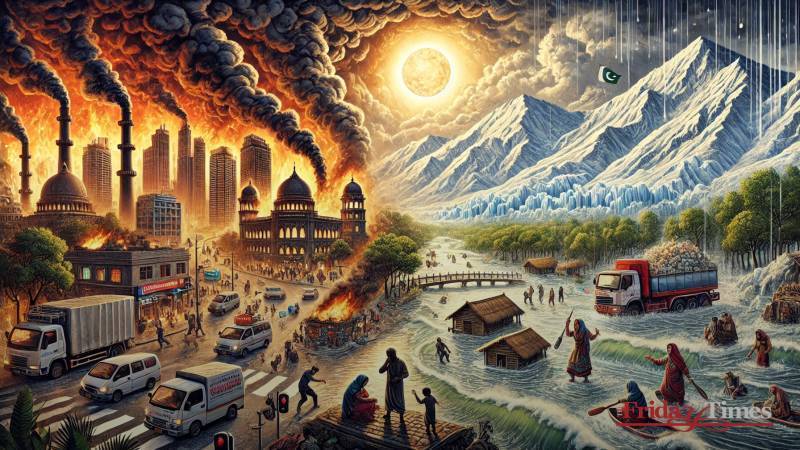
Climate change, as a natural phenomenon, dates back to the origins of the universe, influenced by volcanic activities, solar radiation, plate tectonics, and other factors. However, it gained significant attention with the onset of the Industrial Revolution in the 18th century. The increasing energy demand led to the excessive use of fossil fuels, triggering significant disruptions in the Earth’s natural processes. Over time, global temperatures, the hydrological cycle, and seasonal patterns have been drastically affected, especially in the 21st century.
Despite the mounting evidence, many influential figures remain skeptical about climate change. For instance, former U.S. President Donald Trump openly dismissed it as an issue, often ridiculing its significance. However, a UNDP report published in June 2024 highlighted that 53% of the global population acknowledges climate change as a serious concern for future generations.
Recognising the gravity of the crisis, the Millennium Development Goals (MDGs) were introduced in 2000, primarily targeting poverty eradication, health, education, and environmental sustainability in underdeveloped nations. However, gaps in addressing climate change, inequality, and peacebuilding led to the launch of the Sustainable Development Goals (SDGs) in 2015. The revised framework expanded its focus to land, water, and resilient infrastructure, culminating in 17 SDGs dedicated to combating climate change. International summits such as the UNFCCC, COP conferences, and Rio+ aim for net-zero emissions by 2050. Despite these efforts, the effects of climate change continue to accelerate, disproportionately impacting highly populated regions.
Since 1982, global temperatures have risen by 0.2°C per decade, with 2024 recorded as the warmest year in history. The primary drivers of this trend include excessive resource exploitation, reliance on outdated energy sources, and weak economic frameworks that deprioritise climate-related concerns. The consequences extend beyond heatwaves, significantly disrupting hydrological cycles. Glaciers are melting at an alarming rate, increasing the frequency of flash floods due to high-intensity, short-duration rainfall. This phenomenon has also reduced groundwater recharge, placing immense stress on underground water reserves. Countries like Pakistan, heavily reliant on glacial-fed rivers, face severe water shortages.
According to the Pakistan Meteorological Department, from September 1, 2024, to March 21, 2025, the country recorded 40% below-average rainfall
South Asia, particularly India and Pakistan, has been experiencing the devastating impacts of climate change. Coastal regions along the Bay of Bengal are witnessing more frequent and intense typhoons, alongside rising sea levels. According to Visual Capitalist, approximately 1.81 billion people are exposed to inland and coastal flooding, with 1.24 billion residing in Southeast Asia. Unpredictable rainfall patterns have further aggravated drought conditions, particularly in Asia and Africa. In Pakistan, the situation is dire. According to the Pakistan Meteorological Department, from September 1, 2024, to March 21, 2025, the country recorded 40% below-average rainfall. The deficits were most severe in Sindh (-62%), Balochistan (-52%), Punjab (-38%), and Khyber Pakhtunkhwa (-34%).
Pakistan has witnessed catastrophic floods in recent years, most notably in 2010 and 2022, which inflicted severe damage on agriculture and the economy. Despite having an ideal topography for hydrological infrastructure such as dams, diversions, and weirs, only a handful of successful projects have been executed. The country's extensive canal network remains one of the most efficient in the world, yet water mismanagement persists. One promising initiative is the Mohmand Dam, a multipurpose project capable of storing 1.2 million acre-feet of water and generating 800 MW of hydropower. The dam also aims to protect Charsadda district from flash floods. However, more projects are needed to harness river waters effectively. Rehabilitation of existing dams like Warsak and Tarbela is equally crucial, as sedimentation has significantly reduced their storage capacity. Unfortunately, political conflicts among provinces have hindered progress, despite the existence of the 1991 Water Apportionment Accord, which remains a contentious issue.
One of Pakistan’s ambitious projects, the Thar Desert Agriculture Project, aims to expand agricultural and industrial activity while facilitating urban development. If successfully implemented, it could serve as a model for transforming barren lands in other provinces into fertile and productive regions. However, there must be a structured authority alongside the Irrigation Department to regulate new settlements. Construction on non-agricultural land should be prioritised to prevent the depletion of fertile regions. If such measures are not taken, Pakistan risks losing key agricultural products, such as Multan’s world-renowned mangoes and Mardan’s high-quality tobacco.
Pakistan stands at a critical juncture in the fight against climate change. Rising temperatures, erratic rainfall, and inadequate water management pose significant threats to the country’s economy and food security. The government must adopt a proactive approach by investing in climate-resilient infrastructure, enhancing water conservation efforts, and enforcing policies that prioritise sustainability. Furthermore, strengthening cooperation between provinces on water distribution and resource management is imperative. With effective planning and decisive action, Pakistan can mitigate the worst effects of climate change while ensuring long-term environmental and economic stability.