

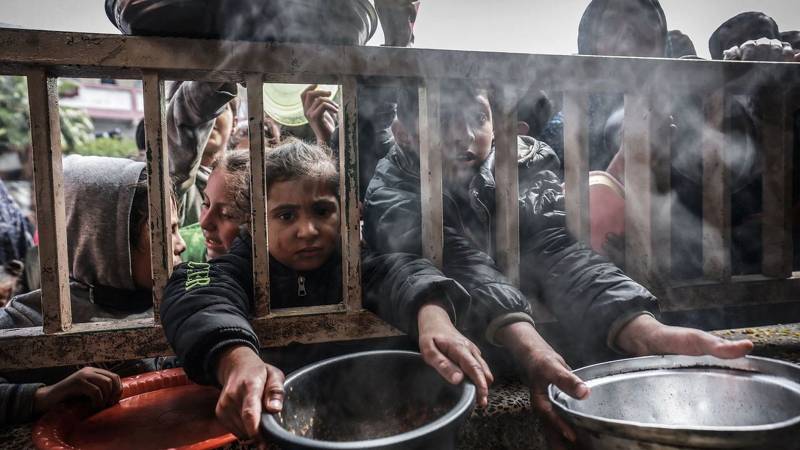
When a crisis erupts, the world instinctively responds to what can be seen. Images of hunger, destroyed homes, displaced families, and overwhelmed hospitals mobilise urgent action. Food, water, shelter, and medical assistance rightly become priorities. Yet in today’s era of prolonged and overlapping crises—a reality increasingly described as a polycrisis—one of the most devastating consequences remains largely invisible: the psychological wounds carried by millions of children.
For children living through conflict, displacement, climate shocks, poverty, and social breakdown, survival is not only a physical struggle. It is also an emotional and neurological battle. Mental Health and Psychosocial Support (MHPSS) is, therefore, not an optional addition to humanitarian response. It is a life-saving intervention essential to protecting children’s development, learning, health, dignity, and future resilience.
A child’s brain is shaped not only by biology but by experiences. Exposure to repeated violence, fear, displacement, hunger, loss, and uncertainty changes how the brain develops. Research in neuroscience has demonstrated that prolonged exposure to toxic stress can disrupt brain architecture, affecting areas responsible for learning, memory, decision-making, and emotional regulation. The consequences are not only psychological; they influence a child’s ability to learn, build relationships, manage emotions, and recover from adversity. This reality becomes even more alarming during a polycrisis, where children are not exposed to a single traumatic event but to a continuous accumulation of threats. While children often demonstrate remarkable resilience, the sheer scale and duration of adversity can push millions beyond their ability to cope.
Severe psychological distress can weaken a child’s immune response, increasing vulnerability to diseases
Afghanistan provides a stark example. Decades of conflict, economic collapse, food insecurity, and restrictions on fundamental rights have exposed children to some of the world’s highest levels of psychological distress. According to UNICEF, more than 14 million children in Afghanistan require humanitarian assistance, with millions experiencing violence, displacement, poverty, and uncertainty about their future. For Afghan girls, particularly those excluded from education, trauma has been compounded by isolation, loss of opportunity, and diminished hope. The denial of education is not only a violation of rights; it is a profound psychological injury that affects identity, confidence, and aspirations.
Sudan represents one of the most severe examples of a contemporary polycrisis. Since conflict erupted in April 2023, millions of children have been affected by violence, displacement, hunger, and the collapse of protective systems. Many have witnessed killings, the destruction of communities, and separation from their families. They have lost homes, schools, caregivers, and the sense of safety that defines childhood. The psychological consequences of these experiences will persist long after the fighting ends unless MHPSS becomes central to both humanitarian response and recovery efforts.
Yemen demonstrates the consequences of prolonged crisis. After nearly a decade of conflict, millions of Yemeni children have grown up knowing displacement, poverty, hunger, and fear as their daily reality. Humanitarian organisations have repeatedly highlighted the severe impact on children’s mental wellbeing, including anxiety, depression, and trauma-related symptoms. A generation is growing up shaped more by insecurity than stability. Without sustained psychosocial support, the consequences will extend beyond individual suffering and affect the social fabric of the country for decades.
Somalia provides another example of how overlapping crises intensify psychological harm. Children face the combined pressures of armed conflict, repeated droughts, displacement, and food insecurity. For children repeatedly forced to flee because of climate shocks, hunger, or violence, trauma accumulates over time, reducing their ability to cope with future crises. A child who experiences repeated loss does not simply recover each time; each experience builds upon the previous one.
A common misconception is that children are naturally resilient and will recover with time. While children possess remarkable adaptive capacities, resilience has limits. In a single crisis, a child may rely on a parent, teacher, or community leader for emotional security. In a polycrisis, those protective networks are often damaged as well. Parents may be traumatised, grieving, displaced, or unable to meet even basic needs. When caregivers are overwhelmed, the child’s primary emotional safety net weakens.
MHPSS helps interrupt this cycle. It provides children with safe spaces, supportive relationships, coping mechanisms, and opportunities to process trauma before it becomes embedded across generations. The connection between mental health and physical survival is also frequently overlooked. Severe psychological distress can weaken a child’s immune response, increasing vulnerability to diseases common in crisis environments, including infectious diseases, malnutrition-related complications, and prolonged illness. A child suffering from untreated trauma may struggle to eat, sleep, concentrate, or engage with health and nutrition services. The invisible wound often deepens visible vulnerabilities.
Education provides another critical pathway for psychosocial recovery. Humanitarian actors rightly prioritise keeping schools open during crises because education provides protection, routine, and hope. However, a traumatised brain cannot easily process or retain information. A child living in constant fear may sit in a classroom but remain psychologically absent. Learning cannot happen effectively without emotional safety. Education and MHPSS must therefore be integrated, not treated as separate interventions.
The humanitarian system must urgently reconsider the place of MHPSS within emergency response. Despite its critical role in recovery and resilience, it remains significantly underfunded compared with other humanitarian sectors. This must change. Mental health and psychosocial support must be recognised as a life-sustaining service alongside food, water, shelter, health, and protection.
Children living through polycrises are not only victims of today’s emergencies; they are the architects of tomorrow’s societies. If their trauma is ignored, the consequences will extend into future generations through lost educational opportunities, weakened social cohesion, and cycles of instability. Humanitarian responses must therefore address not only where children sleep, what they eat, and how they survive—but also what they carry inside. Protecting a child’s mind is an investment in the future. In an era of polycrises, Mental Health and Psychosocial Support is not a humanitarian add-on—it is the foundation upon which response, recovery, reconciliation, and lasting peace are built.
The responsibility to heal children does not end when the conflict ends; it begins when the guns fall silent.