

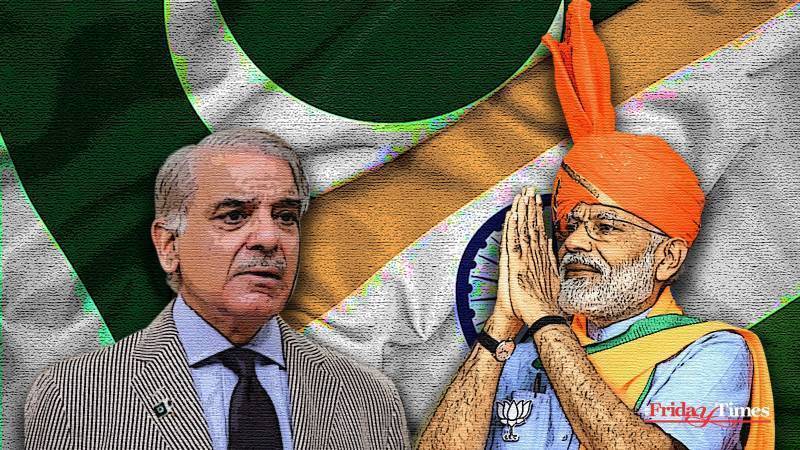
The recent spike in India-Pakistan tensions following the deadly April 22 attack in Pahalgam, Kashmir, marks a perilous moment for the two nuclear-armed neighbors. The assault, which killed 26 civilians, has intensified a long-standing conflict rooted in the disputed Kashmir region, with India accusing Pakistan of orchestrating the attack ─ a charge Islamabad denies. This episode has escalated fears of military retaliation and even potential war, underscoring the fragility of peace in South Asia.
India’s Prime Minister Narendra Modi has responded with a hardline stance, granting the military “complete operational freedom” to pursue those responsible, signaling possible imminent strikes. Pakistan, on its part, claims to have “credible intelligence” of an impending Indian attack within 24 to 36 hours and has taken precautionary measures such as closing over 1,000 religious schools in Pakistan-administered Kashmir and reinforcing its military. The rhetoric from both sides is increasingly belligerent, with Pakistan’s Defense Minister hinting at strategic decisions involving its nuclear arsenal, raising the stakes dangerously high.
This escalation is not occurring in a vacuum. It reflects a broader pattern of entrenched hostility and mistrust between the two countries. Modi’s government, with its nationalist and security-focused agenda, has maintained a tough posture on Kashmir, fueling alienation and unrest in the region. On the other hand, Pakistan’s insistence on defending Kashmir’s disputed status and its strategic doctrine of nuclear deterrence further complicate any prospects for de-escalation. The cycle of tit-for-tat violence and retaliatory threats risks spiraling into a larger conflict, one that could have catastrophic consequences given both countries’ nuclear capabilities.
Sane voices are urging both sides to ensure strategic patience and a return to dialogue based on mutual respect and sovereignty to avoid further deterioration
The domestic political contexts in both countries are contributing to the crisis. In India, there is significant public and media pressure on the government to act decisively in response to perceived Pakistani provocations. In Pakistan, the military’s strategic calculus is shaped by its historical rivalry with India and the need to project deterrence, especially during times of perceived vulnerability. Civilians on both sides of the Line of Control are once again paying the price, as schools are closed, bunkers are prepared, and fear of war looms large.
The international community, including the United States and China, has urged restraint, aware that a full-scale conflict would destabilize the entire region. However, domestic pressures in India for a robust response to the Pahalgam attack, coupled with Pakistan’s defensive posturing, limit the political space for diplomacy. The closure of madrassas and the preparation of bunkers in Pakistan-administered Kashmir illustrate the palpable fear among civilians caught in the crossfire. Meanwhile, calls for restraint from the UN and various foreign ministries have, so far, failed to produce tangible movement toward dialogue.
Nonetheless, sane voices are urging both sides to ensure strategic patience and a return to dialogue based on mutual respect and sovereignty to avoid further deterioration. Yet, the current political climate in India, marked by anti-Pakistan rhetoric and a security-first approach, offers little hope for immediate breakthroughs. Pakistan’s willingness to engage is often misread by India as weakness, exacerbating tensions. Both nations need to recognize that military escalation benefits no one and that the Kashmir dispute requires a peaceful, negotiated settlement.
In this volatile context, diplomacy must take center stage. Major powers such as the United States and China, both of whom have strategic interests in South Asia, should leverage their influence to defuse tensions and facilitate a platform for dialogue. Washington, with its historical ties to both countries and its experience in backchannel diplomacy, can play a key mediating role. Beijing, given its close partnership with Islamabad and growing economic leverage with New Delhi, is also well-placed to promote restraint. Furthermore, middle powers such as Iran and Saudi Arabia, both of whom seek regional stability and enjoy diplomatic channels with Pakistan and India, can act as quiet facilitators to bridge trust deficits. The combined efforts of these actors, working through multilateral forums or regional initiatives, could help chart a diplomatic off-ramp and restore a fragile peace in South Asia.