

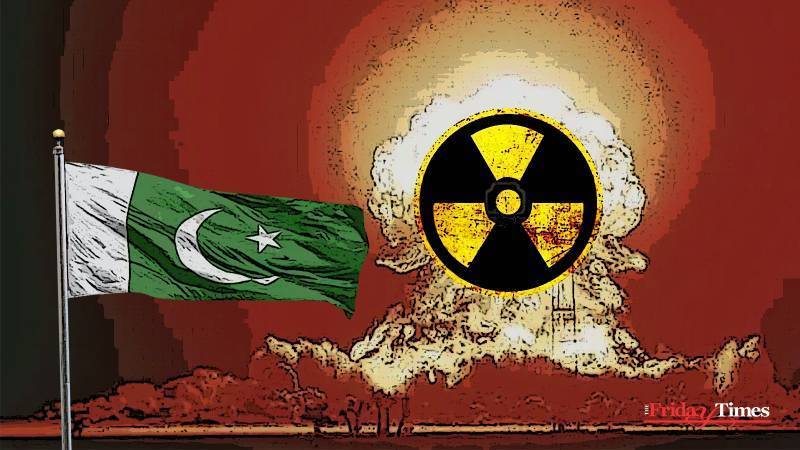
In times when patriotic sentiments are at their peak on both sides of the border, and have dangerously transformed into war hysteria, it becomes difficult—but absolutely necessary—to ask a common-sense question: do we really understand the cost of war? On social media, mainstream news, and even in everyday drawing room conversations, there is a flood of emotional slogans and memes about a potential war between two neighbouring countries, Pakistan and India. The public is buying into the rhetoric, yet many fail to grasp that war is not a movie—and patriotism doesn’t mean marching blindly towards disaster.
Most of those calling for war have never experienced the terror of a bomb falling in their town. That may be why they are unable to fully imagine the consequences of such a conflict. For them, war is just another trending topic, a viral post on Facebook, Instagram, or X (formerly Twitter). But for the people of Gaza, Syria, Afghanistan, and Iraq, war is a living hell. It is a trauma that never ends.
Before I came to know the realities of war in Swat and Waziristan—especially the post-conflict aftermath—it seemed like a distant joke, much like how many people still perceive it. But those who lived through it buried their loved ones, fled their homes, and continue to suffer deep psychological scars. Mental health crises in war-affected areas remain a major concern that’s often ignored.
Afghanistan is another grim example. After decades of U.S. invasion, internal conflict, and drone strikes, generations have grown up under the shadow of bombs and guns. War brought them no peace—only further misery. Their basic problems have worsened, not resolved.
War is the only product where the poor pay in blood, and the powerful profit in silence
Yet some keyboard warriors still fantasise about trying war as if it’s a new product on the market. They’re eager to ‘unbox’ it. But this is a product that has failed again and again to serve the common man. It looks attractive when wrapped in patriotism, but its only content is death. It serves arms dealers, politicians like Modi, populist figures like Trump, and other foreign stakeholders. And who pays the cost? You and I—the ordinary taxpayers.
India may market itself as a regional economic powerhouse, but the other side of the picture reveals hunger, inflation, corruption, oppression, and injustice. Mr Modi’s war rhetoric appears to be a desperate attempt to hide this reality, one that has already failed to gain traction internationally. Pakistan, too, faces hunger, inflation, a collapsing education system, political victimisation, and an undeclared martial law. In such dire circumstances, can we really afford to even consider war?
The truth is, war is not just emotional—it is suicidal, especially when we are already suffering from an economic and political crisis. People are struggling to pay electricity bills; public healthcare is crumbling; our education infrastructure is in tatters; and we remain shackled to the IMF. Amid all this, how can we possibly manage a war?
Security and sovereignty are crucial—but we third-world countries often overspend on defence while ignoring diplomacy, lobbying, and strategic alliances. India, to its credit, has heavily invested in these areas. We must learn from this and shift focus towards dialogue and international cooperation. The future belongs to diplomacy—not war.
Even the Indian public is not buying into the war hysteria manufactured by what they call “Godi media”, widely viewed as an arm of Modi’s election campaign. Common Indians are suffering under poverty, joblessness, and systemic injustice. Many who question the government’s motives are being arrested or silenced. The public, largely, has rejected the war narrative.
The tragic Pahalgam attack, now a controversial issue, has become a tool for Modi to deflect from domestic failures. Pakistan’s offer to cooperate in an independent investigation was a smart and mature diplomatic move—one that India has completely ignored. That silence speaks volumes.
If we are honest, both nations are already at war—with poverty, corruption, injustice, and misgovernance. Do we really have space for another war that will only add decades of suffering?
Our political systems are broken, our economies fragile, and public trust eroded. Both governments are attempting to externalise their internal failures by fabricating a foreign threat. This entire wave of hysteria feels manufactured—not organic.
Before we jump on the war bandwagon, we must read about the destroyed families of Gaza. Their trauma will haunt generations to come. War is not a video game—it’s a real and irreversible tragedy. Starting a war may seem easy, but there is no “undo” button once it begins. War is the only product where the poor pay in blood, and the powerful profit in silence.
We must reject this fake product being marketed to us under the guise of nationalism. The people of Pakistan and India deserve peace—not destruction. Let us, as two great nations, give peace a real chance and demand that our governments abandon this suicidal path before it’s too late.