

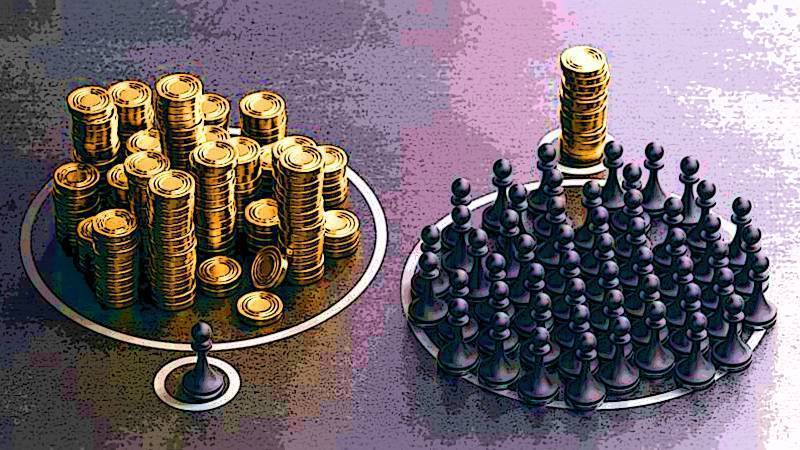
In Pakistan’s cities, a stark and unyielding divide unfolds every day. Two separate worlds exist side by side—one inhabited by a privileged elite, shielded from the everyday struggles faced by the majority. Behind gated communities and tinted windows of luxury vehicles, this insulated class remains largely detached from the harsh realities that define the existence of the other class—the vast majority who grapple with inflation, joblessness, and unrest.
The privileged dine in lavish restaurants, where a single meal can cost as much as an entire family’s weekly budget. For them, life is a procession of luxury and comfort—far removed from the grim existence of millions labouring under the harsh sun. Poverty is not merely a distant reality; it is an ever-present force, ignored and often disregarded by those who can afford to look the other way.
This deliberate blindness is not just a moral failing—it represents a profound national crisis, a collapse of collective conscience. The system that sustains such inequality is not a by-product of chance, but the result of deliberate design—a structure created and maintained by a small, powerful elite. They control public resources, manipulate laws for personal gain, and operate behind a shield of impunity. While they enjoy privileges that are untouchable, the majority of Pakistanis are denied basic rights: clean water, education, healthcare, housing, and fair wages.
The true engine of Pakistan’s economy lies in the hands of its working poor—those who make up over 70% of the labour force and are relegated to the informal economy. These workers have no contracts, no unions, no safety nets, and no state protections. Their labour is invisible, their struggles unacknowledged. Take, for example, the nearly one million private security guards stationed across Pakistan. They stand guard at banks, housing complexes, shopping malls, and schools—tasked with safeguarding property and people for up to 12 hours a day. Yet most of them earn wages that fall below the legal minimum, with no access to overtime pay, medical insurance, pensions, or even the most basic workplace protections.
Social justice cannot be achieved until those who bear the greatest burdens receive the voice, protection and respect they deserve
The depth of this injustice becomes even more apparent when we look at the plight of Pakistan’s sanitation workers. Many of these workers come from marginalised religious communities and face dangerous conditions every day. They work in sewers without protective gear, without gas masks, and often without any guarantee that they will return home safely. In a society that prides itself on progress, few symbols are more harrowing than the way it treats its most essential yet most vulnerable workers.
Meanwhile, the ruling elite continue to live lives of unimaginable comfort, funded by the taxes paid by those who can barely make ends meet. These public figures enjoy protocol security, diplomatic passports, and exclusive perks, while retired officials are given plots of land and ceremonial appointments. All the while, ordinary people cannot afford medicine, pay rent, or send their children to school. This elite-centric model of governance has condemned the vast majority of the population to a never-ending cycle of economic vulnerability. It is a grotesque irony that those who violate building codes, carry illegal arms, or launder money abroad find protection in the very laws that criminalise street vendors, evict the urban poor, and silence labor unions.
What Pakistan needs is not more charity or empty promises of "reform." What we face is a demand for a radical rethinking of our social contract — one that begins by dismantling the entrenched privileges of the elite and truly investing in the people who have sustained this nation through generations. The state can no longer turn a blind eye to the widening inequalities that fracture our society; urgent, decisive action is required to break the cycle of intergenerational poverty that ensnares millions.
Extravagant benefits reserved for a privileged few must be curtailed and redirected toward essential public services — healthcare, education, housing, and fair wages. This is not merely redistribution; it is a reclamation of justice.
Labour law reform is essential to protect millions of informal workers, hold corporations accountable for labour violations, and create safety nets for society’s most vulnerable. Equally important is the empowerment of marginalised voices through the recognition of unions, the enforcement of labour protections, and the defence of the fundamental right to organise.
True progress depends on the full inclusion of the working poor in the democratic process. Social justice cannot be achieved until those who bear the greatest burdens receive the voice, protection and respect they deserve. Ultimately, a just society is measured not by how it treats the elite but by how it cares for and protects its most vulnerable members.