

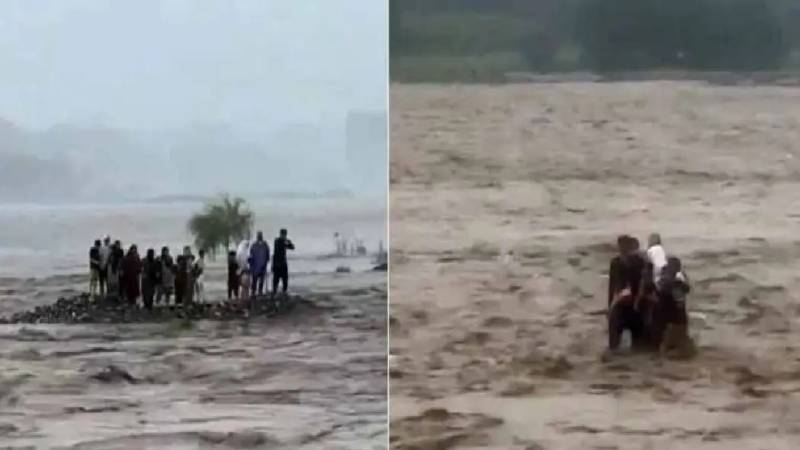
The Swat tragedy—where 17 people reportedly died in full view of helpless onlookers after waiting nearly 90 minutes for evacuation—underscores the near-total absence of a functional national emergency and trauma response network.
It also reveals a disturbing reality: that human lives in Pakistan are, unfortunately, seemingly considered expendable. As a nation, we continue to place belief in conspiracy theories rather than science. Even when we acknowledge a threat, instead of taking global warming seriously, we seek divine help—despite the clear guidance in the traditions of Allah (SWT), such as: “He created the heavens and the earth in truth” (Surah Zumar, Chapter 39, Verse 5, Al-Qur’an). This implies that we, as a nation, must take practical steps and “tie the camel first, and then trust in the Almighty,” as a famous tradition of the Prophet (PBUH) enjoins (Ref: Hadith, Al-Tirmidhi).
When environmental scientists warned of the ominous signs of climate change—particularly global warming—did we heed their message? We continue to fell trees indiscriminately. This ongoing, en bloc deforestation leads to declining rainfall and rising atmospheric temperatures, which in turn accelerate glacier melt and trigger unanticipated flash floods.
When tragedies like the one in Swat become a recurring reality, they demand extraordinary vigilance from both provincial and federal governments. There is an urgent need to establish a national emergency and trauma response network aligned with the National Disaster Management Authority (NDMA).
Beyond conducting failure mode, effect analysis, and root cause analysis to determine what went wrong, we need a comprehensive strategy to establish a robust governance model
Such a network must incorporate digital coordination protocols and pathways mapped through Geographic Information Systems (GIS) and field epidemiology units. Once activated, trained emergency medical technicians (EMTs) should be dispatched based on audio-visual triage, using helicopters and paragliders aided by remotely controlled drones.
We have already suffered too many such tragedies—Swat now joins the grim list that includes the deaths of four brothers some years ago and the Murree Hills snowstorm disaster, where carbon monoxide poisoning claimed many lives.
Time is of the essence. Beyond conducting failure mode, effect analysis, and root cause analysis to determine what went wrong, we need a comprehensive strategy to establish a robust governance model. This must include the training, coordination, triage, and prioritisation of a rapid response force at both national and provincial levels.
The unusually high temperatures Pakistan has experienced over the past two years may have even more disastrous consequences, including heatstroke, acute and chronic kidney injuries, muscle breakdown, and related complications. The Ministry for Climate Change has its work cut out. Climate experts, epidemiologists, GIS scientists, emergency healthcare professionals, and data scientists must come together urgently to mitigate the devastating effects of climate change in Pakistan.
Our actions—or lack thereof—will reveal just how much we value a Pakistani life.