

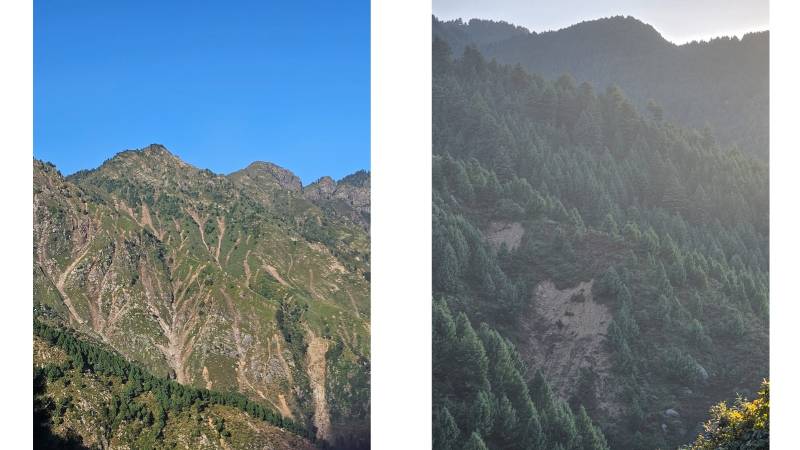
In the serene valley of Swat, the river once symbolized abundance and beauty — its crystal waters nourishing lush fields and forests that defined the charm of the valley. Yet, in recent years, the same river has become a source of destruction: flooding villages, uprooting lives, and washing away fertile soil that once sustained thousands of families. The story of the changing ecology of Swat is no longer one of natural rhythms but of human negligence and vanishing forests.
Uncontrolled deforestation has stripped Swat of its natural shield. Forests that once absorbed the monsoon fury now stand diminished, their loss amplifying the floods that sweep through the valley with increasing ferocity. Landslides follow heavy rains, carrying silt and debris downstream — a grim reminder of how fragile our environment has become. During the tenure of Mr. Fazal Hakeem Yousafzai, Minister for Climate Change and Forestry (March – July 2024), the province of Khyber Pakhtunkhwa recorded between 249 and 306 forest-fire incidents, damaging nearly 1,918 hectares of forest land in just the first half of the year. By contrast, the same period in 2023 saw only 34 fires affecting about 1,076 hectares. These figures reflect not only the growing scale of environmental mismanagement but also the absence of preventive mechanisms and community awareness.
According to the Water and Sanitation Services Company (WSSC), about 52 million cubic feet of mud and sand — roughly 2.3 million tons — have blanketed vast parts of Bangladesh locality, Landaykas, Makan Bagh, Molababa Kokarai, and Marghuzar Dara, leaving behind a stony streambed, destroying the valley's agricultural productivity and its forest cover. The washing away of this green cover has erased the protective layer that once absorbed excess water, resulting in flash floods that are now routine.
This calls for more than seasonal relief efforts. It demands a permanent, institution-based response. Establishing a River Swat Management Authority could be an essential step — a body empowered to monitor deforestation, manage floodplains, and coordinate afforestation, waste management, and soil protection programs under one umbrella.
Lessons from Beyond Borders
South Asia offers inspiring models of community-driven environmental action. In Rajasthan, India, the village of Piplantri plants 111 trees for every girl child born, transforming its arid landscape into a living forest while uplifting its women. This initiative — linking environmental protection with social responsibility — has led to the planting of over 350,000 trees, revitalizing groundwater and biodiversity.
The environmental data is stark: a 900% increase in forest fires and valleys buried under millions of tons of sand
Similarly, Nepal’s “Climate-Smart Village” model provides a regional example of resilience. Through reforestation, rainwater harvesting, and sustainable farming, Nepali communities have adapted to climate change while improving livelihoods. Such initiatives could guide Pakistan in developing climate-resilient rural zones — particularly in regions like Swat, where environmental degradation directly threatens livelihoods and culture.
The Global Climate Connection
The challenges faced by Swat are not isolated; they echo a worldwide pattern. Global warming, driven largely by the coal-fired power generation of major industrial economies, has heated the planet beyond safe thresholds. The United States, China, and India remain among the highest contributors of carbon emissions, accelerating glacial melt in the Himalayas and adding vast amounts of moisture to the atmosphere. This excess moisture returns as devastating rainstorms, increasing both the frequency and intensity of floods across South Asia.
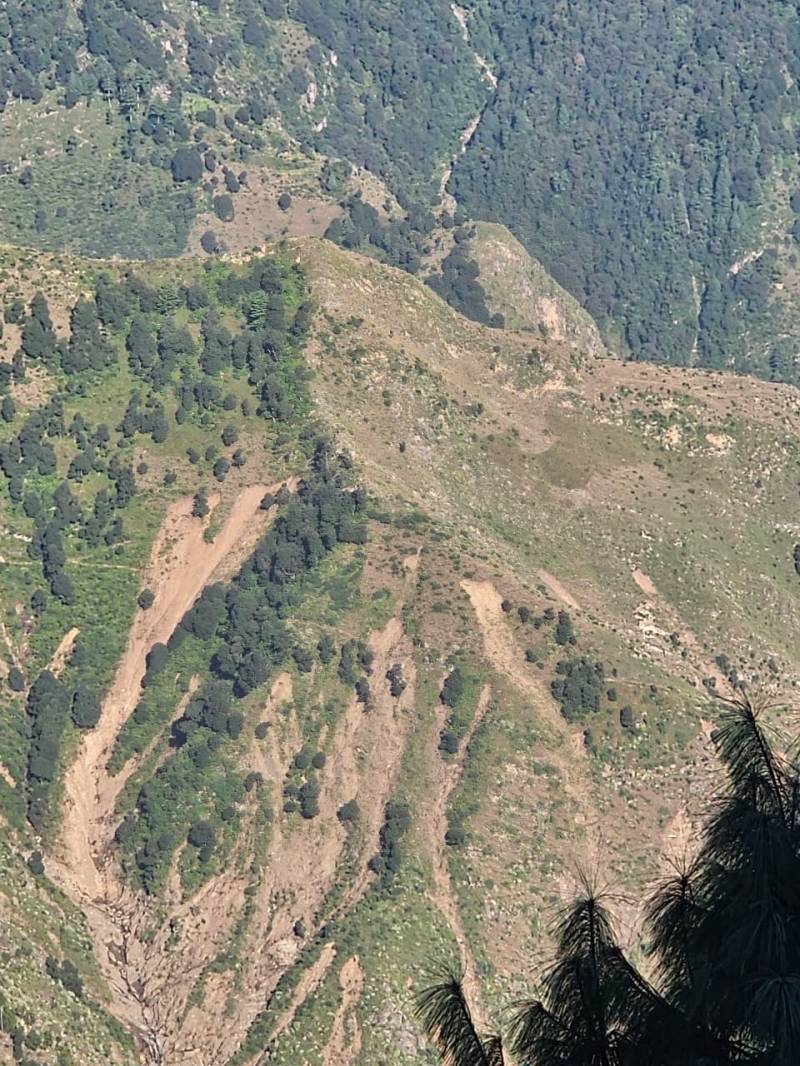
Pakistan, while contributing minimally to global emissions, stands among the most vulnerable countries to these climate shifts. Yet domestic negligence compounds the crisis — forests are cut for profit, riverbeds mined for sand and gravel, and floodplains converted into housing schemes. When nature retaliates, we count losses rather than lessons.
A Way Forward
The way ahead lies in coupling policy with participation. Reforestation drives must be more than ceremonial; they should be integrated with local livelihoods. Introducing community-based forest protection groups, empowering youth through green-employment programs, and linking tree plantation incentives to watershed protection can make a difference.
Educational institutions, too, must become centers of environmental learning. Media campaigns, school curricula, and local governance structures should all promote ecological responsibility. Only then can environmental protection become part of social consciousness rather than a government directive.
Above all, governance must shift from reaction to prevention. Swat needs climate-resilient planning — early-warning systems, eco-zoning laws, and watershed restoration projects — to safeguard both its people and its natural heritage.
If the people of Piplantri can turn a desert into a forest by planting 111 trees for every girl, and Nepal can turn vulnerable villages into climate-smart communities, then surely Pakistan can revive the valley of Swat — once known as the Switzerland of the East — through the same commitment, creativity, and care.