

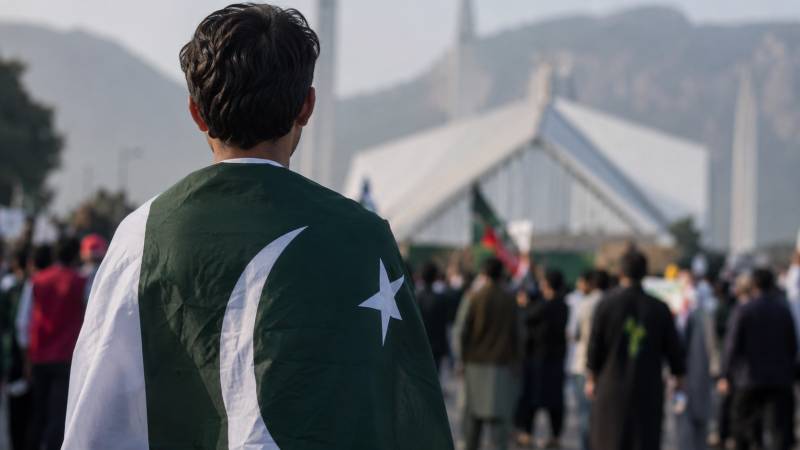
The debate surrounding the proposed 28th Constitutional Amendment has once again exposed the widening gap between Pakistan’s political leadership and its younger generation. Reports suggesting that the government is considering raising the voting age from 18 to 25 have sparked criticism from opposition parties, civil society, and constitutional experts alike. Although government ministers later attempted to downplay the proposal, the discussion itself has raised an important question: can a democracy truly function by excluding millions of young citizens from the electoral process?
Supporters of the proposal argue that voting should require a greater level of maturity. They reason that since a person must be at least 25 years old to contest elections for the National Assembly, the same standard should perhaps apply to voting as well. Some officials have also claimed that younger voters are more emotional, politically inexperienced, and easily influenced by social media campaigns.
At first glance, this argument may appear reasonable. Pakistan’s political environment has indeed become heavily shaped by digital propaganda, misinformation, and emotional polarisation. Social media platforms often encourage quick reactions rather than informed debate, and many young voters rely on online content without verifying facts. In such circumstances, some analysts believe that electoral maturity should become part of the national conversation.
However, raising the voting age is neither a democratic nor a practical solution to these concerns. Across most of the world, 18 is recognised as the standard voting age because it marks legal adulthood. At 18, citizens can obtain national identity cards, drive vehicles, work full-time jobs, and even serve their country in different capacities. If the state considers young people mature enough to carry legal and economic responsibilities, then denying them the right to vote creates a clear contradiction.
More importantly, the proposed amendment would have far-reaching political consequences. According to Election Commission data, nearly 22 million registered voters in Pakistan fall between the ages of 18 and 24. Raising the voting age to 25 would remove a significant portion of the electorate overnight. In simple terms, almost one out of every six voters could lose the right to participate in elections.
Pakistan is one of the youngest countries in the world. A large share of its population belongs to Generation Z, and this youth bulge continues to influence politics, culture, and public debate. Young Pakistanis are more politically aware, digitally connected, and socially active than previous generations. Instead of encouraging their participation in democratic processes, the proposed amendment risks increasing political alienation among the country’s youth.
Young people are not merely future citizens; they are citizens of the present
The timing of this debate has also fuelled suspicion. Over the last few years, youth participation in politics has increased significantly. The 2024 elections showed a stronger turnout among younger voters, many of whom actively used social media to discuss political issues and mobilise support. It is widely believed that a large percentage of these young voters support Pakistan Tehreek-e-Insaf (PTI), while traditional parties such as PML-N and PPP struggle to generate similar enthusiasm among first-time voters.
This is why many critics view the proposed amendment not as constitutional reform, but as political engineering. Removing millions of young voters from the electoral process would inevitably reshape electoral outcomes and reduce the influence of parties that enjoy support among youth. Even if the government denies political motives, the perception itself damages public trust.
Still, the debate should not be reduced entirely to party politics. The issue goes beyond which political party benefits or suffers. The real concern is whether democratic rights should ever be restricted because of changing political trends. Once voting rights become subject to political convenience, the principle of equal representation itself begins to weaken.
There is also a deeper social dimension to this matter. Pakistan’s youth already face serious economic and social pressures. Rising unemployment, inflation, lack of opportunities, and educational uncertainty have created frustration among many young people. Surveys repeatedly show that young Pakistanis feel ignored by mainstream political structures and disconnected from decision-making processes.
In such an environment, restricting their voting rights would likely increase anger and distrust towards democratic institutions. Young citizens who are excluded from political participation may eventually stop believing in constitutional and democratic methods altogether. History shows that societies become unstable when younger generations feel they have no voice in shaping their future.
At the same time, concerns about political awareness among youth should not be dismissed completely. Pakistan does need stronger civic education, responsible political discourse, and better media literacy. Many young voters are exposed to misinformation and emotionally charged narratives online. But the answer to this problem lies in education and democratic engagement, not disenfranchisement.
A healthy democracy does not silence inexperienced voters; it prepares them to become informed citizens. Schools, universities, political parties, and media institutions all have a responsibility to encourage critical thinking and constitutional awareness among young people. Democracies grow stronger when participation expands, not when it shrinks.
The controversy surrounding the proposed 28th Amendment, therefore, reflects a larger struggle over the future of democracy in Pakistan. The country’s leadership must decide whether it wants an inclusive political system that trusts its citizens or a controlled system that limits participation whenever it becomes politically inconvenient.
Pakistan certainly needs electoral reforms. But reforms should aim to strengthen democratic institutions, improve transparency, and increase public confidence in elections. Taking away the voting rights of millions of young Pakistanis would achieve the opposite.
Young people are not merely future citizens; they are citizens of the present. The decisions taken today on the economy, education, employment, and governance will shape their lives more than anyone else’s. Denying them a voice in those decisions would not strengthen democracy — it would weaken it.