

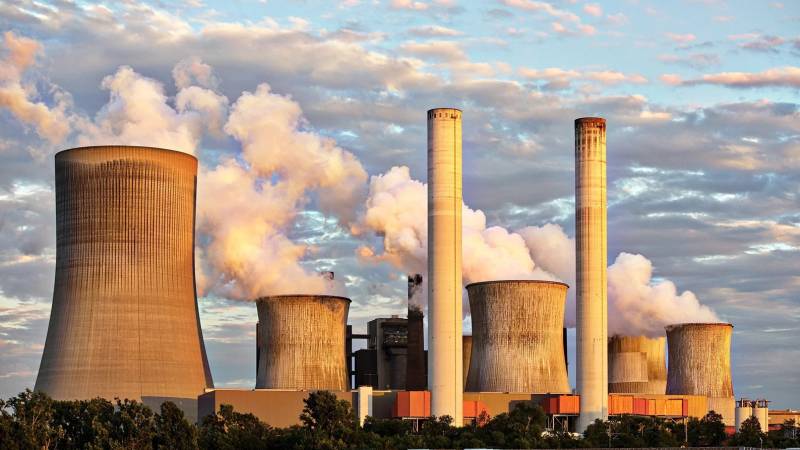
Not all pollution is visible. Some of it is silent, colourless, and odourless—yet it surrounds us, affecting the food we eat, the air we breathe, and the climate we inhabit. One of the most overlooked environmental threats today is nitrogen pollution—a crisis unfolding across fields, cities, rivers, and skies.
As the United Nations Environment Assembly (UNEA) prepares to meet again this year, Pakistan is stepping forward with a bold message: we must act on nitrogen—and we must act now.
Two Faces of Nitrogen
Nitrogen is essential for life. It makes up 78% of the air we breathe and forms the backbone of modern fertilisers that help feed the world. But there’s a catch. When mismanaged, nitrogen turns from friend to foe—polluting water bodies, poisoning air, degrading soils, and warming the planet.
In Pakistan, this problem has been quietly growing for decades. According to the 2024 Pakistan Nitrogen Policy Report, the country now emits over 1,231 gigagrams (Gg) of ammonia, 1,166 Gg of nitrogen oxides, and 199 Gg of nitrous oxide annually—each a different form of reactive nitrogen with dangerous consequences. Since 2000, these emissions have surged by 42% to 63%, with no signs of slowing down.
Fertiliser overuse, poor livestock waste management, fossil fuel combustion, inefficient irrigation, transport and industrial expansion, and urban waste are among the major causes. Agriculture alone contributes over 80% of Pakistan’s nitrogen emissions. But the transport and energy sectors are also rising fast—NOₓ emissions from transport have increased by 62% in the last 15 years. Total nitrogen inputs, including fertiliser and manure, have increased from 499 Gg in 1961 to 4,855 Gg in 2018.
According to the Global Nitrous Oxide Assessment (2024), nitrogen pollution contributes to hundreds of thousands of premature deaths each year, exacerbates global warming, and drives biodiversity loss
This is not just a story of pollution—it’s a story of lost opportunity. Every kilogram of nitrogen that escapes into the environment is a wasted resource—one that farmers paid for but never got to use.
Why It Matters
Excess nitrogen causes air pollution, contributing to the dangerous PM2.5 particles that blanket cities like Lahore and Karachi during winter smog. It seeps into water, creating dead zones in lakes and rivers. It deteriorates soil health, reducing long-term fertility, and—as nitrous oxide—it becomes a greenhouse gas 300 times more potent than CO₂, fuelling climate change and depleting the ozone layer.
According to the Global Nitrous Oxide Assessment (2024), nitrogen pollution contributes to hundreds of thousands of premature deaths each year, exacerbates global warming, and drives biodiversity loss. In many ecosystems—from coral reefs to mountain forests—nitrogen is slowly killing life.
Yet the solutions are within reach—and, more importantly, they are cost-effective. Reducing nitrogen waste through better fertiliser use, improved manure handling, cleaner energy, and smarter city waste management can deliver returns many times greater than the costs. It can boost crop yields, reduce pollution, and save billions of dollars currently lost to inefficiency and environmental cleanup.
Pakistan’s Leadership
This is where Pakistan is showing great vision. Over the past three years, the Ministry of Climate Change and Environmental Coordination (MoCC&EC), in partnership with the University of Agriculture Faisalabad (UAF) and the International Nitrogen Initiative (INI), has positioned the country as a global leader in nitrogen governance.
UAF, as the Lead Partner of the South Asian Nitrogen Hub, has led cutting-edge research on nitrogen flows, field surveys, and farmer behaviour. It published the landmark Pakistan Nitrogen Assessment, conducted a detailed policy review spanning over 170 national laws and programmes, and released the National Nitrogen Policy Report. It also helped develop the South Asia Roadmap for Sustainable Nitrogen Management, in collaboration with SACEP and experts from eight countries.
Meanwhile, MoCC&EC has taken Pakistan’s case to the world—organising a national consultative workshop in 2023 on a draft nitrogen resolution, and presenting at UNEA-6, COP29 in Baku, the UNFCCC Bonn Conference, and various regional ministerial meetings. At each forum, Pakistan has delivered a clear message: nitrogen is the missing link in environmental policy, and we cannot achieve Net Zero without it.
The country is now working to submit a dedicated resolution on nitrogen at UNEA-7—a landmark move that could shape global policy for years to come. Consultations with relevant stakeholders, ministries, experts, and farmer organisations are currently under way.
A Global Problem Needing a Global Response
Nitrogen pollution is not just Pakistan’s problem. In Africa, nitrogen-deficient soils are undermining food security. In Europe and the United States, nitrogen runoff has created massive dead zones in coastal waters. In South Asia, toxic air quality linked to ammonia and nitrogen oxides affects millions. In China and Australia, eutrophication is choking freshwater ecosystems. Across the planet, nitrous oxide is impacting the climate.
That’s why the response must be global. But it must also be just. Countries in the Global South—who are both victims and contributors to this crisis—need technical support, financial investment, and knowledge-sharing. They need policies that work, technologies that fit, and systems that support smallholder farmers and local governments.
Time to Act
The window to act is narrow—but the opportunity is vast. By acting on nitrogen, the world can:
- Improve food security
- Protect biodiversity
- Reduce climate risks
- Cut health costs
- Save billions in economic losses
As UNEA-7 approaches, Pakistan is setting the tone. It’s time for others to listen—and to act.
Because the truth is: you can’t fix the climate, or the planet, without fixing nitrogen. And you can’t afford to ignore a crisis that’s costing the world hundreds of billions each year—in crops, in health, and in hope.